
The importance of blood tests in hormone therapy: What exactly is being measured?
- Remove the existing class from the content27_link item to allow Webflow's native current state to be applied automatically.
- To implement interactions that allow sections in the table of contents to expand and collapse, select the content27_h-trigger element, add a trigger, and choose Mouse click (tap).
- For the first click, select the custom animation Content 28 table of contents [Expand], and for the second click, choose the custom animation Content 28 table of contents [Collapse].
- In the Trigger Settings, ensure that all checkboxes are deselected except for Desktop and above to prevent interaction issues on tablet and smaller devices.
Hormone therapy (HT) offers an effective solution for menopausal symptoms for many women. However, it is not a standard treatment; a safe and successful approach requires customization. Blood tests are essential here. It enables physicians to fine-tune treatment, measure effectiveness and ensure safety. But what exactly is being measured during this study, and why are those values so important to your health?
Why blood tests are crucial in hormone therapy (HT)
Blood tests are the backbone of personalized and safe hormone therapy. They provide objective data that, combined with your symptoms, provides a complete picture of your hormonal status and your body's response to treatment.
Hormone Therapy: An Individualized Approach for Women
Every woman experiences menopause differently. The degree of symptoms and the required dose of hormones varies from person to person. Blood tests help tailor therapy to your unique needs, maximizing the chances of success and minimizing unnecessary side effects. Treatment based on your specific values is the key to effectiveness.
The difference between diagnostics and monitoring during HT
Blood tests have two main goals. Diagnostically, it is used to diagnose menopause, especially when symptoms are unclear. During hormone therapy, the role is monitoring: monitoring whether the target values are reached, whether the dosage needs to be adjusted and that no adverse effects occur.
The hormones under the microscope: What exactly do we measure?
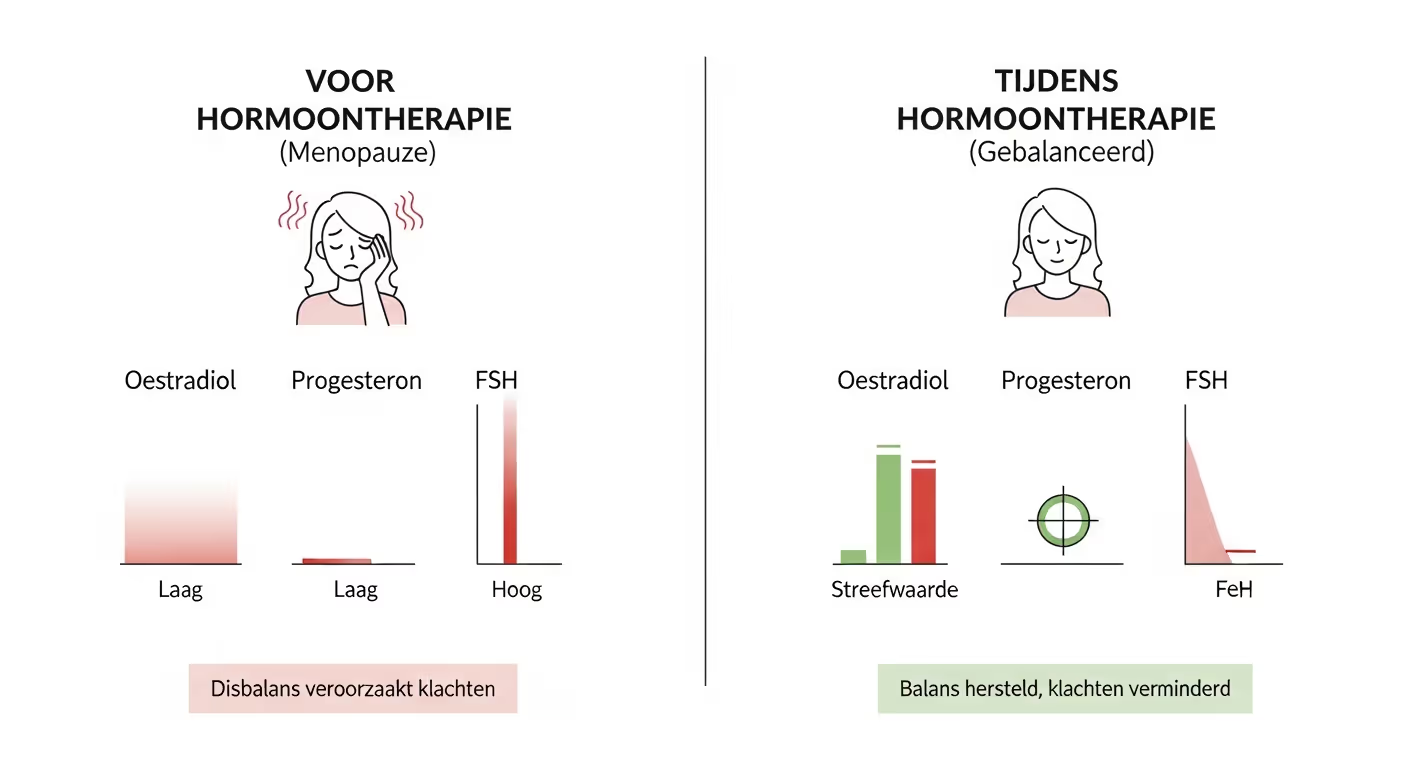
A blood test visualizes the hormonal imbalance during menopause (left) and checks whether hormone therapy reaches target levels, which restores the balance (right).
A blood test for HT looks at a specific set of hormones and other markers that together provide a detailed picture of your hormonal balance and overall health.
Estradiol: The level of estrogen activity
Estradiol (E2) is the most active form of estrogen and the most important indicator of the effectiveness of the therapy. Ovarian production decreases during the transition. Measuring this value helps determine whether the dose of HT is sufficient to alleviate symptoms and protect against long-term risks such as osteoporosis.
Progestogens/Progesterone: Protection and Balance
For women who still have their uterus, the addition of a progestogen or progesterone is essential. This hormone protects the endometrium against excess growth caused by estrogen, which lowers the risk of endometrial cancer. Blood values are monitored to ensure adequate protection and balance.
FSH (Follicle Stimulating Hormone): An Indicator of Menopausal Status
FSH is a hormone that stimulates the ovaries. When the ovaries react less, the FSH value rises. A significantly increased FSH value is a strong indicator that a woman is in menopause. During HT, this measurement is less relevant because the therapy itself can influence the FSH level.
Other relevant blood values for HT (short)
In addition to sex hormones, other values such as thyroid hormones (TSH), liver functions and lipid profile (cholesterol) can also be monitored. These provide insight into overall health and help detect any contraindications or side effects of the treatment early.
Practical aspects of blood tests during HT
For reliable results, it is important to take into account the timing, preparation and form of administration of the medication.
Timing and frequency: When and how often do you sting?
The time of blood collection is crucial. It is often recommended to prick within a specific number of hours after administering the medication (e.g. gel or patch), usually in the morning. Checks usually take place a few months after the start or after a dose adjustment, and then periodically.
Preparing for blood collection
Specific instructions may vary from laboratory to laboratory in the Netherlands, but it is generally important to use the medication in the usual time and manner on the day of the test. Your doctor will inform you about this.
Influence of dosage form and dosage on blood values
The way you administer hormones (oral, transdermal) and the dosage have a direct influence on blood levels. Transdermal administration (via the skin) often leads to more stable values and has a different risk profile than oral administration. Monitoring ensures that the chosen method provides the desired results.
Understanding results: What do your blood levels mean?
Your blood test results are numbers that need context. Interpretation always takes place in combination with your personal situation and symptoms.
Interpretation of blood values in the context of your complaints
A “good” value is not just a number within a reference range; it is a value that significantly reduces your symptoms. A doctor will link the measured hormone levels to your symptoms, such as headaches or hot flushes, to determine if the treatment is effective.
Adapting hormone therapy: From measurement to action
If the results indicate that hormone levels are too low or too high, or if you experience side effects, the dosage or form of the hormone therapy may be adjusted. This cyclical process of measuring and adjusting ensures optimal, personalized treatment.
Blood tests, side effects, and safety
Continuous monitoring via blood tests is a fundamental part of ensuring the long-term safety of hormone therapy.
Minimizing risks
While modern HT is safe for most women, there are small, known risks. Regular monitoring of blood levels helps monitor factors that may influence the risk of conditions such as venous thromboembolism (VTE) or cardiovascular disease, keeping treatment as safe as possible.
Effectiveness versus side effects: Finding the balance
The goal is to find the lowest effective dose possible. Blood tests help achieve this delicate balance, effectively controlling symptoms and minimizing side effects.
Your role as a patient: Collaboration for best results
You play an active role in the success of your treatment. Open communication with your doctor is essential here.
The importance of complaint registration and communication
Keep a journal of your complaints, symptoms, and any side effects. In addition to blood values, this information is invaluable for your doctor to optimize treatment.
Asking questions and making informed decisions
Don't be afraid to ask questions about your results and treatment plan. A good understanding of your therapy allows you to make the best decisions for your health with your doctor.
Conclusion: Personalized and safe hormone therapy thanks to blood tests
Blood tests are not a formality, but an essential tool for modern, safe and effective hormone therapy. They enable personalized treatment that is tailored to the unique needs of each woman at any age during the transition. By accurately measuring what happens in the body, doctors can maximize the benefits of HT and minimize the risks. Talk to your doctor about how blood tests can contribute to your well-being and a complaint-free future.
Lees meer blogs over de Menopauze
Inzicht en inspiratie voor vrouwen



Menovia
Meld je vandaag nog aan