What menopause phase am I in? Do the quick check!
Have you been feeling different lately? Irregular periods, sudden bursts of heat, or a mood that swings in all directions? You are not alone. There is a good chance that you are in the transition, a natural phase of life where in the Netherlands such 1.8 million women are currently in. But the transition is not a single, defined moment; it is a journey with several stages. Knowing which phase you are in helps you better understand the changes in your body and find the right support.
This guide is your personal roadmap. We dive into the different phases, unravel the role of your hormones and give you a quick check to determine where you are on this path. This way, you can get a grip on your body again and you can face this new phase with confidence.
Menopause: A General View and the Role of Hormones
The transition is a period of transformation, similar to puberty, but on the other side of your fertile life. It's the process where your ovaries gradually stop producing eggs and the production of the hormone estrogen decreases. This does not happen overnight, but is a process that can take several years. For many women, this process starts somewhere between the ages of 40 and 60.
It's important to know that this is a completely natural biological process. However, it is often talked about with a certain trepidation. In fact, research shows that 52% of Dutch women talking about the transition is taboo. By understanding what is happening in your body, you break that taboo and take control of your own well-being. The symptoms you experience, from hot flashes to mood swings and changes in your intimate zone, are all directly or indirectly linked to fluctuating and declining hormone levels.
What is the menopause and transition period?
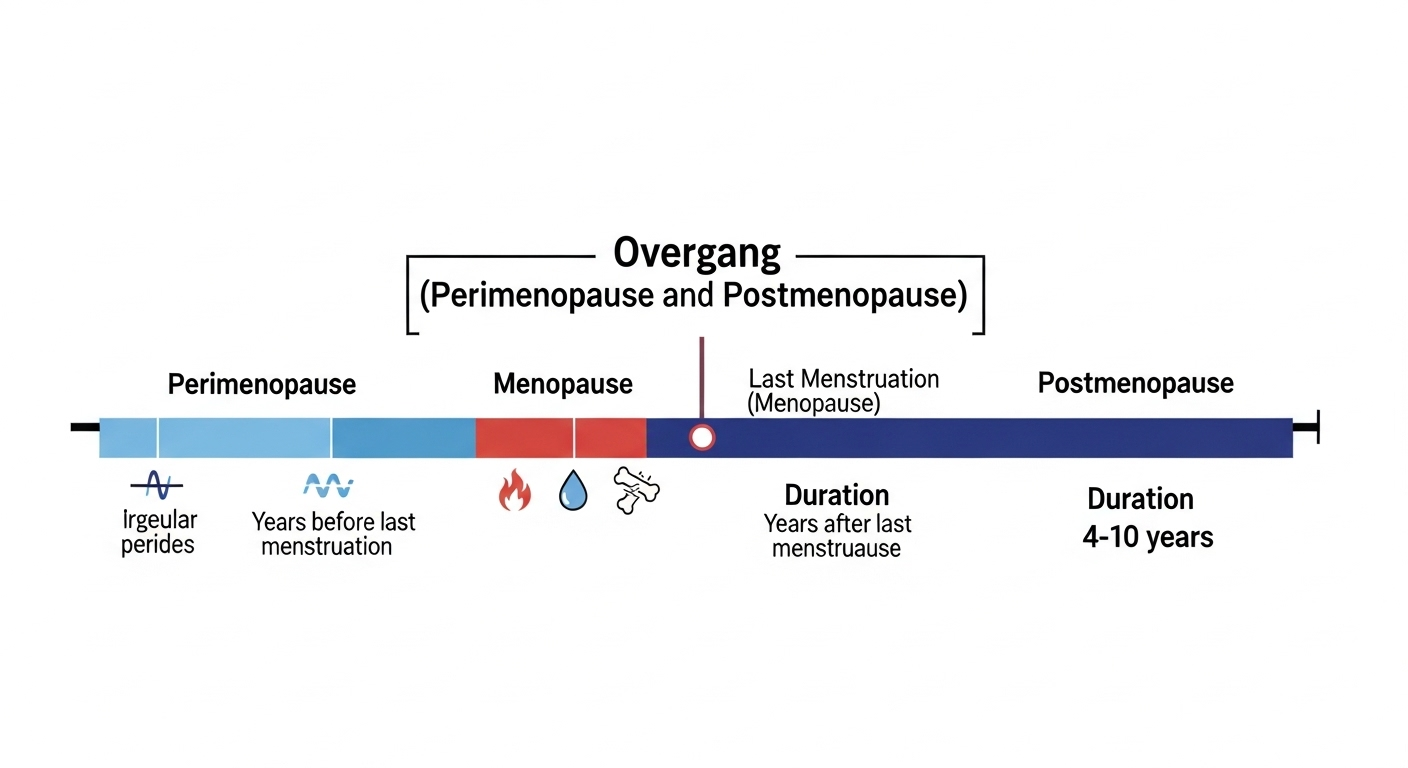
The difference between 'Transition' (the entire transitional period) and 'Menopause' (the last menstruation).
The terms “transition” and “menopause” are often used interchangeably, but they don't mean the same thing. It is crucial to know the difference in order to determine your own phase.
- Menopause (or perimenopause and postmenopause together): This is the entire period of hormonal change. It can take up to 4 to 10 years. This period includes the run-up to your last period and the years after that. It is the “journey”.
- Menopause: This is a specific moment in time. It's officially the day that falls exactly 12 months after your very last period. The average age when women in the Netherlands reach menopause is 51 years old. Menopause is therefore the “destination” that marks the end of your fertile period.
So when we talk about “being in transition”, we mean the long period of change. The complaints you experience are the symptoms of this transition period, not just the one moment, menopause.
The Crucial Role of Hormonal Changes
The protagonist in the entire transition story is estrogen. This female sex hormone does much more than just regulate your menstrual cycle. It affects your skin, bones, blood vessels, brain, and mucous membranes. When the production of estrogen in your ovaries starts to decline, it affects your entire body.
Think of estrogen as the great regulator. When you were younger, it provided a predictable cycle, keeping your skin elastic and your bones strong. It also ensured a healthy, moist and supple vaginal wall. As estrogen production decreases, this system becomes disrupted. Your cycle becomes unpredictable, you may experience hot flushes because your internal thermostat is messed up, and your skin may become drier.
One of the most immediate effects of declining estrogen levels is the impact on your vaginal health. Estrogen is essential for maintaining the thickness, elasticity, and blood flow in vaginal tissue. Deficiency leads to what is known as vaginal atrophy. This may sound clinical, but the consequences are very concrete: vaginal dryness, which can lead to vaginal irritation and pain. This is not a rare phenomenon; it is a direct result of the hormonal shifts at the heart of the transition.
Understanding the Phases of Menopause
The transition is a gradual process that can be divided into three clear phases. Each phase has its own characteristics and symptoms, including intimate health.
Phase 1: Perimenopause (The run-up) This is the phase that precedes menopause and can last several years. Your ovaries begin to produce less estrogen, but this happens in fits and starts. Hormone levels fluctuate wildly, which causes most complaints.
- Features: Your menstrual cycle is becoming more irregular. Sometimes the time between your periods is shorter, sometimes longer. The bleeding may become lighter or much more severe.
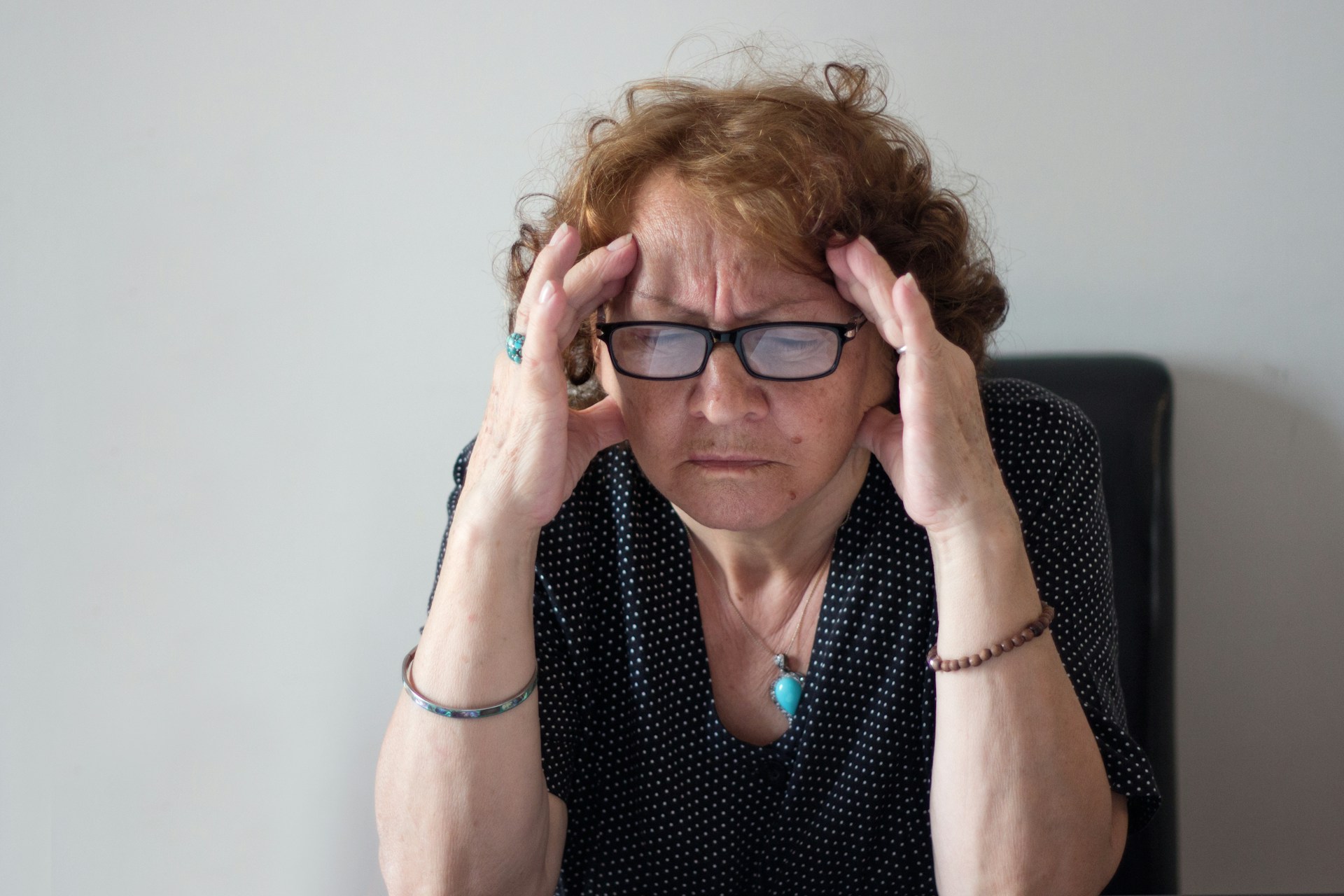
- Typical Symptoms: This is the phase of the first hot flashes, night sweats, sleep problems, mood swings and decreased concentration.
- Impact on Vaginal Health: You may notice the first subtle changes. Because estrogen is still fluctuating, natural lubrication can decrease. You may be experiencing light for the first time vaginal dryness, especially around your period or during sex. It is often not a constant problem, but a first signal.
Phase 2: Menopause (The Tipping Point) As mentioned earlier, this is not really a phase but a date: 12 months after your last period. The period immediately around this point is often characterized by an intensification of perimenopausal symptoms, because your estrogen level is now structurally low.
Phase 3: Postmenopause (The New Balance) This is the phase of life that begins after menopause and lasts for the rest of your life. Your body has found a new, lower hormonal balance. Some symptoms such as hot flushes may decrease, but others, which are directly related to low estrogen levels, may actually become more prominent or chronic.
- Features: You're not menstruating anymore. The hormonal roller coaster of perimenopause is over.
- Typical Symptoms: While hot flashes disappear for some women, complaints related to bone density and heart health may require more attention.
- Impact on Vaginal Health: In this phase, the impact of the estrogen deficiency becomes very clear. The vaginal wall becomes thinner, drier and less elastic. Vaginal dryness is now often a constant fact, not something that comes and goes. This can lead to persistent vaginal irritation, itching, burning and pain when having sex (dyspareunia). The pH of the vagina also changes, making you more susceptible to bladder infections and vaginal infections.
What phase am I in?
Okay, time for the quick check! Grab a pen and paper or answer the questions in your head. Be honest with yourself; this is just for your insight.
Step 1: Check your menstrual cycle (the most important indicator)
- A. My cycle is still regular, as always.
- B. My cycle is getting irregular. Sometimes there is less time between them, sometimes more. The intensity of the bleeding also varies.
- C. I haven't had a period in over 12 months.
Step 2: Check your physical symptoms
- A. I have hardly any hot flashes, night sweats or trouble sleeping.
- B. I occasionally or regularly have hot flashes, night sweats, heart palpitations, or have trouble sleeping.
- C. The hot flushes may have become less severe, but I do have other persistent symptoms.
Step 3: Check your vaginal health
- A. Everything feels normal and comfortable down there.
- B. I notice that my vagina sometimes feels drier than usual, especially when having sex. Lubricant helps.
- **C. My vagina feels dry almost constantly. I regularly experience itching, burning or vaginal irritation, and making love is sometimes painful.
The results of the quick check:
- Mostly A? Chances are that you are not yet in the perimenopause. If you do have symptoms, it is good to discuss this with your doctor to rule out other causes.
- Mostly B? Welcome to the perimenopause. The fluctuating hormones cause the classic menopausal symptoms. Your irregular cycle is the clearest sign. This is the phase where 80% of women experiences complaints.
- Mostly C? You are in the postmenopause. Your periods have stopped and your body has a new hormonal balance. The focus is now shifting to dealing with the long-term effects of low estrogen levels, such as the persistent vaginal dryness.
This check is a guideline. Every woman is unique and the experience can vary greatly. But it gives you a powerful starting point. More and more women are looking for help for this; the number of GP consultations for menopausal symptoms is, especially among women between 50 and 54, significantly increased in recent years.
Conclusion
Knowing what transition phase you are in is more than just labeling your symptoms. It is a form of self-knowledge that enables you to proactively take care of your health. Whether you're in the turbulent perimenopause with its unpredictable fluctuations, or experiencing the new reality of postmenopause, understanding is the first step to control.
Specifically for complaints such as vaginal dryness and vaginal irritation it is crucial to know that these are direct, physiological consequences of hormonal changes. It's not a personal failure and you don't have to suffer silently.
What are your next steps?
- Acknowledge your phase: Accept where you are in the process. This helps you to have the right expectations.
- Talk about it: By talking to your partner, girlfriends or a doctor, you break the taboo and create a support network.
- Find targeted solutions: For vaginal dryness there are effective solutions, such as hormone-free moisturizers, lubricants or, in consultation with your doctor, local estrogen treatments.
- Lifestyle: Pay attention to nutrition, exercise and stress management. This can alleviate many symptoms.
The transition is not an end, but a transformation into a new and powerful chapter. By informing yourself and taking control, you can not only get through this period, but also come out stronger and wiser.
This information is intended as an educational resource and does not replace medical advice, diagnosis, or treatment. If you have symptoms or questions about your personal situation, we recommend consulting a doctor.
Free guide: menopause, a broader perspective
The menopause is about more than just hot flashes. In our free menopause guide, our doctors explain the hormonal changes happening in your body, the symptoms you might not immediately associate with it, and the treatment options available. Written in plain language and medically backed.
Read more blogs about the menopause
Menovia
Sign up today