
Hormone Therapy in Menopause
Bioidentical hormones, carefully tailored to your body and monitored with blood testing.
What is this treatment
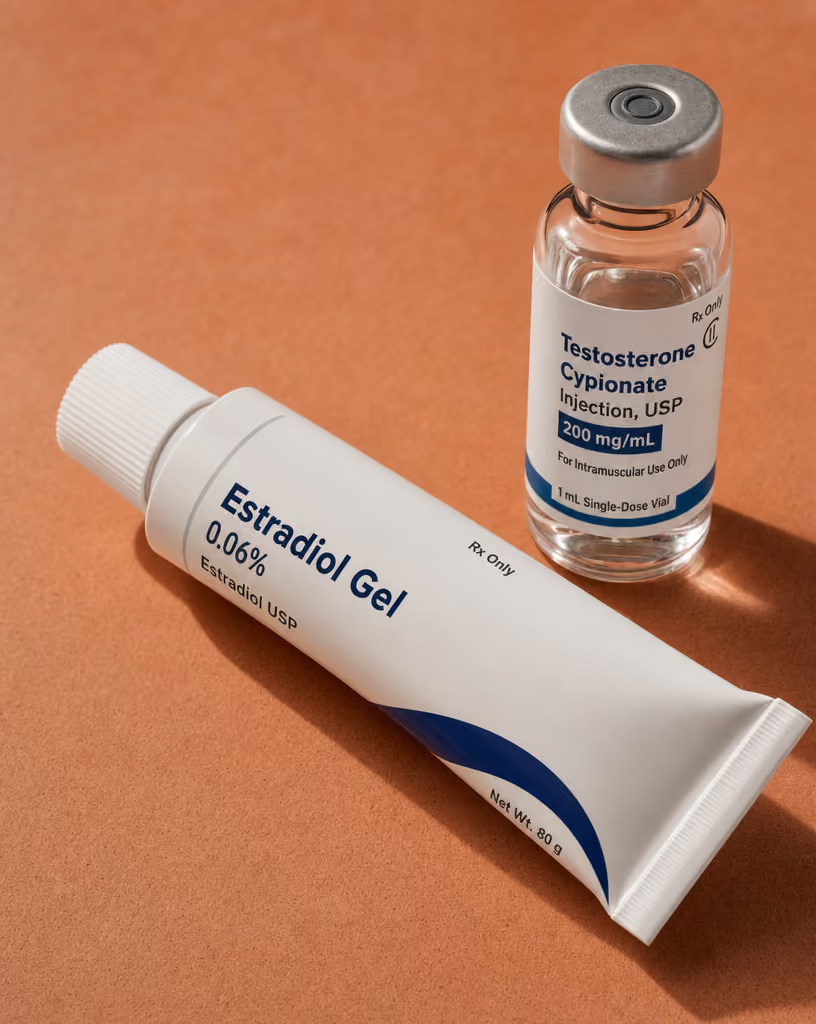
Hormone therapy in menopause, also called HRT (hormone replacement therapy) or HST in Dutch, tops up the hormones your ovaries make less and less of as you go through menopause. It centres mainly on oestrogen and progesterone, sometimes testosterone. At Menovia we work exclusively with bioidentical hormones: molecules with exactly the same structure as the hormones your body produces itself. Hormone therapy does not cure menopause, because menopause is not an illness. It is a biological life stage. But normal does not mean you have to put up with the complaints it brings, and it can noticeably reduce them. The decline in your hormones is uneven, which is why complaints can swing so much from one week to the next. Hormone therapy gives your body a steadier baseline to fall back on, so the system has to react less sharply to every fluctuation.
When is this suitable?
Hormone therapy is first and foremost intended for women with vasomotor complaints: hot flushes and night sweats. This is also the complaint with the strongest scientific support, and the one for which the Dutch GP guideline (NHG-Standaard) recognises hormone therapy as an effective treatment. Hot flushes affect 70 to 80% of women in menopause and can range from mild and occasional to several an hour, day and night. Beyond that, hormone therapy can contribute to a number of complaints that often show up in the same pattern: restless sleep, mood swings, brain fog and vaginal dryness. The evidence differs per complaint, and we tell you that honestly. For bone protection, timing plays a role: women lose 10 to 20% of their bone mass in the first five years after menopause, and 1 in 3 develops osteoporosis. Whether hormone therapy suits you depends on your complaints, your health history and your personal considerations. It is not a standard prescription, but a choice you make together with a doctor.


Why this approach
The clearest and best-supported gain is with vasomotor complaints, such as hot flushes and night sweats. Beyond that, in practice we often see improvement in sleep, mood and mental clarity, though the evidence differs per complaint. We do not promise you a fixed result or a timeline: hormone levels move, your body responds, and adjusting takes time. What we do is measure how you respond and adapt the treatment accordingly.
What it delivers
Preserved bone mass
Fewer hot flushes and night sweats
Calmer sleep
Steadier mood
More mental clarity
How it works in practice
Intake and medical questionnaires
We start with a thorough intake that centres on your complaints, your health history and your life stage.
Blood testing
After the intake, blood testing always follows. With it we carefully map your hormonal situation and other relevant bodily processes.
Medical assessment and treatment plan
On the basis of the intake, questionnaires and test results, a doctor assesses which guidance is appropriate. When hormone treatment is indicated, we work exclusively with bioidentical hormones.
Monthly monitoring and adjustment
Every 12 weeks we repeat the blood test. In addition you have a monthly consult with a doctor and beforehand you fill in the MRS questionnaire, with which we systematically map your complaints. That way we see not only what your blood values are doing, but also how you actually feel.
Frequently asked questions
What women most often ask about hormone therapy at Menovia:
What is the difference between HRT, HST and hormone therapy?
They are three words for the same thing. HRT is the English abbreviation (hormone replacement therapy), HST stands for the Dutch hormoonsuppletietherapie, and hormone therapy is the umbrella term. At Menovia it always involves bioidentical hormones.
Is hormone therapy safe?
That question cannot be answered in a single word. For many women with menopausal complaints the benefits outweigh the risks, certainly with transdermal delivery and a start within the window of opportunity. For some women it is not appropriate. It remains an individual medical judgement you make together with a doctor.
What are the side effects of hormone therapy?
In the first weeks tender breasts, mild headaches or a bloated feeling can occur while your body adjusts to the new levels. Over the longer term a slightly raised risk of thrombosis and breast cancer plays a role, depending on form, dose and duration of treatment. A doctor discusses this with you.
When can I start hormone therapy?
Once your blood results are in, usually within two weeks of the blood draw. The evidence is most favourable if you start within roughly ten years of your last period or before the age of 60. This is known as the window of opportunity. You do not have to wait until your complaints become unbearable; exactly when you start remains a decision you make together with a doctor.
Monitoring and adjustment
Hormone therapy calls for careful follow-up. A consult every month, blood testing every 12 weeks. That is why:
Each month you fill in the MRS questionnaire, so we can track your complaints objectively

Each month you discuss with a doctor how things are going and we adjust where needed
Every 12 weeks we repeat the blood test to check the dose
Drawbacks, risks and side effects
Being honest about the other side is part of the picture. Hormone therapy is not a miracle cure, and it is not the right choice for everyone. In the first weeks you may notice tender breasts, mild headaches, a bloated feeling or mood swings while your body adjusts to the new levels. These are often matters of dose or form that improve with adjustment. Oral oestrogens raise the risk of venous thrombosis slightly; transdermal oestrogen appears to raise that risk little if at all, which weighs into the choice of form. With combined hormone therapy (oestrogen plus a progestogen) there is a small extra risk of breast cancer that increases the longer you are treated; with oestrogen alone that risk is smaller. In the E3N study, involving more than 80,000 women, body-identical micronised progesterone came out more favourably than synthetic variants. The absolute risk is small, but it is not zero, and it weighs into your considerations. With a history of breast cancer, previous thrombosis, certain liver conditions or unexplained vaginal bleeding, extra caution or further investigation is needed. This always belongs in the intake conversation with a doctor, not in an online self-test. We deliberately never simply call hormone therapy safe. The right question is: is this treatment, in this form and dose, appropriate and responsible for you? That is a medical judgement a doctor makes with you.
Fixed care process
With intake, blood testing, and optional microbiome, DNA, and DUTCH test
Medical assessment by experienced doctors
Exclusively bio-identical hormones
When hormonal treatment is appropriate
Personal guidance and continuous monitoring
Scientifically grounded approach
Tailored to your body

Other treatments


Experiences from other women
Start with personal hormonal guidance
Want to find out whether hormone therapy is right for you and what your body needs during menopause? Schedule an intake consultation with Menovia.
At Menovia, you are at the center. We guide you carefully and transparently, so you can make well-informed choices about your hormonal health.
Bio-identical hormone therapy (BHRT) can be an effective and safe way to relieve menopause symptoms. By using hormones your body already knows, we help you restore your hormonal balance and improve your quality of life.
At Menovia, we offer comprehensive, tailored treatment to reduce your symptoms during menopause. Through proven hormone therapy, supplements, and lifestyle advice, we help you feel energetic and balanced again during menopause. You don't have to go through this period alone — we're here to support you, every step of the way.