
What Your DNA Reveals About Your Hormones: A Guide to Personal Health.
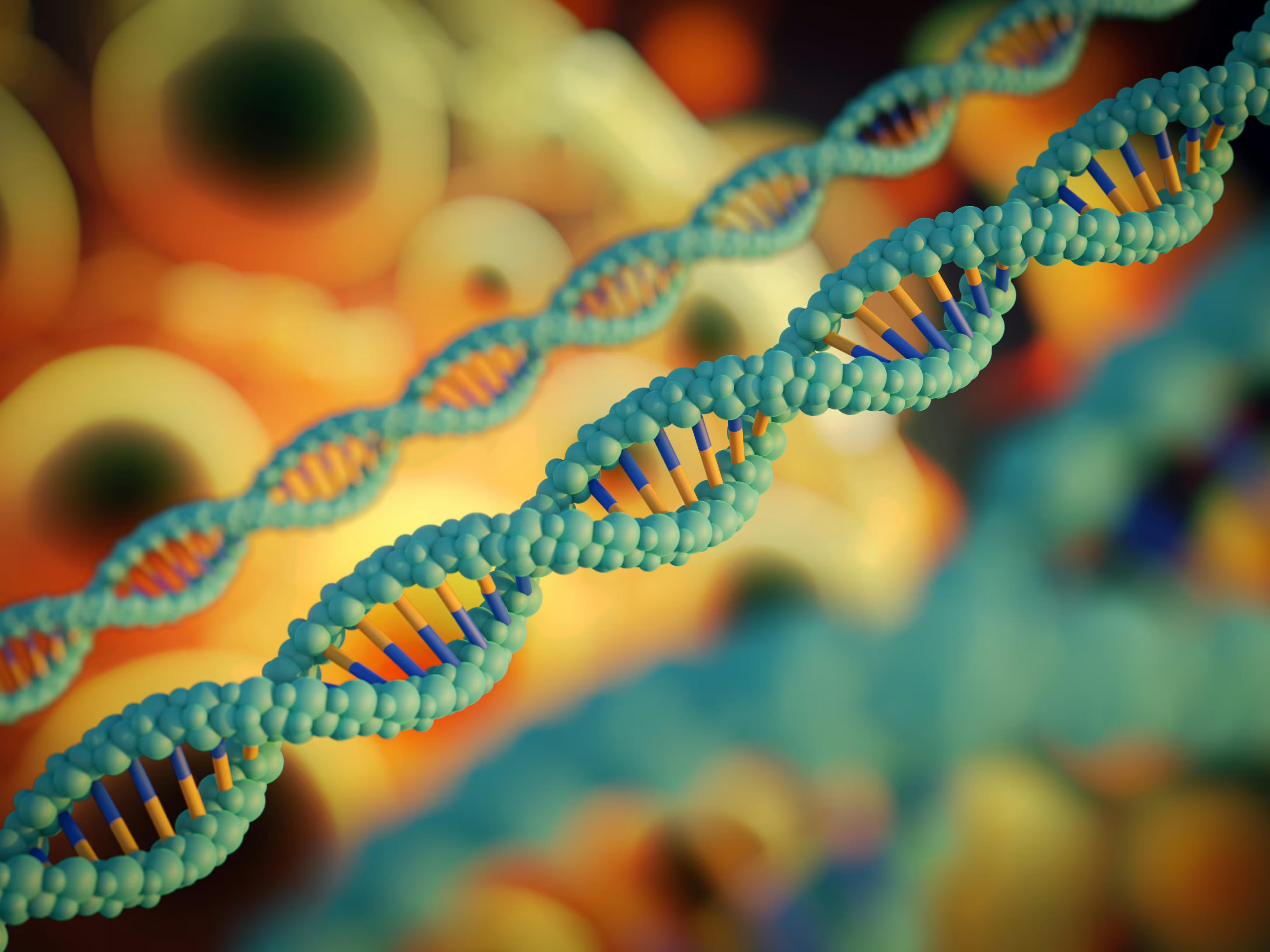
Your body is a complex ecosystem in which countless processes take place simultaneously. The invisible conductors of this orchestra are your hormones. They affect your mood, energy, metabolism, fertility, and much more. We often experience the consequences of a hormonal imbalance — from vague symptoms to chronic disorders — without understanding the underlying cause. What if the key to understanding and optimizing your hormone balance lies in your most personal document: your DNA? The blueprint for your life contains the unique instructions that determine how your body produces, processes and responds to hormones. This article is your guide to unravel the secrets of your genetics, what your DNA reveals about your hormones, and how to use this knowledge for a lifetime of vitality.
Why Your Hormones Are Essential to Your Health
Hormones are your body's chemical messengers. They travel through your bloodstream to tissues and organs and provide instructions that regulate virtually every function. Examples include your sleep-wake rhythm that is regulated by melatonin, your stress response by cortisol, your blood sugar levels by insulin, and your reproductive cycle by estrogen and progesterone. When these messengers inside the hormonal network Being in balance makes you feel energized, focused, and resilient. However, a minor disturbance in this delicate balance can cause a cascade of symptoms; this includes fatigue, weight gain, mood swings, and skin problems. It is therefore not surprising that 80 percent of female employees sometimes or regularly experience hormone-related complaints. Understanding your hormone balance is therefore not a luxury, but a fundamental step towards monitoring your overall health and well-being.
The Revolution of Genetic Insight into Hormone Management
Traditionally, hormonal health has been approached through blood tests that provide a snapshot of your hormone levels. While useful, these tests don't tell the full story. They don't explain why your mirrors are what they are. This is where the revolution of genetic research. One DNA research reveals your innate predisposition: how efficiently your body produces certain hormones, how sensitive your cells are to them, and how quickly you break them down again. Your unique genetic code is not a diagnosis, but a personal handbook. It provides in-depth insight into your unique hormonal system and allows you to act proactively, often before symptoms arise. It is the switch from reactive symptom management to proactive, personalized health care.
The Invisible Band: How Genes Propel Your Hormone
The connection between your genes and hormones is the basis of your physiology. Your DNA contains the code, the 'recipes', for the production of proteins. These proteins are the building blocks of everything in your body, including the enzymes that produce and break down hormones, and the receptors that hormones have to “click” to do their job. Your unique genetic code determines the efficiency and effectiveness of all of these biochemical processes.
Genetic Variants: Small Differences, Big Impact
No one has an identical genetic code. We all have small variations in our genes, so-called genetic variants or SNPs (Single Nucleotide Polymorphisms). These variants function as genetic markers for certain properties. An SNP is like a small misspelling in a recipe. This often has no effect, but sometimes it can subtly change the function of a protein. A known variant, for example, is in the gene that codes for the COMT enzyme. This enzyme is crucial for the breakdown of stress hormones and estrogen. A 'slow' variant of this enzyme can cause estrogen to circulate longer in your system, which can contribute to a hormonal imbalance such as estrogen dominance. These small genetic differences explain why one person is more sensitive to caffeine, responds better to a certain diet, or has an increased predisposition to specific hormonal disorders.
The Dance of Hormone Production, Transport and Breakdown
The life cycle of a hormone consists of three crucial phases, all of which are genetically influenced:
- Production (Synthesis): Genes code for the enzymes that convert the basic building blocks (such as cholesterol) into active hormones such as cortisol and sex hormones. Variants in these genes can lead to a naturally higher or lower production.
- Transport and Sensitivity: Once in the bloodstream, hormones bind to transport proteins and must “land” on receptors on target cells. The effectiveness of both the transport proteins and the sensitivity of the receptors is determined by your genes. For example, you can produce enough thyroid hormone, but if your cell receptors are less sensitive to it, you will still experience symptoms of an underactive thyroid.
- Breakdown (Metabolism): After use, hormones must be broken down and excreted safely. This occurs primarily in the liver through a series of detoxification phases, including phase 1 and phase 2. Processes such as glutathione conjugation in phase 2 are essential to make hormones water-soluble for excretion. Genetic variants can influence the efficiency of these phases, leading to a build-up of hormones or harmful by-products.
The Hormonal Network: A Complex Interplay of Systems
No hormone operates in a vacuum. They are part of a complex and interconnected network. The adrenal glands, thyroid, ovaries/testicles, and pancreas communicate constantly with each other and with the brain. Your genetic predisposition in one system can have a domino effect on others. For example, a genetic predisposition to an overactive stress response with high cortisol can suppress the production of sex hormones and slow down thyroid function. Knowing your DNA profile helps to identify the weak links in your personal hormonal network, allowing you to take targeted measures to restore overall balance.
Specific Hormonal Systems Under the Genetic Review
We study four major hormonal systems: sex hormones, stress hormones, thyroid hormones, and insulin. By zooming in on this, we can see how DNA insights provide concrete tools for improving your health.
Female Sex Hormones: Estrogen and Progesterone
The female cycle is a delicate dance between estrogen and progesterone. Genetics plays a key role in how this dance works.
- Estrogen metabolism: Estrogen must be broken down after use. This happens in the liver through different phases. Genetic variants in CYP genes (Phase 1) and the COMT gene (Phase 2) can slow these processes. A slow COMT enzyme can cause a build-up of potentially harmful estrogen metabolites. This increases the risk of estrogen dominance, with symptoms such as PMS, heavy periods, and mood swings. One ENGLISH Complete test can measure these metabolites, while a DNA test explains why you may have a tendency to accumulate. This knowledge is also relevant in fertility programs, where a test such as the Grow Baby DNA Test looks at genetic factors that may play a role.
- Progesterone sensitivity: Genes also determine how sensitive your body is to progesterone, the “calming” hormone that keeps estrogen in balance. Decreased sensitivity can make PMS symptoms worse.
Stress Hormones: Cortisol and the HPA Axis
Your response to stress isn't purely psychological; it's deeply embedded in your biology, particularly in the Hypothalamic-Pituitary-Adrenal Axis (HPA). This axis regulates cortisol production.
- Cortisol production and breakdown: Genes influence how quickly your HPA axis is activated and how much cortisol you produce. It COMT enzyme, which also breaks down stress neurotransmitters, helps determine how quickly your body clears cortisol again. Someone with a “fast” genetic variant can break down stress hormones quickly and recover quickly, while someone with a “slow” variant stays “on” longer after a stressful event.
- Receptor sensitivity: Your DNA also determines the sensitivity of your cortisol receptors. Decreased sensitivity can cause the brain to keep signaling for more cortisol even when levels are already high, which can lead to adrenal exhaustion.
Thyroid Hormones: Your Body's Thermostat and DNA
The thyroid acts as your body's thermostat and regulates your metabolism. The production and activation of thyroid hormones is a complex process that can be genetically influenced at several points.
- Hormone conversion: The thyroid gland primarily produces the inactive hormone T4. This must be converted to active T3 in the tissues. This conversion is carried out by deiodinase enzymes encoded by DIO genes. Genetic variants in DIO1 and DIO2 can make this conversion less efficient. As a result, you can have normal T4 levels in your blood, but still experience symptoms of an underactive thyroid because you are deficient in active T3 at the cellular level.
- Autoimmunity: There is also a strong genetic component for autoimmune thyroid disorders such as Hashimoto's and Graves diseases. Knowledge of this predisposition can encourage a lifestyle that calms the immune system.
Insulin: Genetic Predisposition to Sugar Regulation and Sensitivity
Insulin is the hormone that regulates your blood sugar levels. An imbalance in this lies at the basis of disorders such as insulin resistance, metabolic syndrome, and type 2 diabetes.
- Insulin production: Genes affect the ability of your pancreas to produce insulin in response to carbohydrates.
- Insulin sensitivity: Perhaps even more important is the genetic influence on the sensitivity of your cell receptors to insulin. Certain gene variants can naturally make your cells less sensitive, so you have an increased predisposition to insulin resistance. This means that your body has to produce more insulin to get glucose into the cells. When you know you have this genetic predisposition, a conscious approach to nutrition and exercise becomes a powerful preventive tool.
More than Genetics: The Power of Epigenetics and Lifestyle
Your DNA is the blueprint, but it is not an unchanging fate. The way you live — what you eat, how much you exercise, how you manage stress — determines which parts of that blueprint are “read” and reflected. This fascinating field is called epigenetics. It is the bridge between your genes and your environment, and it gives you the power to actively manage your health.
Epigenetics: The Dynamic Switching Genes On and Off
Imagine that your DNA is an immense cookbook with thousands of recipes (genes). Epigenetics determines which recipes are used today. An important mechanism here are DNA methylation changes. Lifestyle factors such as diet and stress can influence these markers. An unhealthy lifestyle can “turn off” a “good” gene that helps detoxification, while a healthy lifestyle can actually keep a “risk gene” for a certain condition inactive. Epigenetics shows that your genes listen to what you do and that you have an influence on your biological age.
Lifestyle as a Conductor of Your Hormones: Nutrition, Stress and Exercise
Your daily choices are the most important epigenetic signals that your body receives.
- Power supply: The nutrients you eat act as direct information for your genes. B vitamins are, for example, essential for the methylation process and the crucial BH4 cycle. This cycle, depending on the substance BH4 (tetrahydrobiopterin), is fundamental to the production of neurotransmitters such as serotonin and dopamine, which work closely with your hormones. A deficiency, sometimes due to genetic predisposition, can disrupt the entire chain.
- Stress: Chronic stress leads to persistently high levels of cortisol. This can cause epigenetic changes that make the stress response genes even more sensitive.
- Movement: Regular exercise can place positive epigenetic markers that improve insulin sensitivity and “turn off” inflammatory genes.
How Environmental Factors Affect Your DNA-Hormone Interaction
In addition to your direct lifestyle choices, your hormonal system is influenced by the environment. Every day, we are exposed to endocrine disrupting chemicals, known as xenoestrogens, found in plastics, cosmetics, pesticides and cleaning products. These chemicals can imitate or block the way your own hormones work. Your genetic capacity for detoxification determines how well your body can process these substances. If you have a genetically slower detoxification, you are more vulnerable to the negative effects, which can lead to increased oxidative stress. This cell damage caused by reactive oxygen particles lies at the root of many chronic conditions. Reducing exposure to these chemicals and supporting your body's natural detoxification through food then becomes an important strategy for maintaining hormonal health.
From Insight to Action: Shaping Your Personal Hormone Plan
Knowledge is power, but only when it is translated into action. Unraveling your DNA profile is the first step. The next, and most crucial, step is to translate these insights into a concrete and personalized plan for your health. This is where theory meets practice and a hormone management program takes shape.
The Way to Insight: DNA and Hormone Tests
To get a complete picture of your hormonal status, a combination of tests is often ideal.
- DNA test: One DNA research like the iGene DNA test, usually performed via a simple saliva sample, reveals your genetic predisposition. It tells you where your potential strengths and weaknesses lie. This is your static blueprint.
- Hormone tests: Functional hormone tests such as the ENGLISH Complete test (urine) or a saliva hormone test measure the actual levels of your hormones and their metabolites at any given time. This provides a dynamic picture of your current situation. The combination is powerful: the DNA test explains why your hormone levels may be out of balance, and the hormone test confirms what happening at the moment. All of this can be part of a wider medical laboratory program.
A Personalized Lifestyle Plan Based on DNA Insights
With your DNA profile in hand, you can stop guessing and start optimizing in a targeted manner.
- Customized food: Do you have a knack for insulin resistance? Then a low-carb approach is wise. Slow estrogen breakdown? Focus on fiber and cruciferous vegetables. This is the core of orthomolecular medicine: using the right molecules (nutrients) in the right place.
- Movement that works: Your genetic profile can even provide insight into which type of exercise is most effective for you, from HIIT to endurance training.
- Supplements as support: A DNA test can reveal an increased need for specific nutrients, such as active B vitamins for methylation or antioxidants to oxidative stress to counteract.
- Stress management: If you know that you are genetically slower to recover from stress, integrating relaxation techniques such as meditation or yoga does not become a luxury, but a necessity.
Pharmacogenetics: The Influence of Genes on Medication and Therapy
Pharmacogenetics studies how your DNA influences your response to medication. One pharmacogenetic test may result in a pharmacogenetic passport, which is crucial for hormonal treatments.
- Effectiveness and dosage: Genetic variants in liver enzymes (such as the CYP family) determine how quickly your body breaks down a drug. This is very relevant when it comes to hormonal contraception. As described in the medical journal Obstetrics & Gynaecology, a specific gene variant can cause it to Implanon NXT implant breaks down too quickly, which reduces effectiveness. This underlines the need for personalized choices, especially now that use of hormonal contraceptives decreases.
The Future of Your Health: Prevention via DNA (“Phase 0")
Traditional health care is largely reactive. The insights from your DNA open the door to a new, proactive approach that we 'phase 0'can name: the stage before the very first symptoms, where we act preventively based on genetic predisposition to reduce the risk of high blood pressure or to reduce other disorders.
The Importance of Early Insight: Getting Ahead of Disorders
Many long-term, hormone-related diseases develop slowly over many years. By knowing your DNA profile, you can identify risks long before they become a problem.
- Prevention: If you know you have a genetically inefficient estrogen breakdown, you can support your liver to reduce the risk of estrogen-related disorders. Knowledge about genetic coagulation factors such as Factor V Leiden, or a predisposition to rarer conditions such as the adrenogenital syndrome, enables you and your doctor to be vigilant and make proactive choices (this is not medical advice, but information).
- Understanding complex complaints: Genetic insights can also play a role in understanding complex syndromes such as Mast Cell Activation Syndrome whether histamine intolerance, where hormones often play a modulating role. Large-scale studies, such as those carried out by the MIND Consortium, the complex relationships between genes, neurology and overall health continue to unravel.
Living According to Your Genetic Blueprint: A Guide to Long-Term Health
Your DNA profile is not a conviction, but a compass. It guides your choices and helps you navigate to optimal health. Living according to your genetic blueprint does not mean being limited, but rather that you can focus your energy and efforts on what is most effective for your body. It helps you understand why you feel the way you do and gives you the tools to take control. It's an investment in your future, a guide that helps you not only live longer but, above all, healthier and more vital.
Conclusion: Take Control of Your Hormonal Health
The complex interaction between your genes and hormones is at the heart of your well-being. What was once a “black box” is now becoming increasingly transparent thanks to advances in genetics.
This information is intended as an educational resource and does not replace medical advice, diagnosis, or treatment. If you have symptoms or questions about your personal situation, we recommend consulting a doctor.
Free guide: menopause, a broader perspective
The menopause is about more than just hot flashes. In our free menopause guide, our doctors explain the hormonal changes happening in your body, the symptoms you might not immediately associate with it, and the treatment options available. Written in plain language and medically backed.

Read more blogs about the menopause


Menovia
Sign up today