
Why you sleep poorly during menopause and how to fix it
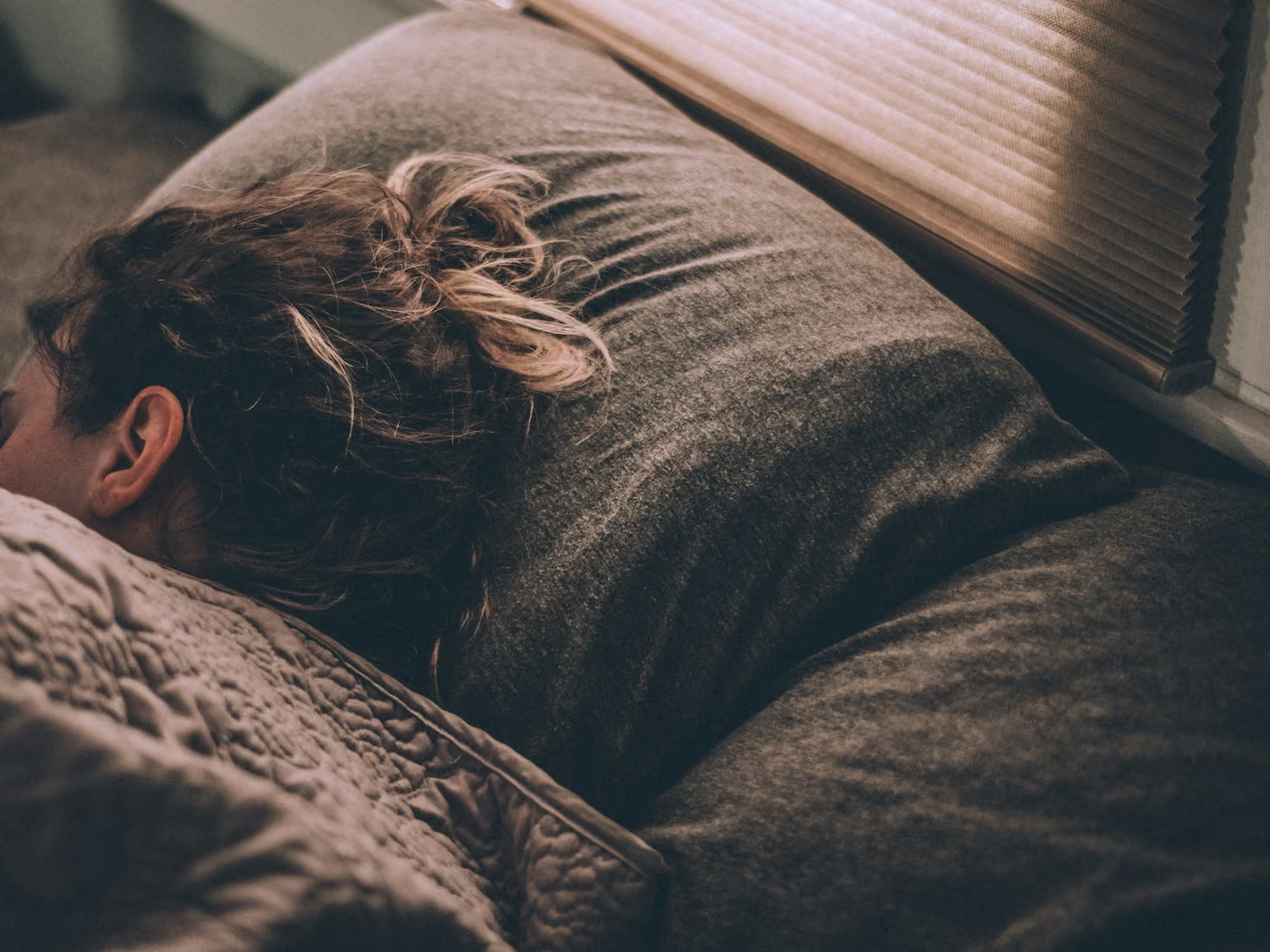
Sleep is one of the first things disrupted by menopause — and one of the last to recover. Many women underestimate how fundamentally poor sleep affects them: impacting mood, concentration, weight, cortisol levels, and immune system function. Conversely, restoring your sleep triggers a chain reaction of recovery that goes far beyond just waking up feeling rested.
Why menopause disrupts your sleep
Several hormonal mechanisms are triggered simultaneously:
Progesterone decline. Progesterone has a direct calming effect on the nervous system via GABA receptors in the brain. When progesterone levels drop — which happens early in perimenopause — this calming effect diminishes. Falling asleep takes longer, staying asleep becomes more difficult, and sleep is less deep and restorative.
Hot flashes and night sweats. A hot flash at night wakes you up. You change your clothes, cool down, try to fall back asleep — and your sleep cycle is broken. For women with frequent night sweats, sleep can be reduced by up to 60-90 minutes per night.
Cortisol dysregulation. Estrogen normally dampens the cortisol response. As estrogen levels fall, cortisol is less effectively inhibited, leading to higher baseline levels at night. Cortisol is a wakefulness hormone: high levels at night make waking up early and being unable to fall back asleep a common complaint.
Melatonin production decreases with age. Melatonin — the sleep hormone produced in darkness — naturally declines with age. Menopause indirectly amplifies this effect through its influence on the biological clock.
Which sleep problems are typical of menopause?
- Difficulty falling asleep despite being tired
- Waking up in the middle of the night, often between 2 and 4 a.m.
- Waking up early and being unable to fall back asleep
- Light sleep — waking up from small noises or movement
- Night sweats that interrupt your sleep
- Vivid, disturbing dreams or nightmares
- Exhausted during the day, but "too tired to sleep" at night
The cascade effects of sleep deprivation
Chronic poor sleep is not harmless. It disrupts:
- Cortisol — sleep deprivation increases cortisol, which in turn further disrupts the balance of sex hormones. A vicious cycle.
- Insulin sensitivity — insulin sensitivity drops after just one bad night. Chronic sleep deprivation contributes to weight gain around the abdomen.
- Mood and cognition — serotonin and dopamine are not sufficiently replenished during disrupted sleep. Irritability, anxiety, and brain fog are direct consequences.
- Immune function — during deep sleep, inflammatory substances are cleared and immune cells are produced. Chronic sleep deprivation undermines your resistance.
- Cardiovascular health — sleep deprivation increases blood pressure and long-term inflammatory markers.
What BHRT does for your sleep
Bioidentical hormone therapy is the most direct and effective intervention for menopausal sleep problems — because it addresses the hormonal root causes:
- Bioidentical progesterone restores the GABA-calming effect in the brain. Women describe it as "finally getting a deep, restful sleep again." At Menovia, progesterone is taken as a capsule before bedtime — it also has a direct sleep-promoting effect.
- Transdermal estradiol reduces hot flashes and night sweats — thereby eliminating the most direct disruptor of sleep.
- Cortisol reduction follows indirectly: fewer hot flashes and more progesterone = better sleep = lower cortisol levels the next morning.
Women at Menovia report improved sleep as one of the first and most noticeable effects of BHRT — often within just two to three weeks of starting. More about our approach.
Sleep hygiene: optimizing your environment
BHRT works better with a supportive sleep environment:
- Temperature: keep the bedroom cool — 17-19°C is ideal, especially if you experience night sweats. A lighter duvet or layered bedding can help with hot flashes.
- Consistency: go to bed and wake up at the same time every day — even on weekends. This anchors your biological clock.
- Light: avoid bright lights and screens for at least 60 minutes before bedtime. Blue light suppresses melatonin. Use a blue light filter or glasses if necessary.
- Caffeine: stop after 2:00 PM. Caffeine has a half-life of 5-7 hours — a cup of coffee at 4:00 PM can still have an effect at midnight.
- Alcohol: alcohol provides a false sense of relaxation but disrupts sleep architecture — resulting in less deep sleep and more interruptions during the second half of the night.
Supplements that support sleep
- Magnesium glycinate — supports muscle and nervous system relaxation. 200-400 mg before bed is a common dosage.
- Melatonin — for difficulty falling asleep or jet lag. Low doses (0.5-1 mg) are more effective than high ones. Not suitable as a long-term solution.
- L-theanine — an amino acid from green tea that promotes relaxation without daytime drowsiness. Effective for anxiety-related sleep issues.
Cognitive Behavioral Therapy for Insomnia (CBT-I)
If sleep problems persist—even after hormone levels have normalized—CBT-I is the most evidence-based non-pharmacological treatment. It focuses on sleep-restricting habits, negative thoughts about sleep, and breaking the cycle of anxiety surrounding sleeplessness. It is more effective than sleep medication in the long term, with no side effects.
When sleep problems require specific attention
Sleep apnea increases during postmenopause, as estrogen also has a protective effect on the upper airways. If your partner mentions that you snore, or if you never wake up feeling rested despite getting enough hours of sleep, it is worth ruling out sleep apnea through a sleep study.
Poor sleep during menopause is real, biological, and treatable. It does not have to be accepted as an inevitable price of aging.
This information is intended as an educational resource and does not replace medical advice, diagnosis, or treatment. If you have symptoms or questions about your personal situation, we recommend consulting a doctor.
Free guide: menopause, a broader perspective
The menopause is about more than just hot flashes. In our free menopause guide, our doctors explain the hormonal changes happening in your body, the symptoms you might not immediately associate with it, and the treatment options available. Written in plain language and medically backed.

Read more blogs about the menopause
Menovia
Sign up today