
Testosterone for Women in Menopause: Libido, Energy, and Treatment

When people talk about hormones and menopause, the conversation is almost always about oestrogen and progesterone. Testosterone stays in the background, even though women produce it too. At the same time, the evidence for treating women with testosterone is narrower than the hype suggests. This article sets out what testosterone does, and does not, do for women.
In short
Yes, women make their own testosterone, in the ovaries and the adrenal glands, and levels decline gradually from around the age of 30. The best-supported use of testosterone therapy is a carefully diagnosed, persistent low sexual desire after menopause (The Menopause Society, 2024). For fatigue, brain fog, mood or muscle mass, testosterone is not supported as a treatment. In the Netherlands, testosterone for women is not registered and is not reimbursed. Whether it is appropriate is an individual medical decision, based on your symptoms, your history and your blood values (total and free testosterone, plus SHBG).
Do women have testosterone too?
Yes. The name suggests a male hormone, but testosterone is a female hormone as well. Women make it in the ovaries and the adrenal glands, in smaller amounts than men. In women it plays a role in sexual desire and, alongside oestrogen, helps maintain bone. Other possible roles, such as energy, concentration, mood and muscle strength, are being studied, but the evidence is not strong enough for them to serve as treatment goals.
Where is testosterone made, and when does it decline?
Testosterone in women is produced in the ovaries and the adrenal glands. Unlike oestrogen and progesterone, which fall relatively quickly around menopause, testosterone declines gradually from around the age of 30. By menopause, levels are on average lower than in young adulthood. That is why some women notice changes years before menopause itself.
When can testosterone be considered?
A drop in sexual desire can have many causes: poor sleep, pain during sex, vaginal dryness, mood, relationship factors, medication and physical conditions. A low libido is therefore not automatically a sign that testosterone is needed. In its 2024 guidance, The Menopause Society supports testosterone therapy for selected postmenopausal women with a carefully diagnosed hypoactive sexual desire disorder, after other causes have been assessed. At Menovia, a BIG-registered doctor first maps your full pattern of symptoms before testosterone is discussed.
When does it make sense to add testosterone to hormone therapy?
Only for a persistent, distressing low sexual desire (hypoactive sexual desire disorder, HSDD) in women who already use oestrogen, and progesterone where needed, and in whom other causes have been assessed and ruled out. That is the single use the international consensus supports. The Global Consensus Position Statement on the Use of Testosterone Therapy for Women concludes that the available evidence supports testosterone only for a carefully diagnosed HSDD after menopause, and not for any other symptom or condition.
In practice this means testosterone is not a stand-alone treatment but sometimes an addition to an existing hormone treatment. The foundation is set first with oestrogen, and with progesterone if you have a uterus. Only if desire then stays persistently low, and other causes such as sleep, pain during sex, mood, relationship factors and medication have been assessed, might a doctor consider testosterone. For energy, muscle mass, mood or bone, adding testosterone is not supported, and we cannot promise that benefit on the current evidence.
If adding it appears appropriate, testosterone is used in a low, female-physiological dose. In the Netherlands this is off-label and always under a doctor's supervision, with monitoring of your symptoms and blood values. Whether adding it makes sense remains an individual medical decision within your treatment plan, together with your doctor.
What testosterone does not do (based on current evidence)
Testosterone is not a general fix for fatigue, brain fog, low mood, weight gain or loss of muscle in menopause. The Menopause Society does not support testosterone for these complaints. They often have other causes, including sleep, thyroid function, glucose regulation and deficiencies such as vitamin D or B12, which we take into account in our blood testing. A hormone treatment should match the complaint you actually want to treat.
How is testosterone measured?
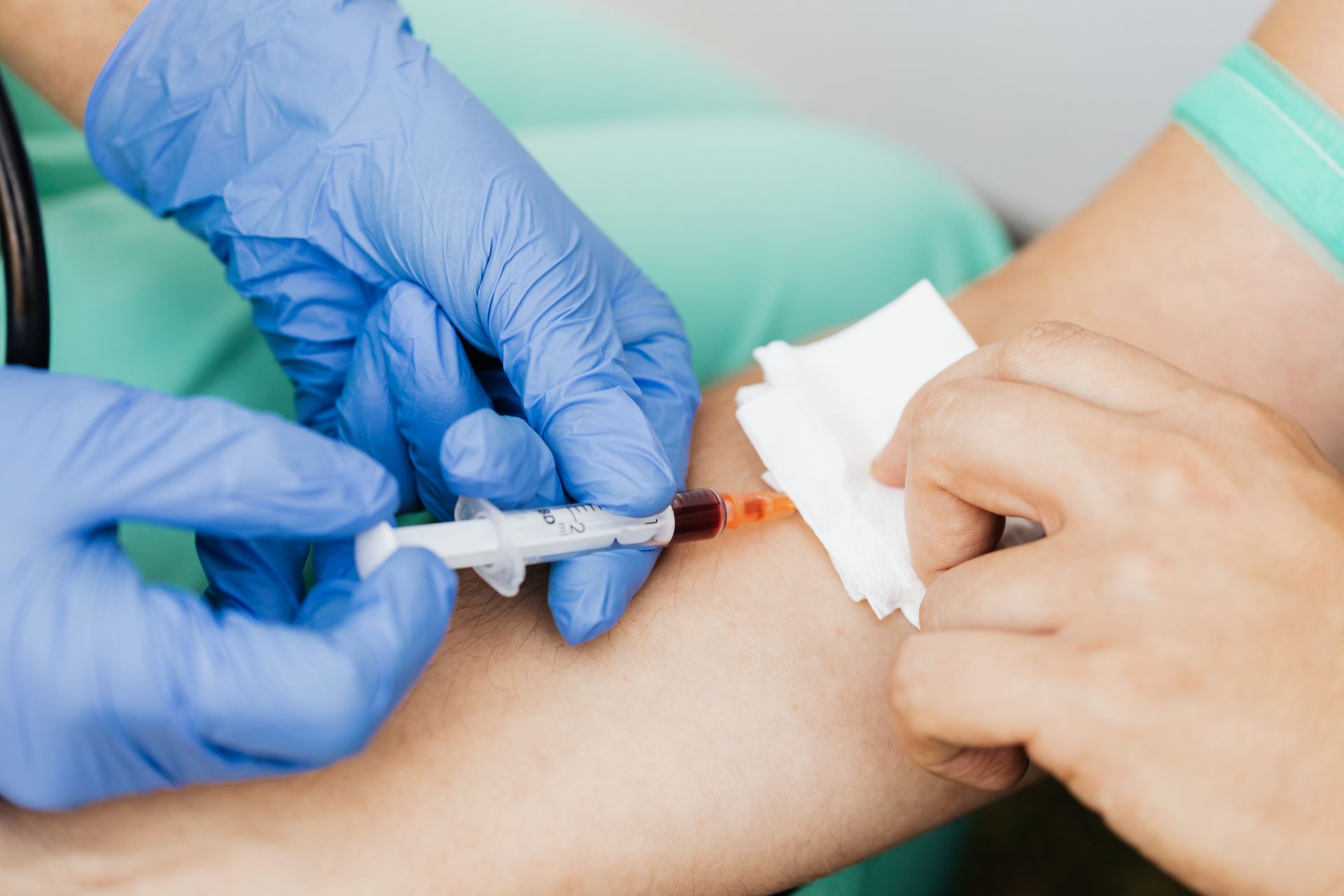
Through blood testing, with some nuance. Total testosterone gives a first impression, but free testosterone is more clinically relevant: it is the fraction that is biologically active. SHBG (sex hormone binding globulin) binds testosterone and makes it inactive; a high SHBG can mean little free testosterone is available even when the total looks normal. That is why we measure total testosterone, free testosterone and SHBG. Blood values are one part of the assessment, alongside your symptoms and your history.
Can you raise testosterone yourself?
Raising testosterone is not a do-it-yourself project. There are no supplements that reliably raise testosterone levels in women, and self-dosing is not safe. A healthy lifestyle, with enough sleep, strength training and stress regulation, supports your overall hormonal health, but that is different from a medical testosterone treatment. If treatment is appropriate, it is only ever done on prescription and under a doctor's supervision.
Administration and monitoring
When a doctor considers testosterone appropriate, Menovia works with bio-identical testosterone in a low, individually tailored dose, usually as a cream applied to the skin. A cream can be dosed more precisely than a gel, which matters because the right dose varies a great deal from woman to woman. During a treatment there is monthly contact with a doctor, the MRS questionnaire is completed beforehand, and blood testing is repeated every 12 weeks, so that symptoms, any side effects and values are discussed together. Do not change the dose yourself; if new symptoms or doubts come up, talk to your doctor.
Registration and reimbursement
In the Netherlands, testosterone for women is not registered as a medicine. When a doctor still considers it appropriate, it is provided through a personal prescription and a compounded (custom-prepared) preparation. Compounded medication, DHEA and testosterone for women are not reimbursed, even though supplementary insurance has, since May 2026, covered part of the consultations.
Frequently asked questions
Do women have testosterone? Yes, made in the ovaries and adrenal glands, in smaller amounts than in men.
Does testosterone help against fatigue or brain fog? That is not supported. The evidence is limited to a carefully diagnosed low sexual desire after menopause.
Is testosterone for women registered or reimbursed in the Netherlands? No, on both points. It is only available through an individual, compounded prescription and falls outside reimbursement.
Testosterone as a cream or a gel? At Menovia, a cream, because it can be dosed more precisely.
Do I need to be on hormone therapy before testosterone is added? Usually yes. Testosterone is considered as an addition for a persistent low libido once the foundation with oestrogen, and progesterone where needed, is in place and other causes have been assessed.
Summary
Testosterone is a female hormone too, and it declines gradually from around the age of 30. Its supported use is limited to a carefully diagnosed low sexual desire after menopause; for energy, brain fog, mood or muscle mass it is not supported. In the Netherlands it is not registered and not reimbursed. Whether testosterone is appropriate is a decision a doctor makes based on your symptoms, your history and your blood values, as part of a broader treatment plan.
This information is intended as an educational resource and does not replace medical advice, diagnosis, or treatment. If you have symptoms or questions about your personal situation, we recommend consulting a doctor.
Free guide: menopause, a broader perspective
The menopause is about more than just hot flashes. In our free menopause guide, our doctors explain the hormonal changes happening in your body, the symptoms you might not immediately associate with it, and the treatment options available. Written in plain language and medically backed.
Read more blogs about the menopause
Menovia
Sign up today