
Bioidentical hormones: what they are and who they are suitable for
Hormones with exactly the same structure as the ones your body makes itself. What that means, how they differ from synthetic hormones, and who they may be suitable for.
What are bioidentical hormones?
Bioidentical means: identical in molecular structure to the hormones your own body produces, such as estradiol, progesterone and testosterone.
Because the shape is the same, your receptors bind them the same way they bind your own hormones. The structure determines how a hormone behaves in your body.
Bioidentical is not the same as ‘natural’. They are made in a laboratory from plant-based raw materials, but the end product is a precisely defined, prescription-only pharmaceutical substance.
Important to be honest about: bioidentical does not automatically mean safer. Whether hormone therapy is responsible for you is something a doctor assesses on the basis of your situation.
Menovia works within the
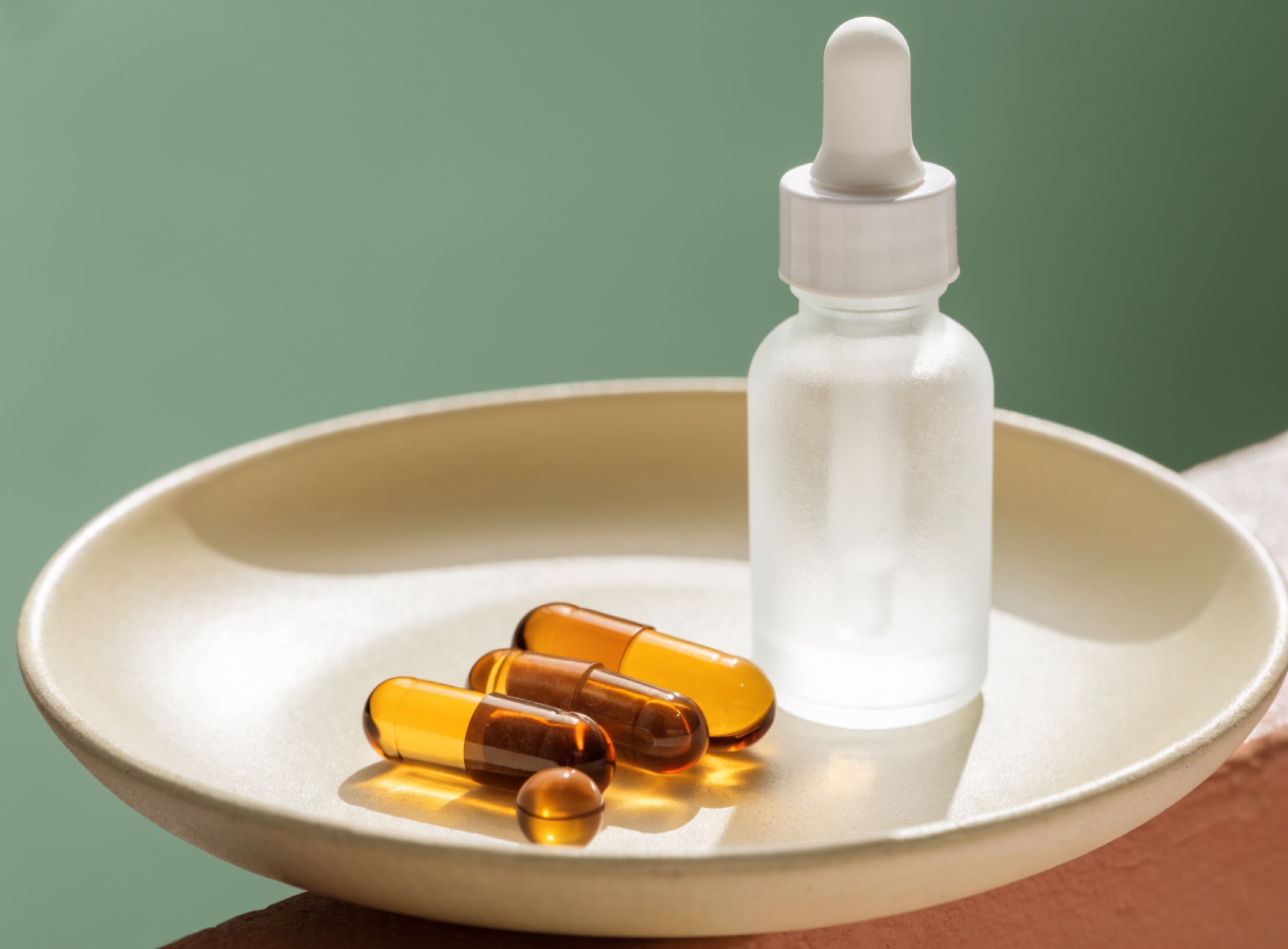
The difference from synthetic and conventional hormones
Two things are often conflated. The first is bioidentical versus synthetic: a hormone with exactly the same structure as your own hormone, or a variant of it. The second is registered versus compounded. These are separate axes, because many conventional, registered preparations are themselves already bioidentical, such as estradiol patches and micronised progesterone. Where solid research does exist: the French E3N study, with more than 80,000 women, found no significantly raised breast cancer risk for the combination of estrogen with bioidentical progesterone, whereas such a rise was seen with certain synthetic progestogens. That is one reason we work within the bioidentical variant. It is emphatically not proof that every bioidentical hormone is without risk for everyone.
Who is bioidentical hormone therapy suitable for?
Bioidentical hormone therapy may suit women with menopause-related complaints that affect their daily functioning, and for whom a doctor finds no contraindication after assessment. Think of complaints such as hot flushes, sleep problems, brain fog, mood swings, vaginal dryness and joint or muscle complaints.

Hot flushes and night sweats
Poor sleep and fatigue

Brain fog and concentration

Mood swings

Vaginal dryness and libido
Registered or compounded
Bioidentical hormones exist in two forms, and that distinction is clinically relevant. Both are prescription-only and belong to a medical pathway.


How Menovia works with bioidentical hormones
We do not see hormones as a standalone product, but as part of a system. Our approach rests on four pillars.

Measure first
Before anything is prescribed, we do blood testing for, among others, estradiol, progesterone, testosterone, LH and FSH. Blood does not tell the whole story; it is a snapshot and one part of a broader puzzle.

Tailored dosing
Tuned to your blood values, your pattern of complaints and, in the extended pathway, DNA information about how your body breaks down hormones. Exclusively bioidentical.
A BIG-registered doctor
Prescribing and adjusting is done by a BIG-registered doctor (the Dutch medical register) with deeper expertise in menopause. No self-help, no algorithm that spits out a prescription.

Monitoring and adjustment
You have a monthly consultation and we repeat the blood test every twelve weeks. Beforehand you fill in the MRS questionnaire. A pathway lasts at least six months.
Experiences of other women
Free guide: menopause, a broader view
Our doctors explain how the hormonal system connects to sleep, mood, bones and the cardiovascular system, and what role hormone therapy can play in it.
Possible side effects and contraindications
Hormone therapy is medication, and medication can cause side effects. Especially in the first weeks: tender breasts, headache, nausea, fluid retention or skin reactions with delivery through the skin. Much of this is temporary or eases after a dose adjustment. Extra care, or not suitable, applies among others with:
Hormone-sensitive cancer

Thrombosis or pulmonary embolism

Active liver disease
Cardiovascular conditions
Unexplained vaginal bleeding

‘Buying’ bioidentical hormones: how do you get them?
Bioidentical hormones are prescription-only medication. You do not buy them in a webshop and you do not order them loose online. The route always runs via a doctor: after intake and blood testing, the doctor determines whether hormone therapy is appropriate, and which form and dose. You then collect the medication with a prescription at your own pharmacy or a compounding pharmacy. Be cautious with parties that offer hormones without a prescription or without a doctor.
Reimbursement, referral and waiting time
A few practical points that often come up.
Reimbursement
Since May 2026, part of the consultations is reimbursed through supplementary insurance, under the category ‘natuurkundig consult’. The amount differs per insurer. Registered bioidentical hormones on prescription are largely reimbursed through your own pharmacy; compounded hormones usually are not.
No referral needed
You do not need a referral from your GP to start with Menovia. You can request an introduction yourself.
No waiting list
We work online and without a waiting list. A pathway lasts at least six months, because hormone levels shift and adjusting takes time.
About bioidentical hormones
What exactly are bioidentical hormones?
Are bioidentical hormones safer than synthetic ones?
What is the difference between bio-identical and ‘natural’?
Can I get bioidentical hormones from my GP?
Can I buy bioidentical hormones without a prescription?
What are the potential side effects of bioidentical hormones?
Who are bioidentical hormones not suitable for?
How soon will I notice the results?
Our doctors will look at it with you
Recognise your complaints and want to know whether bioidentical hormone therapy could be an option? You can have a no-obligation introduction or sign up for an intake.