
Vitamin B12 and Your Hormones: Estrogen, Cortisol & Thyroid

Mood swings, fatigue, tingling in your hands or feet, trouble concentrating: common complaints during menopause. But when they persist despite good hormone care, it is worth checking a lesser-known player: vitamin B12.
B12 is not a hormone, but it plays an essential role in the processes that produce, activate and break down hormones. A B12 deficiency can worsen menopausal complaints and undermine how well hormone therapy works.
Why is B12 so important for your hormonal balance?
Vitamin B12 is involved in three fundamental processes that are directly relevant to hormonal health.
Methylation. B12 is an essential co-factor in methylation, a biochemical process involved in making and breaking down neurotransmitters (serotonin, dopamine, noradrenaline), hormones (including estrogen, via the COMT enzyme) and DNA regulation. A shortage of B12 disrupts this process and can affect how estrogen is broken down.
Nervous system support. B12 is essential for the myelin sheath, the protective layer around nerve fibres. A deficiency leads to neurological complaints: tingling, numbness, concentration problems and mood changes. These overlap strongly with menopausal complaints, which is exactly why a B12 deficiency is easily missed.
Energy and red blood cell formation. B12 is needed to make red blood cells. A deficiency leads to megaloblastic anaemia: fatigue, shortness of breath and a pale complexion. During menopause, when fatigue is often already prominent, a B12 deficiency can make it considerably worse.
Who is at risk of a B12 deficiency?
- Women who eat little or no animal products (B12 is found almost exclusively in animal sources: meat, fish, eggs, dairy)
- Women who use acid-reducing medication (PPIs), as stomach acid is needed to absorb B12 from food
- Women over 50, as stomach function and intrinsic-factor production decline with age
- Women with the genetic MTHFR variant, who process active B12 (methylcobalamin) less efficiently
- Women who use metformin (for diabetes or PCOS), which can inhibit B12 absorption
Which B12 deficiency symptoms look like menopausal complaints?
- Fatigue and low energy
- Concentration problems, forgetfulness, brain fog
- Mood swings, irritability, low mood
- Tingling or numbness in hands and feet
- Sleep problems
- Muscle weakness
Recognise this pattern? It is worth having your B12 measured, especially if your complaints do not fully improve with hormone therapy.
How is B12 measured, and what is a good level?
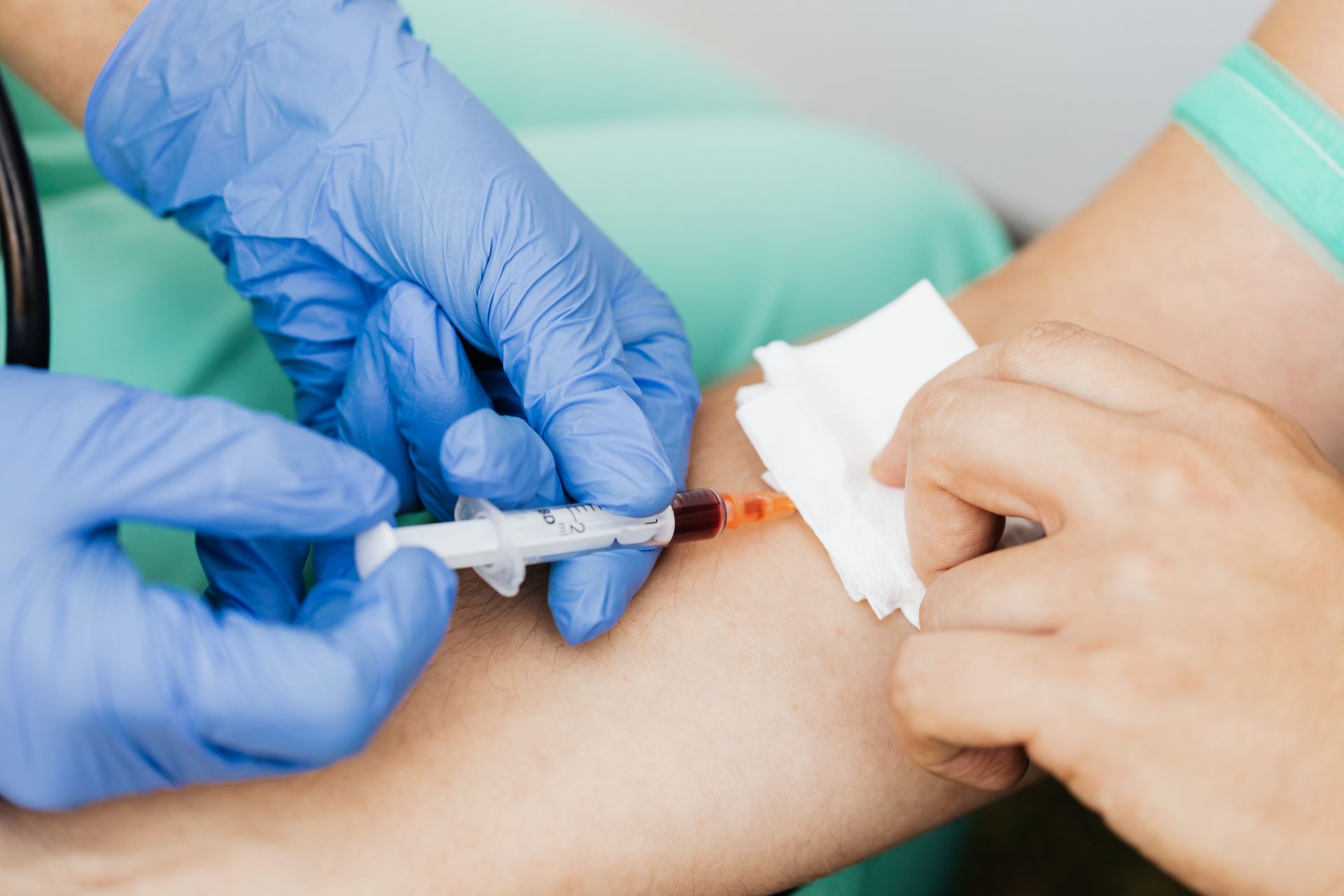
A standard serum B12 test gives a first indication but has limits: serum levels can look normal while there is still a functional deficiency at cell level. Additional markers give a fuller picture:
- Holotranscobalamin (active B12): the fraction of B12 directly available to your cells, more sensitive than total B12
- Methylmalonic acid (MMA): rises in a functional B12 deficiency, even when serum B12 looks normal
- Homocysteine: rises with a B12 or folate deficiency; raised homocysteine is also a cardiovascular risk factor
At Menovia we include B12 in the blood panel when complaints give reason to. Read more about what we measure.
Which form of B12 supplement is best?
Not all B12 supplements are equal:
- Methylcobalamin is the active, directly usable form, and the preferred choice for women with the MTHFR variant
- Cyanocobalamin is the synthetic, most-used form; the body must convert it, which is less efficient in some women
- Adenosylcobalamin is the mitochondrial form and plays a role in energy production
With a confirmed deficiency, sublingual (under the tongue) or injected B12 is often more effective than oral supplements, especially when the cause lies in reduced stomach absorption.
B12 supports hormone therapy, it does not replace it
B12 supplementation does not replace hormone therapy. But it can support how well it works, by supporting methylation, neurotransmitter synthesis and your energy metabolism. A treatment plan that addresses both the hormonal base and the nutritional foundation tends to work better than either part alone.
At Menovia, when complaints persist we always look at the full picture, including the nutrients that support or undermine the hormonal system. That is what personalised care means.
Frequently asked questions
Can a B12 deficiency cause menopause-like symptoms? Yes. A B12 deficiency can cause fatigue, brain fog, mood changes and tingling, which overlap strongly with menopausal complaints. A blood test, ideally including active B12 and MMA, helps tell them apart.
Should I take B12 during menopause? Preferably only if a test shows a deficiency, or if you are in a risk group (plant-based diet, over 50, PPIs or metformin). Measure first, then supplement.
Does B12 replace hormone therapy? No. B12 can support how well hormone therapy works, but it does not replace it. The two address different parts of the picture.
This information is intended as an educational resource and does not replace medical advice, diagnosis or treatment. If you have symptoms or questions about your personal situation, we recommend consulting a doctor.
Free guide: menopause, a broader perspective
The menopause is about more than just hot flashes. In our free menopause guide, our doctors explain the hormonal changes happening in your body, the symptoms you might not immediately associate with it, and the treatment options available. Written in plain language and medically backed.

Read more blogs about the menopause


Menovia
Sign up today