
Belly Fat During Menopause: Why It Accumulates There

Belly fat that concentrates around your waist during menopause has a hormonal cause, not a lack of willpower. Declining estrogen levels shift fat storage from your hips and thighs to your belly, and this article explains how that mechanism works and which steps actually make a difference.
In short
Declining estrogen levels can shift fat distribution during menopause from the hips and thighs to the belly. Decreasing insulin sensitivity and muscle mass loss can reinforce that shift. Strength training, enough protein, and appropriate blood testing help you make targeted choices. Always discuss hormone therapy or GLP-1 medication with a BIG-registered doctor; these treatments aren't right for everyone.
Why belly fat accumulates there specifically during menopause
Before menopause, your body mainly stores fat in a gynoid pattern: around the hips, buttocks, and thighs. Once your estrogen level declines, that pattern shifts toward an android fat distribution, with fat concentrating around the belly and organs. The North American Menopause Society (NAMS) describes this shift as a direct result of the hormonal phase, not of aging alone.
There's more at play than estrogen alone. Insulin sensitivity decreases as hormone levels decline, which makes your body process glucose less efficiently and store it as belly fat more quickly. At the same time, you lose muscle mass during this life stage, which lowers your resting metabolism: less muscle means less calorie burn at rest, even without your eating pattern changing. Women struggling with weight gain during menopause often recognize this pattern: the same diet and the same exercise suddenly produce a different body composition. That's not a coincidence, it's a measurable shift in how your body processes and stores energy.
This shift is more than an aesthetic issue. Visceral belly fat, the fat around your organs, is linked to a higher cardiovascular risk than fat on the hips or thighs, as research first flagged by Harvard Women's Health Watch back in 1999 and confirmed by additional research since. That makes measuring and tracking waist circumference more relevant than just your weight on the scale.
What you need
You don't need expensive equipment to get started, just clarity about what's happening in your body.
- A measuring tape to track your waist circumference weekly, fat around the organs changes measurably faster than body weight
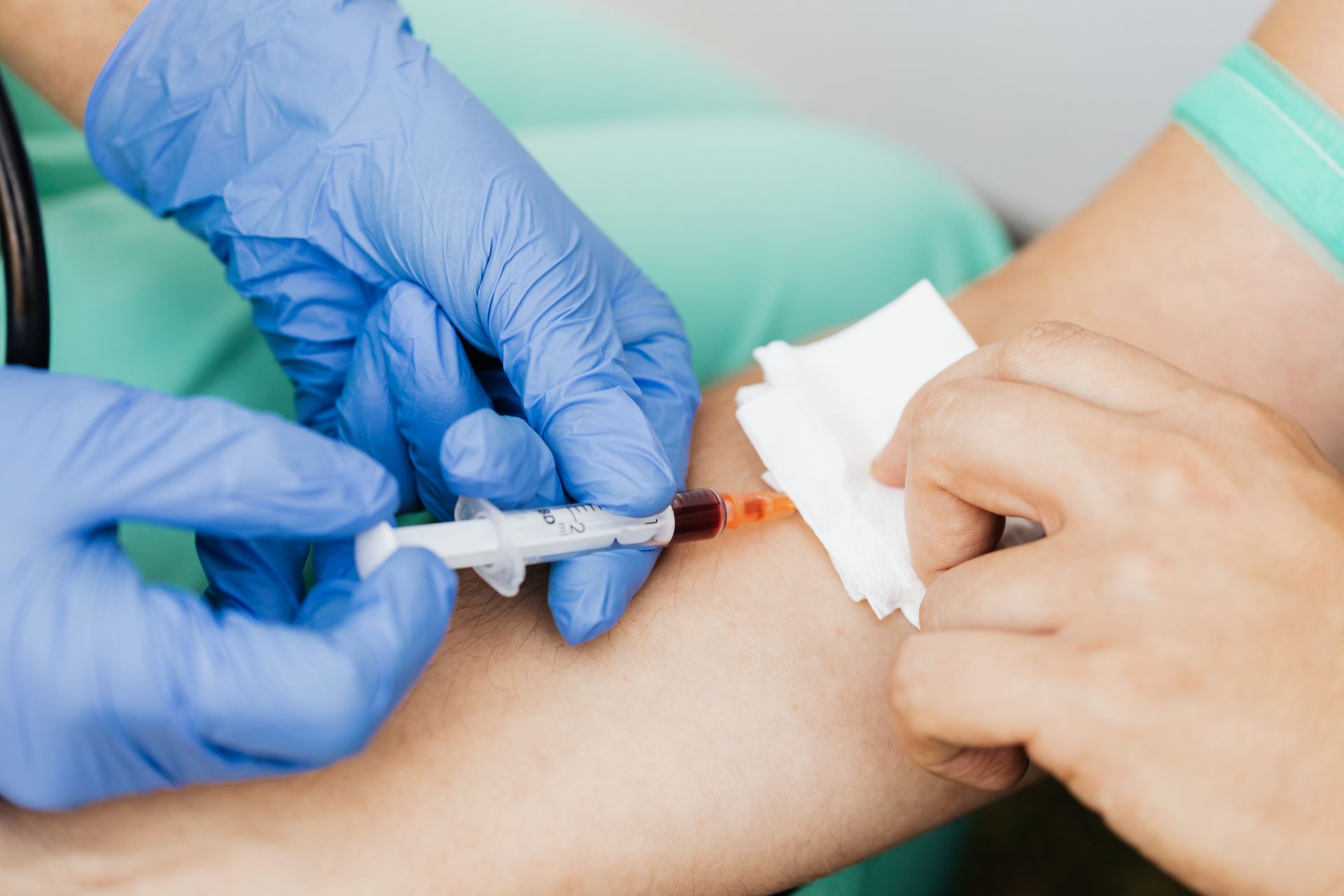
- Blood testing for FSH, insulin, and thyroid values, so you know whether the cause is hormonal
- At least 6 to 8 weeks to assess the effect of lifestyle changes, hormonal processes respond slowly
- Access to strength training, two to three times a week
- Possibly a treatment program with bio-identical hormones, guided by a BIG-registered doctor, if your blood values and symptoms call for it
The steps that actually address belly fat during menopause
1. Measure your waist circumference, not just your weight
Your weight can stay the same while your fat distribution shifts. Measure your waist circumference at navel height, every week at the same time of day, preferably fasting in the morning. An increase of more than 2 centimeters per month without a clear cause is a signal to look further into hormonal values. A common mistake: only tracking the scale and concluding nothing is changing.
2. Have blood testing done for insulin, FSH, and thyroid
Belly fat during menopause is often mistaken for a lifestyle problem, while insulin resistance and an FSH value above 25-30 IU/L point to a hormonal cause. Without these figures, you don't know whether you're fighting a hormonal shift or a diet. This testing is a standard part of the screening phase of a program, and it prevents you from spending months turning the wrong dial.
3. Increase your protein intake and start strength training
Muscle mass declines on average throughout menopause, and that directly lowers your resting metabolism. Aim for 1.2 to 1.6 grams of protein per kilogram of body weight per day and combine that with strength training, two to three times a week. Cardio alone burns calories only during the activity itself; strength training builds muscle mass that keeps burning calories at rest too. The common mistake here is using too little weight out of fear of injury, when sufficient resistance is exactly what stimulates muscle growth.
4. Address sleep and cortisol
Lack of sleep raises cortisol, and elevated cortisol specifically stimulates fat storage around the belly. Work on a fixed sleep rhythm of 7 to 8 hours and limit caffeine after midday. Women who sleep poorly during menopause often find that belly fat sticks around despite a consistent diet, precisely because the cortisol cycle undermines the effect of lifestyle changes.
5. Consider bio-identical hormone therapy as part of your approach
Hormone therapy, lifestyle, and any supplements work best simultaneously, not one after another. Bio-identical hormones, tailored to your blood values, can address the underlying hormonal cause of fat redistribution while lifestyle changes reinforce the effect. A hormone therapy menopause clinic assesses, based on blood, DNA, microbiome, and the DUTCH test, which dosage and form suits you, instead of prescribing a standard dose.
6. Monitor every 12 weeks and adjust
Hormone values and body composition change, so a single measurement isn't enough. A program includes monitoring every 12 weeks as standard, so dosage and approach are adjusted based on new blood values instead of assumptions. Women who skip these check-ins often stay on a dosage that no longer fits their current hormone profile.
7. Add GLP-1 medication for stubborn belly fat
For some women, belly fat remains stubborn despite hormone therapy and lifestyle changes. In that case, GLP-1 medication such as semaglutide or tirzepatide can be added as a supplement to bio-identical hormone therapy, never as a replacement for it. The combination targets both the hormonal cause and the metabolic effect, instead of treating one piece of the problem in isolation.
Troubleshooting
You eat healthy but aren't losing fat around your belly. Insulin resistance could be the reason: your body stores glucose as fat more quickly when cells are less sensitive to insulin. Blood testing for fasting insulin values gives clarity on this, lifestyle changes alone rarely resolve a hormonal problem.
Strength training doesn't seem to have an effect. Training twice a week is often too little to compensate for muscle loss from declining hormone levels. Combine training with enough protein and give it at least 8 weeks before drawing conclusions, muscle building is a slow process that isn't visible in two weeks.
You're sleeping poorly and the belly fat sticks around. The cortisol-sleep-belly fat cycle is stubborn: poor sleep raises cortisol, cortisol stimulates belly fat storage, and belly fat can in turn disrupt sleep further. A fixed sleep rhythm and limiting alcohol in the evening often break part of that cycle.
You don't know if this is hormonal or just age. Blood testing for FSH, insulin, and thyroid values makes this distinction measurable. Without those figures it stays guesswork, which often leads to lifestyle changes that don't address the actual cause.
You're already using hormone therapy but the belly fat remains. The dosage and form of bio-identical hormones sometimes need to be adjusted based on new blood values. Discuss at your next check-in whether GLP-1 medication as an addition makes sense for your situation.
Tools and resources
To properly track belly fat during menopause and identify possible causes, you need the following:
- Blood testing for FSH, insulin, thyroid, and cortisol
- DNA testing, microbiome analysis, and the DUTCH test for a complete hormonal picture
- A measuring tape and a fixed weekly moment to track waist circumference
- A strength training schedule, two to three times a week
- A treatment program under the guidance of BIG-registered doctors
Next step
Want to know how long you're dealing with this hormonal shift? The duration of menopause determines how long belly fat storage plays an active role, and that varies a lot by woman. Once you know which phase you're in, it becomes clearer whether this lasts months or years without a targeted approach.
“Belly fat during menopause isn't a matter of willpower, it's a hormonal redistribution.”
Frequently asked questions
What causes belly fat during menopause?
Declining estrogen levels shift fat storage from the hips and thighs to the belly, reinforced by decreasing insulin sensitivity and muscle mass loss. This shift is hormonal, not a result of less discipline in eating or exercise.
Does belly fat disappear on its own after menopause?
No, the shift in fat distribution usually persists unless you actively address the hormonal and metabolic causes. Strength training, blood testing, and hormone therapy where needed produce more results than waiting.
Does losing weight without hormone therapy help against belly fat during menopause?
Lifestyle changes like strength training and more protein help, but with a hormonal cause such as insulin resistance, the effect is often limited. Blood testing shows whether hormone therapy as an addition makes sense.
How much belly fat is normal during menopause?
An increase of more than 2 centimeters in waist circumference per month without a clear cause is a signal to have your blood values checked. A slight shift in fat distribution is common, a rapid increase is not.
Is belly fat during menopause dangerous for your health?
Visceral belly fat is linked to a higher cardiovascular risk than fat on the hips or thighs, according to research from Harvard Women's Health Watch. That makes tracking waist circumference more relevant than just your weight.
Can GLP-1 medication help against belly fat during menopause?
GLP-1 medication such as semaglutide can be used as an addition to bio-identical hormone therapy for stubborn belly fat. It doesn't replace hormone therapy, it's used alongside it.
Does health insurance cover treatment for belly fat during menopause?
Since May 2026, supplementary insurance partially reimburses consultations, depending on your policy. Compounded medication, DHEA, and testosterone for women aren't covered by this.
In conclusion
Belly fat during menopause isn't a matter of willpower, it's a hormonal redistribution. Women who start with blood testing in 2026 before adjusting their diet or training know sooner whether they're fighting insulin resistance, muscle loss, or both. That saves months of misdirected effort and explains why lifestyle alone gives insufficient results for some women.
This information is intended as an educational resource and does not replace medical advice, diagnosis, or treatment. If you have symptoms or questions about your personal situation, we recommend consulting a doctor.
Free guide: menopause, a broader perspective
The menopause is about more than just hot flashes. In our free menopause guide, our doctors explain the hormonal changes happening in your body, the symptoms you might not immediately associate with it, and the treatment options available. Written in plain language and medically backed.

Read more blogs about the menopause


Menovia
Sign up today