
Collagen during menopause: does it help skin and joints?
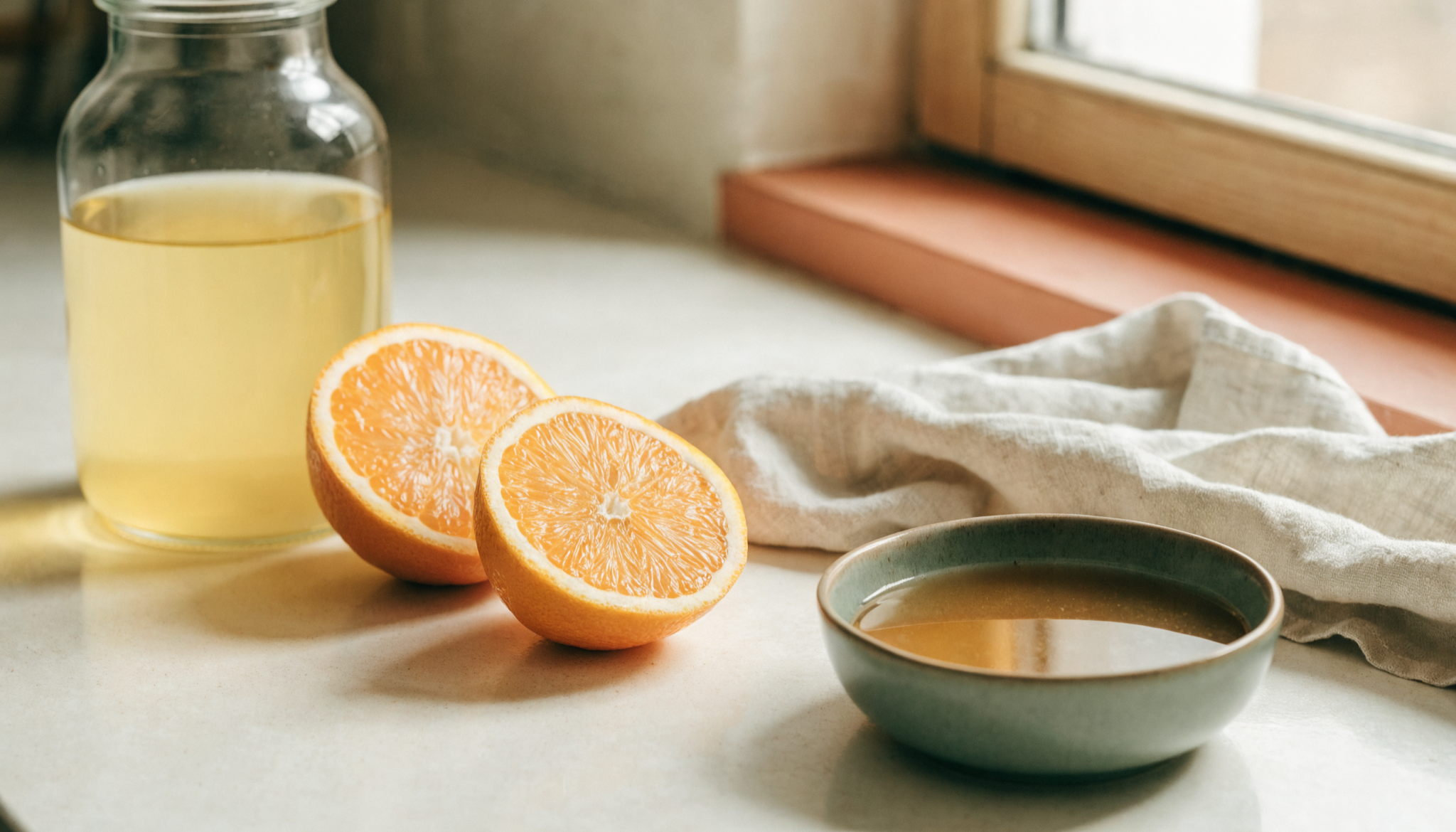
Collagen supplements may contribute to slightly better hydrated, more elastic skin, but the effect is modest and the evidence for joint complaints is weaker and mixed. What matters more is the underlying cause: during menopause your oestrogen falls, so your body makes less collagen of its own. A supplement is therefore a possible addition, not a replacement for good care or a healthy lifestyle.
In short
- During menopause oestrogen declines. This reduces your body's own collagen production, so your skin becomes thinner and drier and your joints can feel stiffer.
- Hydrolysed collagen peptides are the most studied form. For the skin, several studies show a modest improvement in hydration and elasticity.
- For joint complaints the evidence is more limited and not clear-cut. Some studies see pain reduction, others do not.
- Lifestyle weighs more heavily than a supplement: enough protein, not smoking, sun protection and regular movement.
- A supplement may help, but it does not replace medical care. For oestrogen-related skin and joint complaints, hormonal treatment can be appropriate. That is a decision you make together with a doctor.
Why do your skin and joints change during menopause?
The common thread is oestrogen. This hormone stimulates the fibroblasts in your skin, the cells that produce collagen, elastin and moisture-binding substances. As oestrogen falls, that production declines. Research estimates that in the first five years after menopause women can lose up to about 30% of their skin collagen, followed by a more gradual loss. That explains why skin in this phase often feels thinner, drier and less resilient.
Collagen is not only found in your skin. It is also a building block of cartilage, tendons and ligaments. Many women experience stiff or painful joints during menopause, sometimes without clear wear and tear. The precise role of oestrogen in these joint and muscle complaints is not yet fully understood, but the decline appears to contribute. You can read more about what happens to your skin in our article on hormones, skin ageing and menopause.
What exactly are collagen supplements?
Most collagen supplements contain hydrolysed collagen, also called collagen peptides. The collagen, usually from cattle or fish, has been cut into small pieces so it is better absorbed. Your body breaks these peptides down into amino acids and smaller fragments. It uses part of that as building material, and there are indications that some fragments can prompt your own collagen production in the skin and cartilage.
Important to know: a collagen supplement does not go straight to your skin or joints. It supplies building blocks and signals, after which your body decides what to do with them. Vitamin C is a necessary cofactor for collagen production, so a shortage of it works against you.
What does the research show for skin?
For the skin the evidence is most convincing, although the effect remains modest. A systematic review and meta-analysis of 26 randomised studies with 1,721 participants found that hydrolysed collagen improved skin hydration and elasticity on average compared with placebo. Individual placebo-controlled studies also saw a measurable improvement in hydration and elasticity after several weeks.
At the same time, caution is warranted. The studies differ in dose, type of collagen and duration, and some were funded by manufacturers. Studies typically use somewhere between 2.5 and 10 grams per day, for at least eight to twelve weeks before an effect becomes visible. The improvement is real but small, and no supplement reverses the influence of falling oestrogen.
Not sure whether a supplement or something else fits your complaints? Skin and joint complaints during menopause often have a hormonal background, and a broader view can help you choose the right order of steps. Download the free guide →
And for the joints?
For joint complaints the evidence is weaker and less clear-cut. A systematic review of collagen peptides found that a portion of the studies showed improvement in joint function and pain, especially in people with existing complaints or after intensive loading. Other studies saw no clear difference from placebo.
What this means for menopause: if your joints feel stiff or painful, a collagen supplement may possibly contribute something, but you cannot expect a large or guaranteed effect. The studies moreover often concern knee osteoarthritis in the general population, not menopause specifically. Stay realistic in your expectations and also look at other causes of joint pain.
What to keep in mind if you want to try collagen?
If you want to try collagen, a few things are useful to know. Choose hydrolysed collagen or collagen peptides, as that is the form most studied. Give it time: count on at least eight to twelve weeks before you may notice a difference. Make sure you get enough vitamin C, because your body needs it to produce collagen.
Collagen can also come from food, for example from broth, fish, eggs and protein-rich products combined with vegetables and fruit for the vitamin C. For most women a varied, protein-rich diet supplies the building blocks the body needs. If in doubt, or in case of pregnancy, allergies or medication use, check first with your doctor or pharmacist.
What helps more than a supplement?
In practice we see that lifestyle weighs more heavily than any supplement. Enough protein supports the maintenance of skin and muscle tissue. Not smoking is one of the strongest factors, because smoking accelerates the breakdown of collagen. Daily sun protection shields the skin from extra collagen loss, and regular movement, including strength training, keeps muscles and joints stronger.
And the hormonal side? Because falling oestrogen is at the heart of the story, hormonal treatment with bio-identical hormones can be appropriate for oestrogen-related skin and joint complaints. Research shows that hormone therapy can improve the collagen content and thickness of the skin. Whether this fits you depends on your complaints, your health and your personal considerations, which you discuss with a doctor. A supplement can then be an addition, not a replacement.
When to see a doctor?
Collagen-related complaints are rarely a medical emergency, but some complaints do deserve attention. Contact your doctor for joint pain with swelling, redness or warmth, for pain in a single joint that suddenly flares, or for morning stiffness lasting longer than an hour. That can point to a cause other than menopause, such as an inflammatory form of arthritis.
Also seek advice for rapidly worsening skin complaints, a spot that changes colour or shape, or wounds that heal poorly. And if skin or joint complaints affect your daily life or your mood, that is in itself a good reason to have your situation assessed. You do not have to accept complaints as something that simply comes with menopause.
Frequently asked questions
Does collagen really work for your skin? The evidence points to a modest improvement in hydration and elasticity with hydrolysed collagen, after several weeks of use. The effect is small and varies from person to person.
Does collagen help against joint pain in menopause? Possibly a little, but the evidence is weaker and mixed. Do not expect a large effect, and always have persistent or severe joint pain assessed.
Which form and how much? Hydrolysed collagen or collagen peptides are the best studied. Studies typically use between 2.5 and 10 grams per day. If in doubt, check with a doctor or pharmacist.
Can I also get collagen from food? Yes. A protein-rich and varied diet, with enough vitamin C, supplies the building blocks your body needs.
Is collagen an alternative to hormone therapy? No. A supplement does not address the cause, falling oestrogen. For oestrogen-related complaints, hormonal treatment can be appropriate, which you discuss with a doctor.
Sources
- Journal of Integrative Dermatology. Beyond Hot Flashes: Understanding and Treating Menopause-Associated Skin Changes. jintegrativederm.org.
- Pu SY, et al. Effects of Hydrolyzed Collagen Supplementation on Skin Aging: A Systematic Review and Meta-Analysis. Int J Dermatol, 2023. pubmed.ncbi.nlm.nih.gov.
- Bolke L, et al. A Collagen Supplement Improves Skin Hydration, Elasticity, Roughness, and Density: Results of a Randomized, Placebo-Controlled, Blind Study. Nutrients, 2019. ncbi.nlm.nih.gov.
- Khatri M, et al. The Effects of Collagen Peptide Supplementation on Body Composition, Collagen Synthesis, and Recovery from Joint Injury and Exercise: A Systematic Review. Amino Acids, 2021. ncbi.nlm.nih.gov.
This information is intended as an educational resource and does not replace medical advice, diagnosis or treatment. If you have complaints or questions about your personal situation, we recommend consulting a doctor.
Free guide: menopause, a broader perspective
The menopause is about more than just hot flashes. In our free menopause guide, our doctors explain the hormonal changes happening in your body, the symptoms you might not immediately associate with it, and the treatment options available. Written in plain language and medically backed.

Read more blogs about the menopause

Menovia
Sign up today