Hormone therapy and thrombosis: what you need to know

Does hormone therapy during menopause raise your risk of thrombosis? The honest answer is that it depends strongly on how you receive the estrogen. Estrogen in tablet form passes through the liver first and can modestly raise the risk of venous thrombosis. Estrogen through the skin, as a gel or patch, largely bypasses that first pass through the liver and, at the usual menopausal doses, has not been linked to a clearly increased risk of thrombosis. That is why we at Menovia choose the transdermal route as standard, especially if you have additional risk factors.
In short
- Thrombosis is a blood clot in a vein, most often in the lower leg. A clot that breaks loose can travel to the lung and cause a pulmonary embolism.
- The route of administration shapes the risk: estrogen through tablets can modestly raise it, while estrogen through the skin (gel or patch) has not been significantly linked to it in studies.
- The type of progestogen also plays a part: micronized (bio-identical) progesterone appears in studies not to add a clear extra risk of thrombosis.
- Personal risk factors such as a previous thrombosis, an inherited clotting disorder, obesity, smoking, or prolonged immobility call for an individual assessment by a doctor.
- With a one-sided swollen, painful, warm lower leg, or with sudden shortness of breath, contact a doctor straight away or call the emergency number.
What exactly is thrombosis?
Thrombosis means that a blood clot forms inside a blood vessel. In venous thrombosis that clot sits in a vein, usually deep in the lower leg. We call this a deep vein thrombosis. You can often recognise it by a lower leg that is swollen, warm, painful, and redder or darker than usual on one side only.
The danger lies in what can happen next. If part of the clot breaks loose, it can travel through the bloodstream to the lungs. There it can block a blood vessel, which is a pulmonary embolism. This can show up as shortness of breath, pain when breathing, coughing up blood, or fainting. A pulmonary embolism is a medical emergency.
Why does the route of administration make such a difference?
The difference lies in the path the estrogen takes through your body. If you swallow estrogen as a tablet, it first reaches the liver in high concentration. This first pass through the liver stimulates the production of certain clotting factors, so your blood clots a little more readily. In this way, oral hormone therapy can modestly raise the risk of venous thrombosis. NICE describes a risk for oral estrogen that is roughly one and a half to three times higher than the baseline.
With estrogen through the skin, as a gel or patch, the estrogen is absorbed directly into the blood and that first pass through the liver is largely bypassed. As a result, the transdermal route has far less influence on clotting. In the French ESTHER study, transdermal estrogen was not associated with an increased risk of thrombosis, whereas oral estrogen was (Canonico et al., Circulation). It is important to note that the absolute risk of thrombosis in this age group is low, so even a relative increase still means a small absolute risk for most women.
This difference is exactly why guidelines recommend the transdermal route for women with an increased risk of thrombosis. If you want to see the two forms side by side, read estrogen as a gel or patch: what is the difference.
Not sure whether hormone therapy fits your situation? Our free guide calmly explains how menopause, your symptoms, and your health connect, so you can have a better informed conversation with a doctor. Download the free guide →
Does the type of progestogen also play a role?
If you still have a uterus, estrogen is combined with a progestogen to protect the lining of the womb. Here too, the choice appears to matter. Research suggests that micronized progesterone, the bio-identical form, does not add a clear extra risk of thrombosis. In the ESTHER study, the combination of transdermal estrogen with micronized progesterone was not associated with an increased risk.
For some synthetic progestogens the picture is less reassuring, and there are indications of a higher risk. The evidence here is not yet complete, so we draw no firm conclusions. It is, however, one of the reasons that in practice we work with bio-identical hormones as the core of treatment, with lifestyle as a complement.
Which personal risk factors count?
The risk of thrombosis is never only a matter of the treatment. Your personal situation weighs at least as heavily. Factors that raise the risk include:
- a previous thrombosis or pulmonary embolism;
- an inherited clotting disorder (thrombophilia) or thrombosis in close family;
- obesity, in particular a BMI above 30;
- smoking;
- prolonged immobility, for example after surgery or during a long journey.
Having one or more of these factors does not automatically mean that hormone therapy is off the table. It does mean that a careful, individual assessment is needed. With a strongly increased risk, such as a previous thrombosis or a known inherited clotting disorder, NICE advises assessment by a specialist before you start hormone therapy.
How does Menovia approach this?
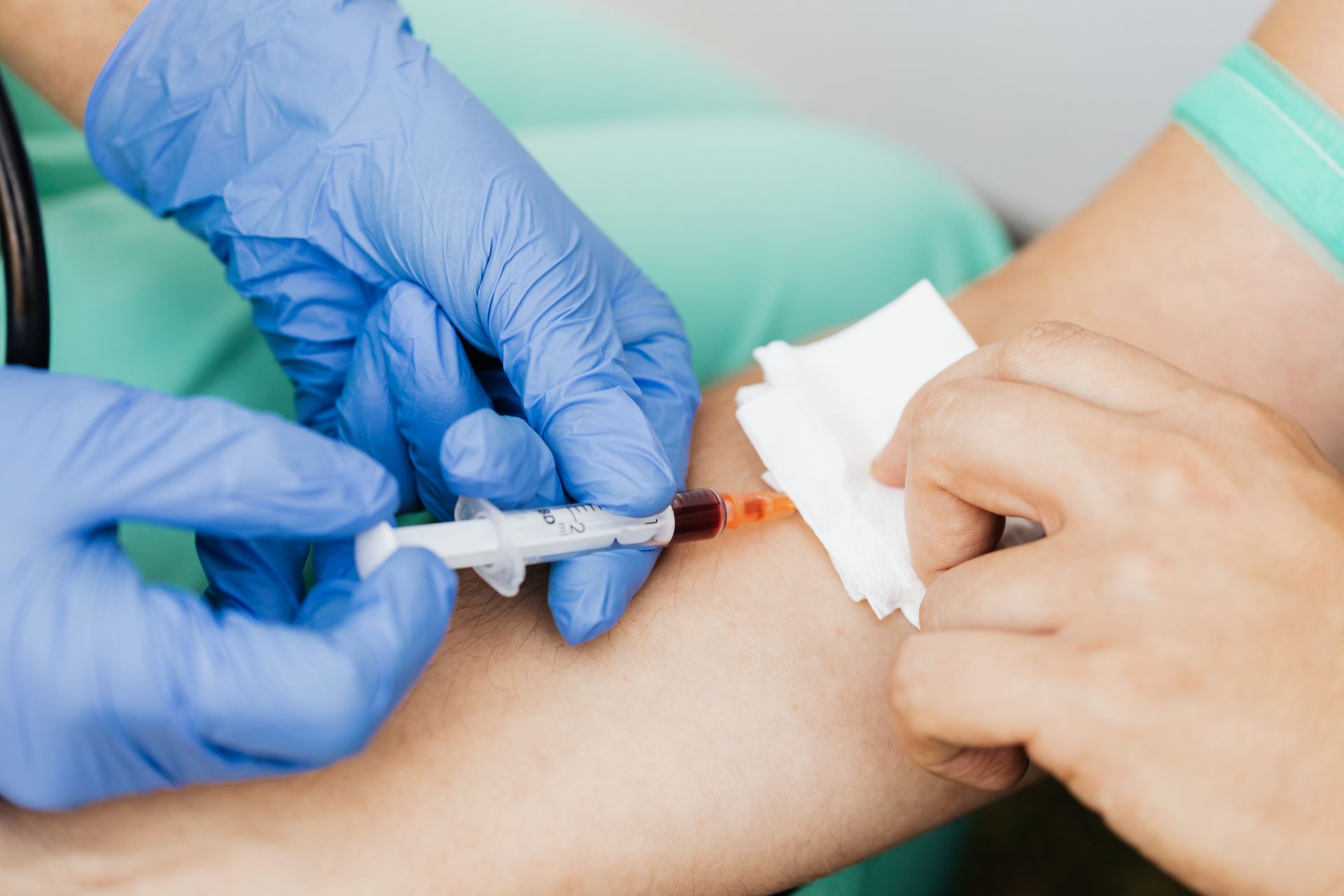
At Menovia, every treatment path begins with a thorough intake and blood test, so we have a clear picture of your symptoms and your health. We discuss your personal risk factors, including your own clotting history and that of your family. On that basis, our BIG-registered doctors weigh the options together with you.
In practice, we therefore often choose estrogen through the skin, because that route influences clotting the least. If there is a strongly increased risk, we refer you or first bring in additional advice. For more on what else to expect, read side effects of hormone therapy in menopause, and for your blood vessels, read about menopause and your cardiovascular health.
When to see a doctor
Some symptoms call for quick action. Contact your GP or the out-of-hours GP service straight away if you notice signs of a deep vein thrombosis: a lower leg that is swollen, warm, painful, and discoloured on one side.
Call the emergency number or the out-of-hours GP service if you notice signs of a pulmonary embolism: sudden shortness of breath, pain when breathing, chest pain, coughing up blood, or fainting (or nearly fainting). Not sure whether your symptoms are related? Then always seek medical advice. It is better to call once too often than too late.
Frequently asked questions
Can I use hormone therapy if I have ever had thrombosis? That calls for an individual assessment by a doctor. A previous thrombosis is not an automatic reason to forgo treatment, but extra caution is needed, and the transdermal route, together with specialist advice where necessary, is often considered.
Does estrogen through the skin raise the risk of thrombosis? In studies, transdermal estrogen at the usual doses has not been linked to a clearly increased risk. No treatment is without trade-offs, though, which is why we always look at your personal situation.
Is bio-identical progesterone more favourable for clotting? Research suggests that micronized progesterone does not add a clear extra risk of thrombosis. The evidence is still limited, so we present this as an indication and not as a guarantee.
What if I smoke or have obesity? These are additional risk factors that weigh into the assessment. They do not necessarily rule out hormone therapy, but they make a careful evaluation, and often a preference for the transdermal route, more important.
Do I need a blood test before starting? At Menovia, a blood test is a standard part of the intake. This way we build a picture of your health together with you before any choice is made.
Sources
- National Institute for Health and Care Excellence (NICE). Menopause: identification and management (NG23). nice.org.uk
- Canonico M, et al. Hormone Therapy and Venous Thromboembolism Among Postmenopausal Women (ESTHER study). Circulation, 2007. ahajournals.org
- Thuisarts.nl. Ik denk dat ik een trombosebeen heb. thuisarts.nl
- Thuisarts.nl. Heb ik een longembolie? thuisarts.nl
This information is intended as an educational resource and does not replace medical advice, diagnosis, or treatment. For complaints or questions about your personal situation, we recommend consulting a doctor.
Free guide: menopause, a broader perspective
The menopause is about more than just hot flashes. In our free menopause guide, our doctors explain the hormonal changes happening in your body, the symptoms you might not immediately associate with it, and the treatment options available. Written in plain language and medically backed.
Read more blogs about the menopause
Menovia
Sign up today