
How Long Does Menopause Last? Phases and Duration

For most women, menopause doesn't last a few months, but years: perimenopause, menopause, and postmenopause together span an average of 7 to 10 years, with large individual differences in symptoms and duration.
In short
How long does menopause last? Perimenopause (the phase with fluctuating hormone levels and irregular cycles) lasts an average of 4 to 8 years. Menopause itself isn't a period but a single moment: the day you've gone 12 consecutive months without a period, in the Netherlands averaging around age 51. Postmenopause follows, lasting for the rest of your life, and bone mass loss (10 to 20% in the first five years) is a real concern during this phase. At Menovia, the phase you're in is determined through blood testing (FSH above 25 to 30 IU/L is an indicator), not a guess based on age alone. Advice: have the duration and phase of your menopause objectively determined before choosing a treatment plan, because 'menopause' is a different timeline for every woman.
Why this matters
The word 'menopause' gives the impression of something temporary, a phase you get through and are then done with. That picture doesn't match the data. Perimenopause often already starts in your late 30s or early 40s, years before your period stops, and already brings hot flashes, mood swings, and sleep problems with it.
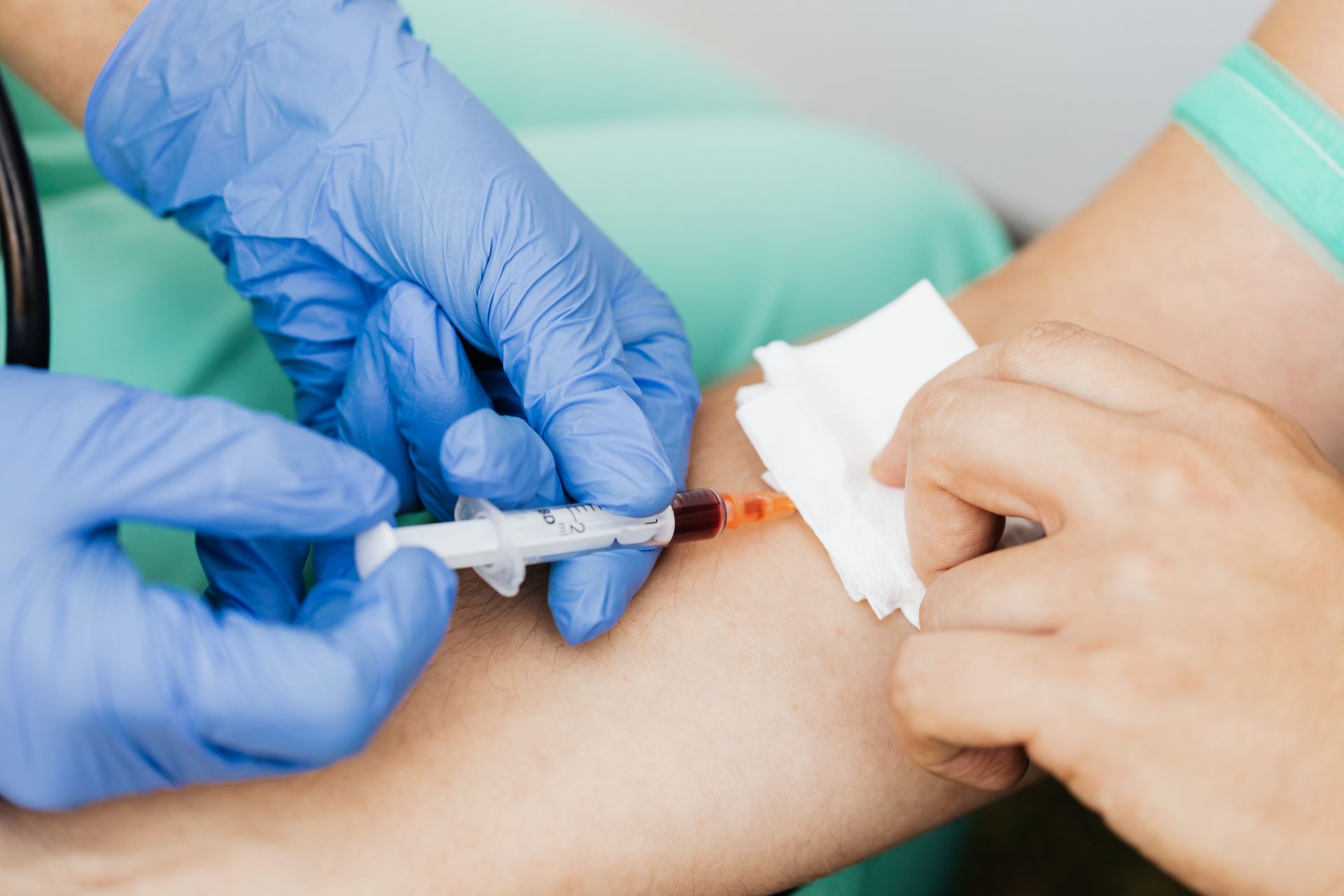
That lack of clarity about duration leads to two problems in practice. Women wait too long to seek help because they think 'it'll pass on its own,' and primary care doctors often have limited time to pinpoint the exact phase. Blood values such as FSH and TSH (thyroid value, normally between 0.4 and 4.0 mU/L) give a more objective picture than age or symptom checklists alone, which is exactly why Menovia works with blood testing, DNA testing, microbiome analysis, and the DUTCH test at intake instead of a questionnaire.
What you should know before assessing the duration of your menopause
- Your age at first symptoms. Perimenopause starts on average between ages 45 and 50, but can begin as early as 35.
- Your cycle history over the past 12 months. Irregular cycles are the first clinical sign of perimenopause.
- Any thyroid symptoms. A disrupted thyroid can cause hot flashes and fatigue that resemble menopause symptoms, without menopause being the cause.
- Family history. The age at which your mother went through menopause is an indication (not a guarantee) for your own timeline.
- Blood values, if available. FSH, TSH, and estradiol together give a more precise picture than symptoms alone.
The phases of menopause and their average duration
1. Early perimenopause: recognizing the first signs
This phase begins with subtle changes: a slightly shorter or longer cycle, milder PMS-like symptoms, an occasional hot flash. Early perimenopause lasts an average of 2 to 4 years. Estrogen levels fluctuate strongly during this period, which explains the varying symptoms. Common mistake: attributing symptoms to stress or age without blood testing, which sometimes leaves the phase unnoticed for years.
2. Late perimenopause: cycles become irregular
In this phase, periods are regularly missed for 60 days or more. Hot flashes, night sweats, and sleep problems increase in frequency. This phase lasts an average of 1 to 3 years and ends with your last period. FSH values above 25 to 30 IU/L, combined with your cycle history, confirm you're in this phase. Common mistake: waiting until symptoms become 'unbearable' before getting tested, when early diagnosis makes the treatment plan more precise.
3. Menopause: the point, not a period
Menopause itself is, by definition, a single day: the date on which you've gone exactly 12 months without a period. In the Netherlands, this averages around age 51. This isn't a phase that 'lasts,' but the reference point that marks the boundary between perimenopause and postmenopause. Common mistake: using menopause and the menopausal transition as synonyms, which makes duration questions ('how long does menopause last') unanswerable as posed.
4. Early postmenopause: the first 5 years after your last period
Symptoms like hot flashes can persist for years, for some women even 7 to 10 years after their last period. At the same time, accelerated bone mass loss begins in this phase: 10 to 20% in the first five years after menopause, a direct result of declining estrogen levels. This is the phase in which blood testing, lifestyle changes (calcium, vitamin D, strength training), and, where indicated, bio-identical hormone therapy are used simultaneously, not one after another, to limit both symptoms and bone loss. Common mistake: assuming that symptoms automatically disappear within a year after menopause.
5. Late postmenopause: symptoms generally decrease, focus shifts
From about 5 to 10 years after menopause, vasomotor symptoms gradually decrease for most women, while attention shifts to bone density, cardiovascular health, and mucosal symptoms (vaginal dryness). This phase in principle lasts for the rest of your life. Monitoring through periodic blood checks remains relevant, even once the acute symptoms have decreased.
Common sticking points when estimating duration
- "My symptoms are too mild to count as perimenopause." Mild doesn't mean absent: blood testing objectively shows whether hormone levels are already shifting, even with light symptoms.
- "I'm only 42, that can't be menopause yet." For some women, perimenopause starts before age 45; age alone rules nothing out.
- "My hot flashes didn't go away after menopause, so something must be wrong." For some women, hot flashes persist 7 to 10 years after their last period; that's not an exception but a known pattern.
- "I thought it was my thyroid, not menopause." Thyroid abnormalities (TSH outside 0.4 to 4.0 mU/L) and menopause symptoms strongly overlap in symptoms like fatigue and heat intolerance, and both deserve blood testing rather than an assumption.
- "I'll just wait until symptoms get worse." Bone mass loss already begins in early postmenopause, well before it's noticeable; waiting for symptoms means waiting on a process that's already underway.
Tools and resources
- Blood testing for FSH, estradiol, and TSH as a starting point for determining your phase.
- DNA testing and microbiome analysis, two of the four diagnostic pillars Menovia uses alongside blood testing and the DUTCH test.
- Menovia's overview of the three programs: Basis (€95 per month, intake €395), Plus (€185 per month, intake €995), and Compleet (€275 per month, intake €1,595), each built from 7 steps over a minimum of 6 months.
- The article on thyroid and hot flashes if you're unsure whether your symptoms are from menopause or your thyroid.
- Since May 2026, consultations are partly reimbursed through supplementary insurance (naturopathic consultation category, varies by insurer). Note: compounded medication, DHEA, and testosterone for women aren't registered in the Netherlands and aren't reimbursed.
What to do next
If you're not sure which phase you're in, a blood test is a more precise starting point than a symptom checklist. FSH, TSH, and estradiol together show whether you're approaching perimenopause, menopause, or postmenopause, and that determines whether lifestyle, supplements, and possibly bio-identical hormone therapy make sense as a simultaneous treatment plan. If you're specifically unsure whether your symptoms are from your thyroid, read the article on thyroid and hot flashes first before choosing a program.
Frequently asked questions
How many years does menopause typically last? The full menopausal transition, from early perimenopause to the end of symptoms in postmenopause, lasts an average of 7 to 10 years. Perimenopause itself usually accounts for 4 to 8 years of that.
What's the difference between perimenopause and menopause? Perimenopause is the years-long transitional phase with fluctuating hormone levels and irregular cycles. Menopause is one specific day: 12 months after your last period.
At what age does menopause usually start? Perimenopause starts on average between ages 45 and 50, though early starts from age 35 aren't exceptional. Menopause itself falls in the Netherlands on average around age 51.
Does menopause last the same length for everyone? No, the duration varies a lot from woman to woman and is linked to factors like family history, lifestyle, and hormonal sensitivity. Blood testing gives a more precise picture than an average alone.
Can you shorten the duration of menopause? You can't shorten the biological phase itself, but the symptom burden within that phase can decrease for some women when blood values, lifestyle, and, where needed, bio-identical hormone therapy are simultaneously tailored to the individual situation.
How do I know if I'm in menopause? Irregular cycles, hot flashes, and a changed sleep pattern are the most common signals, but blood testing for FSH and estradiol gives objective confirmation instead of an estimate based on symptoms alone.
Is hormone therapy safe throughout menopause? The 2002 WHI study (participants averaged 63 years old, using conjugated equine estrogen plus synthetic MPA) raised concerns decades ago, but later analyses and the French E3N study show no significantly increased breast cancer risk with bio-identical progesterone combined with estrogen, compared to synthetic progestogens. Safety depends on timing, hormone form, and individual blood values, and is assessed per program by BIG-registered doctors at Menovia.
What does a treatment program at Menovia cost? Menovia offers three programs: Basis from €95 per month (intake €395), Plus from €185 per month (intake €995), and Compleet from €275 per month (intake €1,595). Since May 2026, part of the consultation costs are reimbursed through supplementary insurance, with the exception of compounded medication, DHEA, and testosterone.
One more thing
The most underestimated fact isn't the duration of menopause itself, but that bone mass loss (10 to 20% in the first five years after menopause) already begins while most women are still fully occupied with hot flashes. Those who only take action once symptoms decrease miss the window in which that bone loss happens fastest. Blood testing that includes bone-related values is therefore just as relevant as testing for FSH and estradiol, even if you consider your vasomotor symptoms mild.
This information is intended as an educational resource and does not replace medical advice, diagnosis, or treatment. If you have symptoms or questions about your personal situation, we recommend consulting a doctor.
Free guide: menopause, a broader perspective
The menopause is about more than just hot flashes. In our free menopause guide, our doctors explain the hormonal changes happening in your body, the symptoms you might not immediately associate with it, and the treatment options available. Written in plain language and medically backed.

Read more blogs about the menopause
Menovia
Sign up today