
Menopause and Diabetes Risk: Higher, But Manageable

Menopause changes not only your hormone balance, but also how your body processes blood sugar. This article explains why the risk of type 2 diabetes increases during menopause, and which concrete steps you can take now to reduce that risk.
In short
- Declining estrogen levels during menopause can reduce insulin sensitivity and thereby increase the risk of type 2 diabetes.
- Fat distribution shifts more toward the belly; belly fat is more strongly linked to insulin resistance than fat elsewhere.
- Blood testing forms the basis at Menovia. Microbiome, DNA, and DUTCH testing can be a useful addition, depending on your program and medical question.
- Bio-identical hormone therapy, lifestyle, and possibly GLP-1 medication are assessed at Menovia as one coherent treatment plan.
Why this matters
Estrogen plays a role in how your body uses insulin, through receptors in fat tissue, the liver, and the pancreas. As your estrogen level declines during menopause, insulin sensitivity can decrease. The North American Menopause Society (NAMS) lists changes in fat metabolism and insulin sensitivity as part of the broader metabolic picture around menopause. That doesn't mean every woman develops type 2 diabetes, but for some women the risk does increase.
At Menovia, this connection between hormones and blood sugar is central to the diagnostics. Blood testing, DNA testing, microbiome analysis, and the DUTCH test, the four diagnostic pillars of every program, together map out how your hormone balance and metabolism are changing. This is necessary, because symptoms like fatigue, weight gain, and concentration problems can belong to menopause as well as to early insulin resistance.
At the same time, fat storage often shifts from the hips and thighs to the belly. Belly fat (visceral fat) is metabolically more active and more strongly linked to insulin resistance than fat elsewhere in the body. That explains why two women with the same body weight in 2026 can have a different metabolic risk, depending on where that fat is located.
“Insulin resistance can already be detectable in your blood values before your fasting glucose changes.”
What you need
Before you get started on reducing your diabetes risk during menopause, gather a few concrete data points:
- Recent blood values: fasting glucose, HbA1c, and fasting insulin (through your GP or through Menovia's blood testing)
- Insight into your hormone status: FSH value (often above 25-30 IU/L in perimenopause) and estradiol
- A waist circumference measurement, not just your weight on the scale
- Time for a program of at least 6 months if you choose a structured approach
- Basic knowledge of your current lifestyle: nutrition, strength and endurance training, sleep
The steps
1. Have your blood values and hormone status measured
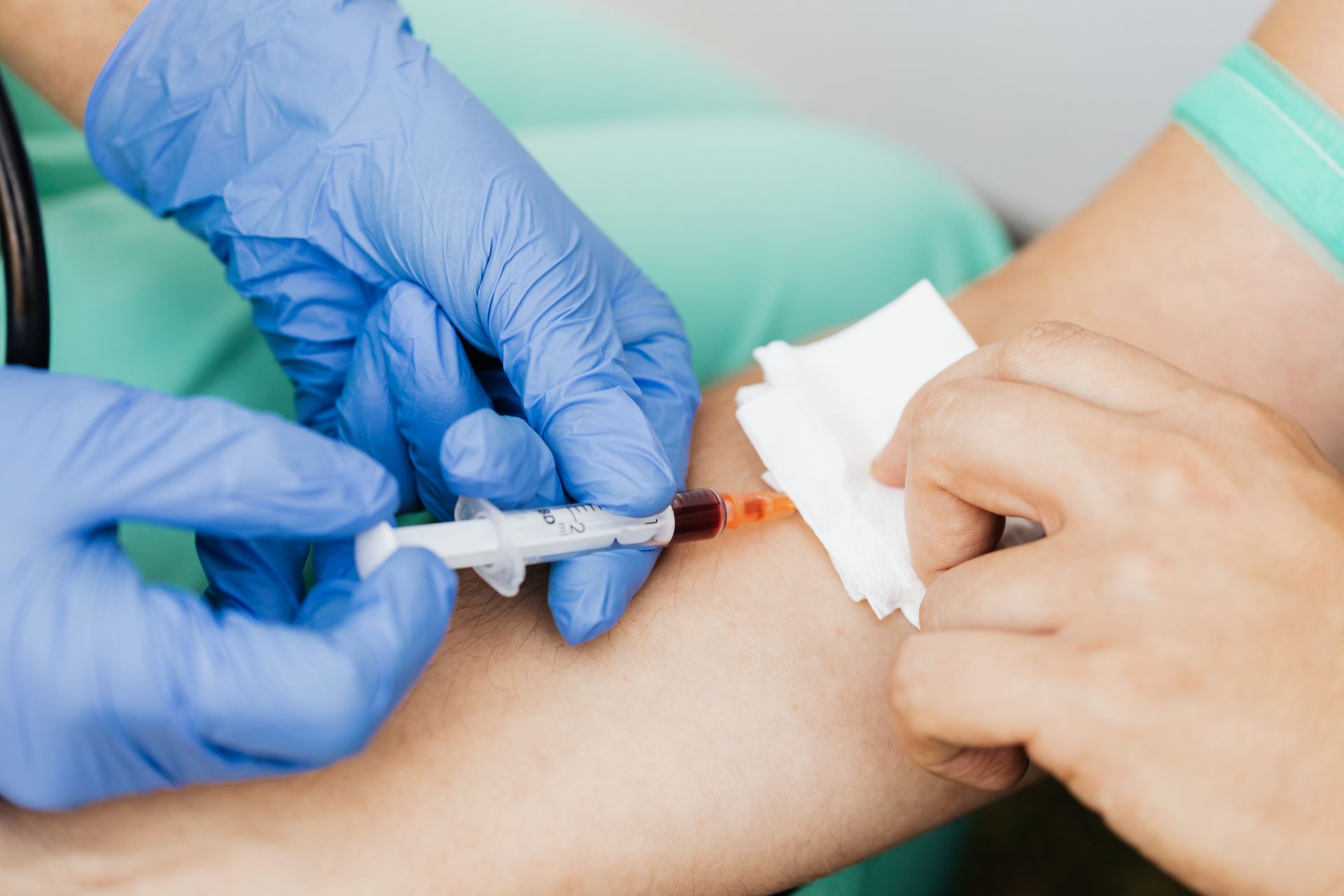
This gives you a starting point instead of a guess. Insulin resistance is often already measurable in your fasting insulin value and HbA1c before your fasting glucose changes, so ask for these values specifically, not just a standard glucose test.
At Menovia, blood testing is one of the four diagnostic pillars, alongside DNA testing, microbiome analysis, and the DUTCH test. Together they show how your hormones, metabolism, and stress response are connected. Expected result: concrete figures a BIG-registered doctor can use to draw up a treatment plan. Common mistake: only measuring weight and skipping blood values because you otherwise feel fine.
2. Map your fat distribution, not just your weight
Your weight on the scale only tells part of the story. Measure your waist circumference at navel height; in women, a circumference above roughly 88 centimeters points to elevated metabolic risk according to commonly used clinical cutoffs.
Weight gain during menopause often comes with a shift of fat toward the belly, even if total weight barely changes. Expected result: a trend you can track every month. Common mistake: only watching the scale and ignoring waist circumference.
3. Adjust your diet for insulin sensitivity
A protein-rich breakfast, more fiber, and fewer fast-digesting carbs help dampen blood sugar spikes. This works best as an addition alongside other measures, not as something you try in isolation first.
Concretely: add a protein and fiber source to every meal before you eat carbohydrates, this demonstrably slows glucose absorption. Expected result: steadier energy throughout the day. Common mistake: cutting out carbohydrates entirely instead of adjusting the order and composition of meals.
4. Build muscle mass with strength training
Muscle tissue absorbs glucose, partly independent of insulin. More muscle mass therefore means more storage capacity for blood sugar, which can reduce the risk of type 2 diabetes.
Aim for two to three strength sessions a week, targeting the major muscle groups. Expected result: noticeable improvement in energy and body composition within a few months. Common mistake: doing only cardio and skipping strength training.
5. Discuss bio-identical hormone therapy with a BIG-registered doctor
Research summarized by NAMS points to a more favorable metabolic profile for some women who use bio-identical hormone therapy during menopause, although this isn't a guarantee and response varies by person. Bio-identical hormones are available both as registered products through the regular pharmacy and as compounded preparations for a personalized dosage.
When choosing a hormone therapy menopause clinic, look for guidance from BIG-registered doctors and monitoring at set intervals. Expected result: a treatment plan tailored to your blood values, not a standard dose. Common mistake: seeing hormone therapy as a standalone intervention rather than part of a broader plan.
6. Consider GLP-1 medication as an addition
GLP-1 medication (such as semaglutide or tirzepatide) can contribute to weight loss and improved insulin sensitivity. Within Menovia's programs, this is always used as an addition to bio-identical hormone therapy and lifestyle, never as a replacement for them.
Discuss with your doctor whether this fits your blood values and risk profile. Expected result: a combined approach instead of separate interventions side by side. Common mistake: seeing GLP-1 medication as a quick fix without addressing the underlying hormonal change.
7. Monitor monthly and have blood testing repeated every 12 weeks
One-off measurements say little about a trend. At Menovia there's a monthly consultation with a BIG-registered doctor. You fill in the MRS questionnaire beforehand, so symptoms and changes over time are discussed in a structured way. Blood testing is repeated every 12 weeks.
Expected result: targeted adjustment of treatment or lifestyle advice based on your symptoms, the MRS questionnaire, and current blood values. Common mistake: relying on a single isolated measurement or waiting months to discuss changes.
Troubleshooting
My fasting glucose is still normal, but I feel less energetic. Insulin resistance often precedes changes in fasting glucose. Additionally ask for HbA1c and fasting insulin, which gives a more complete picture than glucose alone.
I'm not losing weight, but my waist is growing. This fits the shift of fat storage toward the belly during menopause. Focus on waist circumference and strength training instead of just the number on the scale.
I don't know whether my fatigue is from menopause or my thyroid. Thyroid symptoms and menopause symptoms often overlap, so have your TSH checked alongside your hormone values (reference range typically between 0.4 and 4.0 mU/L) before drawing conclusions.
Hormone therapy feels like a big step. A program starts with screening and intake, not a definitive choice. You build up in seven steps, with evaluation points where you can adjust course.
My insurance doesn't cover everything. Since May 2026, part of the consultation costs are reimbursed through supplementary insurance, in the naturopathic consultation category; this varies by insurer and policy. Compounded medication, DHEA, and testosterone for women aren't registered in the Netherlands and aren't reimbursed.
I already have type 2 diabetes. Discuss a combined approach with your treating doctor. The BIG-registered doctors at Menovia align hormone therapy and any GLP-1 medication with your existing diabetes treatment, rather than viewing it separately.
Tools and resources
- Online menopause clinic for working women, for those seeking guidance around a busy work schedule
- Stopping hot flashes: what helps according to science, for the most common menopause symptom
- Sleep problems in menopause: how to address it, since lack of sleep itself also increases insulin resistance
- Heart palpitations in menopause: is this normal, for those who also recognize cardiovascular symptoms
- Buying bio-identical hormones: what to look for, for those exploring treatment options
External sources
- The Menopause Society: MENOPAUSE 101 COURSE, on changes in insulin resistance and visceral fat around menopause.
- American Diabetes Association: Diabetes Prevention Program, on nutrition, exercise, and guidance for lowering type 2 diabetes risk factors.
- PubMed: The Role of Traditional and Nontraditional Risk Factors, a 2025 review on cardiometabolic changes during the menopause transition.
What you can do next
Want to know roughly how long this phase lasts before symptoms and risks stabilize? Read how long menopause typically lasts for a concrete timeline, so you know where you stand in the process.
Frequently asked questions
Does menopause increase the risk of type 2 diabetes?
Yes, for some women the risk of type 2 diabetes increases during menopause, because declining estrogen levels can reduce insulin sensitivity. This isn't a certainty for every woman, but it is a mechanism the North American Menopause Society (NAMS) describes within the broader metabolic picture around menopause.
What's the connection between belly fat and menopause?
During menopause, fat storage often shifts from the hips and thighs to the belly, and that belly fat is metabolically more active and more strongly linked to insulin resistance than fat elsewhere. Waist circumference is therefore a more useful signal than weight alone.
Does hormone therapy help against type 2 diabetes in menopause?
Research summarized by NAMS points to a more favorable metabolic profile for some women who use bio-identical hormone therapy during menopause, although this isn't a guarantee. At Menovia this is always combined with lifestyle, never used on its own.
Is treatment for diabetes risk during menopause reimbursed?
Since May 2026, part of the consultation costs at Menovia are reimbursed through supplementary insurance, depending on your insurer and policy. Compounded medication, DHEA, and testosterone for women fall outside this and aren't reimbursed.
Can GLP-1 medication help with diabetes risk in menopause?
GLP-1 medication such as semaglutide can contribute to weight loss and improved insulin sensitivity, and at Menovia is always used as an addition to bio-identical hormone therapy and lifestyle. It doesn't replace the hormonal approach, but reinforces it.
How often are blood values checked during a program?
At Menovia there's a monthly consultation with a BIG-registered doctor and you fill in the MRS questionnaire. Blood testing is repeated every 12 weeks, so symptoms and relevant values can be tracked together.
Can type 2 diabetes during menopause be prevented?
Full prevention isn't guaranteed, but strength training, adjusted nutrition, enough sleep, and, where needed, bio-identical hormone therapy can together limit the risk of type 2 diabetes during menopause. The combination works better than separate measures one after another.
In conclusion
The risk of type 2 diabetes during menopause isn't a foregone conclusion, but it's not chance either. Insulin resistance can already be measurable in your blood values well before a fasting glucose test shows anything, which is exactly why isolated annual check-ups often come too late. Anyone starting a program in 2026 with monthly consultations and an MRS questionnaire, supplemented with blood testing every 12 weeks, can discuss changes earlier than someone who waits for symptoms.
Related articles
This information is intended as an educational resource and does not replace medical advice, diagnosis, or treatment. If you have symptoms or questions about your personal situation, we recommend consulting a doctor.
Free guide: menopause, a broader perspective
The menopause is about more than just hot flashes. In our free menopause guide, our doctors explain the hormonal changes happening in your body, the symptoms you might not immediately associate with it, and the treatment options available. Written in plain language and medically backed.

Read more blogs about the menopause


Menovia
Sign up today