
Thyroid and Hot Flashes: How Are They Connected?

You're in the middle of menopause and suddenly feel exhausted, forgetful, and those extra pounds seem to be creeping on by themselves. Your doctor nods understandingly: "Typical menopause symptoms." But what if it isn't only menopause?
The relationship between the thyroid and menopause is more complex than many women realize. Both systems influence each other, and the symptoms overlap surprisingly strongly. A missed thyroid problem can go untreated for years if it's dismissed as "just menopause."
In short
Hot flashes and heat intolerance are part of menopause, but a disrupted thyroid can cause almost identical symptoms, or make menopause symptoms worse. An overactive thyroid (hyperthyroidism) causes heat intolerance, sweating, and heart palpitations that resemble hot flashes; an underactive thyroid (hypothyroidism) causes fatigue, weight gain, and brain fog that overlap with menopause. On top of that, menopause itself puts pressure on the thyroid through estrogen, cortisol, and the immune system. The only way to tell the difference is blood testing: TSH, free T4, free T3, and thyroid antibodies, supplemented with estradiol and FSH. At Menovia, we routinely include thyroid function in our diagnostics, so a thyroid problem isn't missed behind a "menopause" diagnosis.
The thyroid: what does it actually do?
The thyroid is a small, butterfly-shaped organ in your neck. It produces two hormones, T4 (thyroxine) and T3 (triiodothyronine), which affect almost every cell in your body. They regulate your metabolism, energy level, body temperature, heart rhythm, digestion, and mood. The thyroid is controlled by the pituitary gland, which produces TSH (thyroid-stimulating hormone). The higher the TSH, the harder the thyroid has to work, which usually points to an underactive thyroid (hypothyroidism). A low TSH can point to an overactive thyroid (hyperthyroidism).
Can a thyroid problem cause hot flashes?
Yes, it can. During menopause, hot flashes are usually the result of declining estrogen levels, but a disrupted thyroid can cause or worsen almost the same heat-related symptoms. An overactive thyroid (hyperthyroidism) in particular speeds up your metabolism: this causes heat intolerance, excessive sweating, heart palpitations, and a keyed-up feeling, symptoms that are easily mistaken for hot flashes. Because hot flashes are so strongly associated with menopause, a thyroid cause is regularly overlooked in practice. If your hot flashes remain unusually intense, or occur together with heart palpitations, weight loss, or trembling, it's wise to also have your thyroid checked.
Underactive or overactive thyroid: which one causes heat symptoms?
- Overactive thyroid (hyperthyroidism): heat intolerance, sweating, heart palpitations, restlessness, trembling hands, and unexplained weight loss. These symptoms most closely resemble hot flashes and are therefore most often confused with menopause.
- Underactive thyroid (hypothyroidism): cold intolerance, fatigue, weight gain, dry skin, constipation, and brain fog. This resembles hot flashes less, but overlaps strongly with the broader range of menopause symptoms, which means this too is often missed.
A rule of thumb: menopause symptoms fluctuate (hot flashes come in waves, symptoms vary from day to day), while thyroid symptoms are usually more consistent and gradually worsen without treatment. Only blood testing gives certainty.
How does menopause affect the thyroid?
Menopause doesn't cause thyroid disease, but it creates conditions that can expose existing vulnerabilities. Three mechanisms play a role here.
Estrogen and thyroid hormone transport. Estrogen stimulates the liver to produce more thyroxine-binding globulin (TBG). As estrogen levels decline, TBG declines too, which can affect the amount of active thyroid hormone in the blood. Blood values can look normal in this situation while a woman still experiences symptoms.
Cortisol and the conversion of T4 to T3. Menopause often comes with elevated cortisol levels. High cortisol inhibits the conversion of inactive T4 into active T3. Instead, more reverse T3 (rT3) is produced, an inactive form that can block receptors. The result: symptoms of an underactive thyroid, even with normal-looking blood values. This is exactly why good hormone guidance also looks at cortisol.
Immune system and autoimmunity. Estrogen has a modulating effect on the immune system. As estrogen declines, the immune system can become dysregulated, which raises the risk of autoimmune reactions.
Do you suspect your thyroid is playing a role in your symptoms? Our free guide explains how hormones and the thyroid are connected during menopause, and what steps you can take. Download the free guide →
Estrogen and your thyroid: the TBG connection
Many women search for "estrogen dominance and thyroid." The key lies in that TBG protein. When estrogen is relatively high compared to progesterone, the liver produces more TBG. That binds more thyroid hormone, leaving less free, active hormone available for your cells, even though the total amount may look normal. This can cause symptoms of an underactive thyroid while a standard TSH test shows nothing unusual. It's one of the reasons we measure not just TSH, but also free T4 and free T3, and assess the thyroid together with your estrogen and progesterone balance.
Hashimoto's and menopause
Hashimoto's thyroiditis, the most common cause of hypothyroidism, has an autoimmune basis. Because declining estrogen can dysregulate the immune system, women around menopause are relatively more likely to receive a first-time Hashimoto's diagnosis. Up to 20% of women over 60 have an underactive thyroid, partly related to the hormonal changes of this life stage. An important point: thyroid antibodies (TPO) are often measurable long before T3/T4 levels drop. A single normal TSH result therefore doesn't rule out early Hashimoto's.
An enlarged thyroid during menopause
An enlarged thyroid (goiter) can present as a full or pressing feeling in the throat, sometimes visible as a swelling low in the neck. It can occur alongside both an underactive and an overactive thyroid, and sometimes without a clear functional disorder. If you notice a swelling, persistent throat complaints, or difficulty swallowing, always have this assessed by a doctor. Imaging (ultrasound) combined with blood testing gives the clearest picture.
How do you tell the difference?
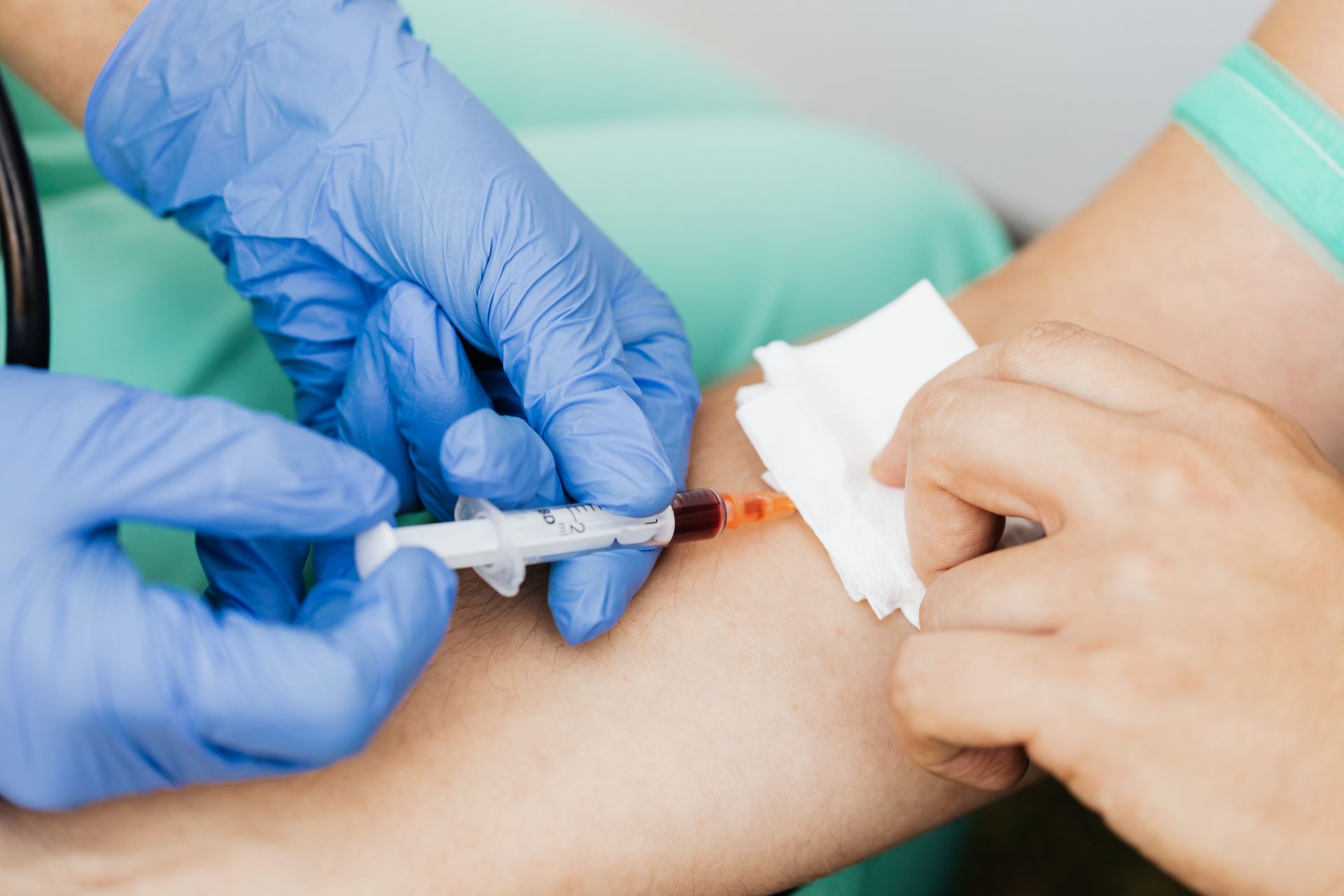
The symptoms of thyroid problems and menopause overlap strongly. A few rules of thumb help. Menopause symptoms often fluctuate: hot flashes come in waves, mood shifts, sleep varies from night to night, and they usually ease as the hormonal situation stabilizes. Thyroid symptoms are usually more consistent and gradually worsen without treatment. The only way to get certainty is blood testing. A standard TSH test gives a first impression, but a fuller picture comes from also measuring free T4, free T3, and thyroid antibodies (TPO).
When should you request blood testing?
Have your thyroid function tested if, during menopause, you're dealing with persistent fatigue that doesn't improve with rest, unexplained weight changes, heart palpitations that don't fit your usual hot-flash pattern, or symptoms that are consistently present rather than coming in waves. At Menovia, every patient receives an extensive blood panel, including thyroid values. More about what we measure and why.
Frequently asked questions
Can a thyroid problem cause hot flashes without you being in menopause? Yes. A disrupted thyroid can cause hot flashes, heart palpitations, and sweating regardless of age or cycle. An extensive thyroid panel (TSH, free T4, free T3) makes this distinction.
Is it normal for thyroid symptoms and menopause symptoms to occur together? Yes, this happens more often because declining estrogen affects the availability of thyroid hormone via thyroxine-binding globulin (TBG), and menopause can dysregulate the immune system. Testing both values separately is the way to tell them apart.
How much time should I allow before concluding my treatment isn't working? Discuss with your doctor when a check-up after a dose adjustment makes sense: both thyroid medication and hormone therapy need time to stabilize. Concluding too early gives a distorted picture.
What's the difference between thyroid-related hot flashes and menopause-related hot flashes? There's no sharp clinical distinction based purely on the pattern; a symptom diary over two to four weeks can give clues, but blood testing is needed for certainty.
Does hormone therapy affect my thyroid medication? Yes, estrogen increases the production of TBG, the protein that binds thyroid hormone, so your dose may need to be adjusted. Always discuss this with your doctor before starting hormone therapy.
Which blood values should I request if I'm unsure whether it's my thyroid or menopause? An extensive thyroid panel (TSH, free T4, free T3, possibly antibodies) for the thyroid, and estradiol with FSH for menopause. This combination gives clarity in most cases.
Can I start hormone therapy while my thyroid values aren't stable yet? This is generally not advised until thyroid values fall within the normal range, because starting in phases prevents confusion about which treatment is causing which effect. Discuss the order with your doctor.
How often should I have my thyroid checked during menopause? With abnormal initial values, your doctor determines the check-up schedule; with normal values and persistent symptoms, periodic checks are standard. At Menovia, the thyroid and metabolism panel is part of our ongoing monitoring.
Can an underactive thyroid cause hot flashes? An underactive thyroid more often causes cold intolerance than hot flashes, but the accompanying symptoms (fatigue, weight gain, brain fog) overlap strongly with menopause. Hot-flash-like heat symptoms fit an overactive thyroid more closely. Blood testing makes the distinction.
I have hot flashes and I'm tired, is that my thyroid or menopause? It can be both, and they often play a role at the same time. Only an extensive thyroid panel (TSH, free T4, free T3) together with estradiol and FSH gives clarity.
Summary
The thyroid is not a bystander during menopause. Menopause doesn't cause thyroid disease, but it can expose existing vulnerabilities through estrogen, cortisol, and the immune system, and thyroid symptoms can mimic or worsen hot flashes. Blood testing, including TSH, free T4, free T3, and antibodies, is the only way to get certainty. If your menopause symptoms feel heavier than expected, or aren't improving, have your thyroid function checked too.
This information is intended as an educational resource and does not replace medical advice, diagnosis, or treatment. If you have symptoms or questions about your personal situation, we recommend consulting a doctor.
Free guide: menopause, a broader perspective
The menopause is about more than just hot flashes. In our free menopause guide, our doctors explain the hormonal changes happening in your body, the symptoms you might not immediately associate with it, and the treatment options available. Written in plain language and medically backed.

Read more blogs about the menopause

Menovia
Sign up today