
Weight Gain During Menopause: Cause and Approach
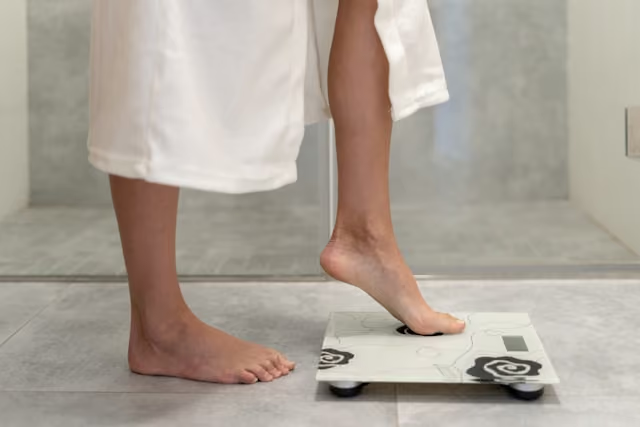
Weight gain during menopause isn't caused by eating too much or moving too little alone. Declining estrogen levels change how your body stores fat and how sensitive your muscles are to insulin, and that calls for a different approach than before.
In short
Weight gain during menopause results from a combination of declining estrogen, reduced insulin sensitivity, and muscle loss, not simply a lack of willpower. Blood testing for FSH, estradiol, and thyroid values (TSH) shows which mechanism is at play for you. Advice: map out your hormone balance through a program like Menovia and use lifestyle, strength training, and possibly bio-identical hormone therapy simultaneously, since according to NAMS research, separate measures work less consistently than a combined approach. For some women, under strict medical supervision, GLP-1 medication can be used as an addition to hormone therapy and lifestyle, never as a replacement for them. Those who still wait to get blood testing in 2026 often miss the clearest starting point for addressing weight gain during menopause.
Why this matters
Estrogen doesn't just drive your cycle, it also influences where your body stores fat. Once production declines, fat storage shifts from the hips and thighs toward the belly, and that visceral belly fat is metabolically more active and harder to lose than subcutaneous fat.
On top of that, muscle mass gradually declines from your forties onward, and muscle tissue burns more calories at rest than fat tissue. Less muscle mass means a lower resting metabolism, even if you eat and exercise the same as five years ago. Sleep problems from hot flashes also raise cortisol levels, and chronically elevated cortisol is linked to extra belly fat storage.
For some women, the thyroid plays a role. TSH values outside the 0.4-4.0 mU/L range can slow metabolism further, and that mechanism is covered in more detail in this article on thyroid and hot flashes. Without blood testing, this stays invisible, which is exactly why a diagnostic approach achieves more than eating less alone.
How do you lose weight during menopause?
Losing weight during menopause is harder for many women than it was ten years earlier, and that isn't down to a lack of willpower. Declining estrogen changes your metabolism on several fronts at once, so the same approach that used to work now delivers less. Understanding what shifts helps you aim your energy at what can actually make a difference.
Four mechanisms make losing weight during menopause harder. Your insulin sensitivity decreases, so your body stores carbohydrates as fat more readily. Your muscle mass gradually declines from your forties, and less muscle means a lower resting metabolism, even with the same food and exercise. Fat distribution shifts from the hips and thighs to the belly, where fat is metabolically more active and more stubborn. And disrupted sleep from hot flashes raises your cortisol, which can promote extra belly fat storage.
What tends to help most in practice is combining strength training with adequate protein. Strength training protects the muscle mass that keeps your resting metabolism up, and protein is the building block for it. A randomized study in postmenopausal women found that combining strength training with a high-protein diet improves body composition more than training alone (randomized trial). Aim for 1.2 to 1.6 grams of protein per kilogram of body weight per day and build up to two or three strength sessions a week. Sleep and stress matter too: a systematic review of lifestyle interventions around menopause confirms that combined changes in diet and exercise work more consistently than isolated measures (systematic review).
And where does hormonal treatment fit? Bio-identical hormone therapy is not a weight-loss drug and won't lower the number on the scale on its own. What it can do is help indirectly by reducing symptoms: fewer hot flashes and better sleep often mean more energy for exercise and fewer cortisol spikes, which makes lifestyle changes easier to sustain. In practice we see that women who address symptoms, sleep, and lifestyle at the same time get more of a grip on their weight than those who try one lever at a time. The core stays lifestyle and strength training, with hormone therapy as an addition tailored to your blood values.
What you need
- Recent blood testing or willingness to get it done (FSH, estradiol, TSH, and preferably a DUTCH test for hormone metabolites)
- Insight into your current protein intake and exercise pattern
- Access to a menopause program with BIG-registered doctors for guidance on any hormone therapy or GLP-1 medication
- Time for two to three strength sessions a week
- Patience for a program of at least several months, weight gain during menopause doesn't reverse in two weeks
The steps
1. Map out your hormone status
Start with blood testing for FSH, estradiol, and TSH. An FSH value above 25-30 IU/L points to reduced ovarian function, and that result gives context to weight gain that would otherwise remain unexplained. Without these figures you're guessing at the cause, with the figures you know whether hormonal decline, thyroid function, or both are at play.
Common mistake: going by symptoms alone without blood values, so lifestyle advice doesn't match what's actually happening in your body.
2. Have insulin sensitivity and microbiome checked
A DUTCH test and microbiome analysis map out how your body breaks down hormones and how your metabolism responds to food. Research published in The Lancet and summarized by the Dutch Association of Internal Medicine describes how insulin sensitivity can decrease around menopause, contributing to fat storage around the belly. This testing is part of the four pillars (blood testing, DNA testing, microbiome analysis, DUTCH test) that Menovia uses as standard.
Common mistake: cutting out carbohydrates entirely without knowing whether insulin sensitivity is actually the problem.
3. Increase your protein intake and start strength training
Muscle mass protects against a declining resting metabolism, and protein is the building block for it. Aim for 1.2 to 1.6 grams of protein per kilogram of body weight per day, spread across meals, and combine this with two to three strength sessions a week. This mechanism works independently of hormone therapy, but reinforces its effect when both are used together.
Common mistake: doing only cardio, while strength training specifically counters the muscle loss that leads to a lower resting metabolism.
4. Stabilize sleep and reduce cortisol spikes
Hot flashes and night sweats disrupt sleep, and poor sleep raises cortisol, which can in turn promote belly fat storage. Keep your bedroom cool, maintain a fixed sleep rhythm, and limit caffeine after midday. Women who address hot flashes and sleep problems together through hormone therapy often also see cortisol-related symptoms decrease, according to research cited by Harvard Women's Health Watch.
Common mistake: ignoring sleep problems as though they're just part of it, when they're a direct link to weight gain.
5. Use blood testing, lifestyle, and bio-identical hormone therapy simultaneously
Menovia works with an integrated approach: blood testing, lifestyle changes, and bio-identical hormone therapy are used simultaneously, tailored to your values, not one after another. A large French cohort study (E3N) shows that bio-identical progesterone combined with estrogen doesn't show a significantly increased breast cancer risk compared to synthetic progestogens, contrary to what's often assumed based on the 2002 WHI study (average age 63, using conjugated equine estrogen and synthetic MPA, a different composition and target group). This makes bio-identical hormone therapy a real option alongside, not after, lifestyle changes.
Common mistake: thinking you have to try lifestyle first before hormone therapy comes into play. The most effect occurs precisely when everything is used at the same time.
6. Consider GLP-1 medication as an addition, not a replacement
For some women, hormone supplementation and lifestyle aren't enough to break the weight pattern. In those cases, GLP-1 medication, such as semaglutide or tirzepatide, can be a worthwhile additional step under strict medical supervision. These medications mimic a hormone naturally produced in the gut: they increase satiety, slow gastric emptying, and improve insulin sensitivity, with an effect that reaches further than weight loss alone, including less visceral fat and a better lipid profile.
An observational study from Mayo Clinic, published in The Lancet Obstetrics, Gynaecology & Women's Health (January 2026, 120 participants), shows that postmenopausal women who combined tirzepatide with hormone therapy lost 35% more weight than women using tirzepatide alone. The researchers themselves emphasize that this wasn't randomized research and that hormone therapy hasn't been shown to have caused the extra weight loss; better sleep and treatment adherence may also have played a role. Precisely for that reason, Menovia never uses GLP-1 medication on its own, but always as part of a broader plan alongside bio-identical hormone therapy, after diagnostics through blood testing and, depending on your program, a thyroid and metabolism panel. Read more about how Menovia uses GLP-1 within a program.
Common mistake: seeing GLP-1 medication as a replacement for strength training or hormone therapy, when the sharp drop in appetite it causes actually carries extra risk of muscle and bone mass loss without those other two pillars.
7. Monitor every 12 weeks
Menovia's program follows seven steps: screening, intake, testing, treatment plan, start, monitoring every 12 weeks, and evaluation. That monitoring consists of a monthly consultation with a doctor, the MRS questionnaire, and blood testing every 12 weeks. That monitoring frequency isn't there for nothing, hormone dosages are adjusted based on follow-up blood testing, not by feel. With GLP-1 use, this monitoring runs alongside the regular consultations in your program.
Common mistake: starting a treatment plan and then never having it checked again.
8. Evaluate after six months
A full program lasts at least six months. Only after that period can you properly assess whether weight, energy, and symptoms are stabilizing, and whether the dosage still fits. Don't expect a straight line down on the scale, muscle gain and fat loss can temporarily offset each other.
Common mistake: concluding after six weeks that it's not working while the body is still adjusting.
Troubleshooting
- I'm not losing weight despite exercising and eating less: this often points to reduced insulin sensitivity or a too-low resting metabolism from muscle loss. Have this checked through blood testing and the DUTCH test instead of dieting even more strictly.
- I have no energy for strength training: fatigue from declining estrogen and lack of sleep is a known pattern. Start with two 20-minute sessions instead of jumping into a heavy schedule.
- My thyroid has never been checked: TSH values outside 0.4-4.0 mU/L can worsen weight gain, read more in the article on thyroid and hot flashes about how the two are connected.
- I don't know how much longer this will last: menopause has no fixed end date, and that partly determines how long you stick with lifestyle changes and treatment.
- Reimbursement is unclear: since May 2026, part of the consultations are reimbursed through supplementary insurance (naturopathic policy category, varies by insurer). Compounded medication, DHEA, and testosterone for women aren't covered by this, since they aren't registered in the Netherlands and aren't reimbursed.
- I don't know which program fits me: Menovia offers three programs, Basis from €95 per month (intake €395), Plus from €185 per month (intake €995), and Compleet from €275 per month (intake €1,595), tailored to how much diagnostics and guidance you need.
Tools and resources
- Blood testing through your GP or through Menovia as a starting point for a complete hormonal picture
- A food diary or app to track protein intake
- A simple strength training schedule of two to three sessions a week
- BIG-registered doctors for guidance on any bio-identical hormone therapy or GLP-1 medication
- The four diagnostic pillars (blood testing, DNA testing, microbiome analysis, DUTCH test) as a starting point for a tailored treatment plan
What to do now
Want to know how much longer you might deal with these symptoms, and whether that affects your approach? Read how long menopause typically lasts for a more realistic timeframe than the vague assumption that it lasts a few years, which you often hear.
Want to approach losing weight during menopause more deliberately? Our free guide explains how symptoms, lifestyle, and hormones connect, so you can base your choices on more than guesswork. Download the free guide →
Frequently asked questions
What exactly causes weight gain during menopause? Declining estrogen shifts fat storage to the belly, muscle mass decreases which lowers your resting metabolism, and reduced insulin sensitivity plays a role for some women. Blood testing for FSH, estradiol, and TSH shows which mechanism dominates for you.
How do you lose weight during menopause? Losing weight during menopause works best with strength training and adequate protein, combined with good sleep and attention to stress. That protects muscle mass and keeps your resting metabolism up. Hormone therapy can help indirectly by reducing symptoms, but it is not a weight-loss drug.
Does hormone therapy help with losing weight during menopause? Hormone therapy is not a weight-loss drug and won't lower your weight on its own. It can reduce symptoms such as hot flashes and poor sleep, which often gives you more energy for exercise and makes lifestyle changes easier to sustain, so losing weight can become easier. It stays an addition to strength training and adequate protein, not a replacement for them.
Does hormone therapy help against weight gain during menopause? Bio-identical hormone therapy can contribute to a more favorable fat distribution and more energy for exercise, through restoring estrogen levels, as shown in research such as the E3N study. It doesn't replace strength training or protein intake, it reinforces their effect when used at the same time.
Can GLP-1 medication help with weight gain during menopause? For some women, GLP-1 medication such as semaglutide or tirzepatide, under medical supervision, can be a worthwhile addition when hormone therapy and lifestyle alone don't give enough results. An observational Mayo Clinic study from 2026 in The Lancet Obstetrics, Gynaecology & Women's Health saw 35% more weight loss with the combination with hormone therapy than with tirzepatide alone, although that study can't prove a causal link.
Is the 2002 WHI study still a reason to avoid hormone therapy? That study used conjugated equine estrogen and synthetic MPA in women with an average age of 63, a different composition and target group than bio-identical treatment for women around 45 to 55. A large French cohort study (E3N) shows a different risk profile for bio-identical progesterone.
How much does a program against weight gain during menopause cost at Menovia? Menovia offers three programs: Basis from €95 per month with an intake of €395, Plus from €185 per month with an intake of €995, and Compleet from €275 per month with an intake of €1,595.
Is a treatment program reimbursed? Since May 2026, supplementary insurance reimburses part of the consultations, depending on your policy and insurer. Compounded medication, DHEA, and testosterone for women fall outside this reimbursement.
Can I lose weight with lifestyle alone, without hormone therapy? Some women see results with strength training and protein intake alone, but with a strongly declined estrogen level, the mechanism behind the fat shift remains unaddressed. Blood testing shows whether that's the case for you.
How quickly do I see results after starting a treatment plan? Expect at least several months before weight, energy, and symptoms measurably stabilize, with monitoring through monthly consultations, the MRS questionnaire, and blood testing every 12 weeks to adjust dosage. A full program spans at least six months.
Does the thyroid play a role in weight gain during menopause? For some women, yes: TSH values outside 0.4-4.0 mU/L can slow metabolism alongside the hormonal changes of menopause. This is mapped out separately through blood testing, not automatically assumed.
In conclusion
Most women in 2026 still focus on eating less as their first response to weight gain, while muscle loss and insulin sensitivity often play a larger role in the mechanism. Blood testing gives a more concrete answer to that than a stricter diet.
Related articles
- How long menopause typically lasts
- Thyroid and hot flashes: how are they connected
- How Menovia uses GLP-1 within a program
- Menovia, blood testing, and treatment programs
This information is intended as an educational resource and does not replace medical advice, diagnosis, or treatment. If you have symptoms or questions about your personal situation, we recommend consulting a doctor.
Free guide: menopause, a broader perspective
The menopause is about more than just hot flashes. In our free menopause guide, our doctors explain the hormonal changes happening in your body, the symptoms you might not immediately associate with it, and the treatment options available. Written in plain language and medically backed.

Read more blogs about the menopause


Menovia
Sign up today