
What to expect at your first menopause clinic consultation

At a first consultation at a menopause clinic, you meet a BIG-registered doctor and, together, map out your symptoms, medical history and cycle. It is mainly a calm conversation with your story at the centre, not a treatment that is decided in advance. Where appropriate, blood tests follow, and the doctor then proposes a personal plan.
By Menovia
In short
- A first consultation begins with a friendly introduction and a thorough intake: your symptoms, medical history and menstrual pattern are discussed in detail.
- For women over 45, menopause is usually a clinical assessment based on age, symptoms and cycle. Blood tests are mainly useful to rule out other causes, such as the thyroid.
- At Menovia the conversation takes place online, guided by a BIG-registered doctor.
- A personal plan combines bio-identical hormones as the core of the treatment with lifestyle as a complement, and nothing is decided in advance.
- You do not need to prepare extensively, but an overview of your symptoms and a list of your medication help the conversation.
What does a first consultation at a menopause clinic look like?
A first consultation is, at its heart, an introduction. You speak with a BIG-registered doctor who listens to what you are experiencing, asks questions and explains which steps are possible. Nothing is prescribed straight away, because the goal is first to build a complete picture of your situation.
At Menovia this happens online, through a video call from a quiet place at home. If you would like to see how the whole care pathway is set up beforehand, you can read that on our how Menovia works page. That way you know what to expect from the introduction and the steps that follow.
What is asked during the intake?
The intake is broader than an average GP appointment, precisely because menopausal symptoms are wide-ranging and change over time. The doctor asks in more detail about, among other things:
- Your symptoms: hot flashes, sleep problems, heart palpitations, mood swings, brain fog or changes in weight, ideally with a sense of how often and how severe they are.
- Your menstrual pattern: whether your cycle is changing, irregular or has stopped.
- Your medical history and that of your family, such as cardiovascular disease, breast cancer or thrombosis.
- Medication you already take, such as thyroid medication, antidepressants or blood pressure lowering medication.
A common pitfall is playing symptoms down out of habit. It is exactly the frequency and the burden you experience that help the doctor gauge what is going on and which tests make sense.
What tests are part of a first consultation?
For women over 45, menopause is usually a clinical diagnosis, which the doctor infers from your age, your symptoms and your menstrual pattern. A single hormone value is often not decisive here, because the hormone FSH fluctuates strongly during perimenopause. That is also why the NHG guideline on menopause does not advise routine FSH testing for this group.
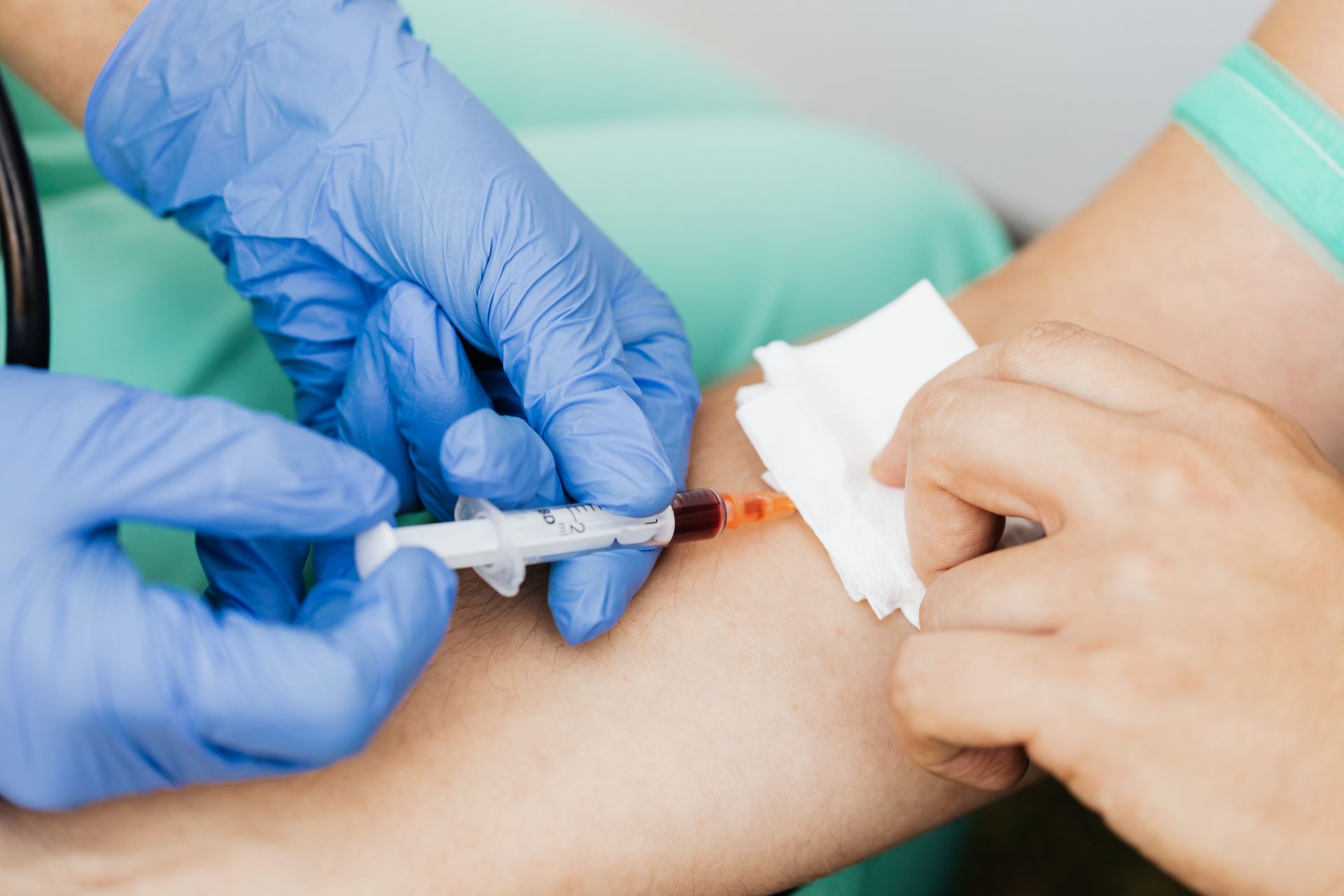
Blood tests do have a clear place where they are appropriate, for example to rule out other causes. Thyroid problems can mimic hot flashes and heart palpitations, and such values are easy to check with a blood test. Menovia arranges the blood tests that are needed, so you do not have to supply your own lab results.
There is a reason it helps to have symptoms assessed in good time: after menopause, bone loss runs faster for a number of years. On average, women lose up to around 10% of their bone mass in the first five years after menopause, with wide variation from person to person (Better Health Channel). A consultation helps you weigh up, together with a doctor, whether and when steps are needed.
Not sure whether your symptoms belong to menopause? A broader view of what happens in this phase can help you ask sharper questions during a consultation. Download the free guide →
How do you prepare for the first consultation?
You do not need to make extensive preparations, but a few things make the conversation easier:
- A short overview of your symptoms, with when they started and how often they occur.
- A list of the medication and supplements you take.
- Any recent blood results if you have them. If you do not, that is not a problem.
- The questions you want to ask yourself, for example about hormone therapy, lifestyle or how long a care pathway lasts.
- A quiet place for the video call.
What happens after the first consultation?
Once the picture is complete, the doctor discusses a personal plan with you. Bio-identical hormones form the core of the treatment, while lifestyle is an important complement. The plan is tailored to your symptoms and situation and is not fixed in advance, so you decide together with the doctor what fits.
Still unsure whether a clinic is the right place, or want to know what to look for in a provider of hormone therapy? Then read what to look for in a hormone therapy clinic before you make a choice. After starting, follow-up appointments help you discuss how you are responding and whether anything needs adjusting.
When to see a doctor
A menopause clinic does not replace care for acute or alarming symptoms. Contact your GP or a doctor for symptoms such as:
- Vaginal bleeding after menopause, or bleeding between periods that differs from your normal pattern.
- Persistent or severe heart palpitations, chest pain or shortness of breath.
- Severe low mood, anxiety or thoughts that worry you.
- Symptoms that strongly interfere with your daily functioning.
If you are unsure whether something can wait, consulting a doctor is always the safe choice.
Frequently asked questions
Is a first consultation immediately a treatment? No. The first consultation is an introduction and intake. Only once your symptoms and any tests are clear does the doctor propose a plan that you discuss together.
Do I need to bring my own blood results? You do not have to. If blood tests are useful, the clinic arranges them. If you have recent results, you are welcome to share them.
Does the consultation take place online or in person? At Menovia the conversation takes place online, through a video call with a BIG-registered doctor. A quiet place at home is enough.
How can I best prepare? An overview of your symptoms, a list of your medication and the questions you have yourself make the conversation more focused.
What does a first consultation cost? The cost depends on the care pathway you choose. Current rates can be found on the website, and you can also ask about them during the introduction.
Is a consultation also worthwhile for mild symptoms? Yes. Even lighter symptoms can point to hormonal changes. A conversation helps put your symptoms in perspective and decide together whether further steps are needed.
Ready for an introduction?
Would you like your symptoms assessed by a BIG-registered doctor? Plan a no-obligation introduction and discover what fits your situation.
Sources
- Dutch College of General Practitioners (NHG). NHG guideline 'De overgang' (M73). richtlijnen.nhg.org
- Better Health Channel (Department of Health, Victoria). Menopause and osteoporosis. betterhealth.vic.gov.au
This information is intended as an educational resource and does not replace medical advice, diagnosis, or treatment. For complaints or questions about your personal situation, we recommend consulting a doctor.
Free guide: menopause, a broader perspective
The menopause is about more than just hot flashes. In our free menopause guide, our doctors explain the hormonal changes happening in your body, the symptoms you might not immediately associate with it, and the treatment options available. Written in plain language and medically backed.

Read more blogs about the menopause
Menovia
Sign up today