Red clover for menopause: does it really work?
Red clover is often promoted as a natural remedy for hot flushes, but the evidence is weak and mixed. The large Cochrane review of phytoestrogens found no convincing, consistent evidence that red clover reduces hot flushes and night sweats compared with a placebo. Some women notice mild relief, but red clover is not a proven treatment and it is not a replacement for an approach with stronger support.
In short
- Red clover (Trifolium pratense) contains isoflavones, plant compounds that resemble estrogen in structure. The mechanism is plausible, but plausible is not the same as proven.
- The Cochrane review of phytoestrogens found no consistent benefit of red clover over placebo for hot flushes.
- The placebo effect is large with menopausal complaints: in the review, the reduction in hot flushes in the placebo groups ranged widely, from 1 to 59 percent.
- Because of its estrogenic action, caution is needed with hormone-sensitive conditions, such as a history of breast cancer. Always discuss this with your doctor first.
- Bio-identical hormones, prescribed by a doctor, have the strongest evidence for hot flushes. Red clover is at most an addition, not a core treatment.
What is red clover and how might it work?
Red clover is a plant whose flower contains isoflavones, in particular biochanin A and formononetin. Isoflavones are phytoestrogens: plant compounds that resemble the body's own estrogen in structure. In the body they are converted into compounds that can bind weakly to estrogen receptors.
That mechanism is the reason red clover is tried for hot flushes. As estrogen levels fall during menopause, the idea is that a plant compound with a weak estrogen-like effect may offset part of that loss. According to the American NCCIH, this theory is plausible, but in research it does not lead to a reliable result.
One point matters here: the same estrogenic action that makes red clover interesting is also exactly why it is not without consequence for hormone-sensitive conditions. More on that below.
Does red clover really work for hot flushes?
The honest answer is that the evidence is weak and inconsistent. The 2013 Cochrane review (Lethaby and colleagues) pooled several randomised studies of phytoestrogens. Its conclusion was that there is no convincing evidence that these supplements reduce the frequency or severity of hot flushes or night sweats.
For red clover specifically, five studies using a standardised extract were combined. Between red clover and placebo there was no statistically significant difference in the number of hot flushes per day. The NCCIH also concludes that the studies give inconsistent results and that some carried a high risk of bias.
What stands out is how strong the placebo effect is. In the review, the reduction in hot flushes in the placebo groups ranged from 1 to 59 percent. That makes it hard for an individual to tell a real effect from expectation. Isoflavones also act gradually rather than acutely, so any change would not be immediate.
It is also worth knowing the difference between forms. Studies use a standardised extract with a known amount of isoflavones. Loose red clover tea does not contain a measured, comparable concentration and therefore cannot be compared with research results.
Who should be cautious?
Red clover appears to be well tolerated with short-term use, but its estrogenic action calls for nuance. The NCCIH points out that phytoestrogens may not be suitable for women who should not use estrogen. Its long-term safety has not been sufficiently studied.
- A history of breast cancer or another hormone-sensitive condition: do not use red clover without discussing it with your treating doctor. Its estrogenic mechanism makes this a category where caution comes before experimentation.
- Use of medication that affects your hormone balance: always coordinate use with your doctor. Discussion is also sensible if you take blood thinners, because of possible interactions.
- Pregnancy or breastfeeding: red clover is not advised in these situations.
The most commonly reported side effects are mild, such as stomach upset or nausea, and are more often reported at higher doses. Complaints that overlap with the thyroid deserve their own assessment; for that, read how the thyroid and hot flushes are connected.
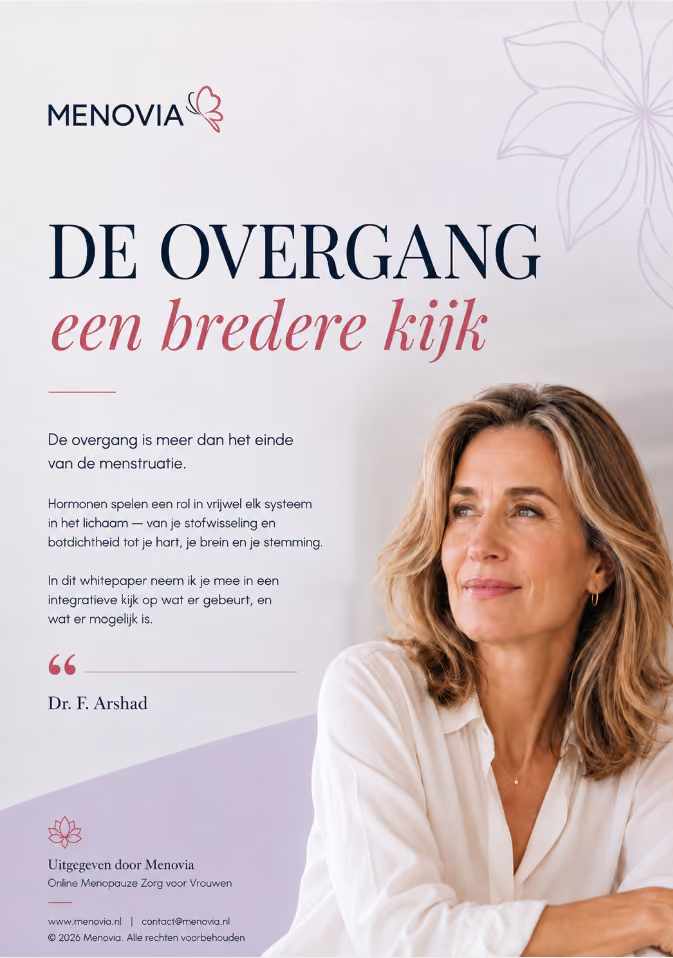
Wondering whether a single supplement is enough for your complaints? Menopause often has more layers than one plant compound can reach, and a broader view can help you make a choice. Download the free guide →
Red clover or bio-identical hormones?
If your complaints affect your daily life, the comparison is genuinely relevant. Red clover shows no consistent benefit over placebo in most randomised studies. Bio-identical hormones, prescribed after a proper intake and blood test, act directly on your hormone balance and have the strongest support for hot flushes.
At Menovia we therefore see bio-identical hormones as the core of treatment when they are indicated, with lifestyle as a valuable addition. A supplement such as red clover can at most be a slight addition, not a replacement. If you want to know what to look for in that choice, read buying bio-identical hormones: an overview and advice.
If red clover makes no measurable difference after an honest trial, the next logical step is not a second herbal supplement, but a conversation about an approach that fits your blood values. See hormone therapy menopause clinic: what to look for for the questions you can ask a clinic.
When to see a doctor
Menopausal complaints can often be managed well, but some signals deserve medical assessment. Contact your doctor if:
- your complaints seriously disrupt your daily functioning, work or sleep;
- you have a history of breast cancer or another hormone-sensitive condition and are considering supplements or hormones;
- you take medication and want to add a supplement, because of possible interactions;
- you have unexpected blood loss, persistent heart palpitations or other complaints that do not resolve on their own;
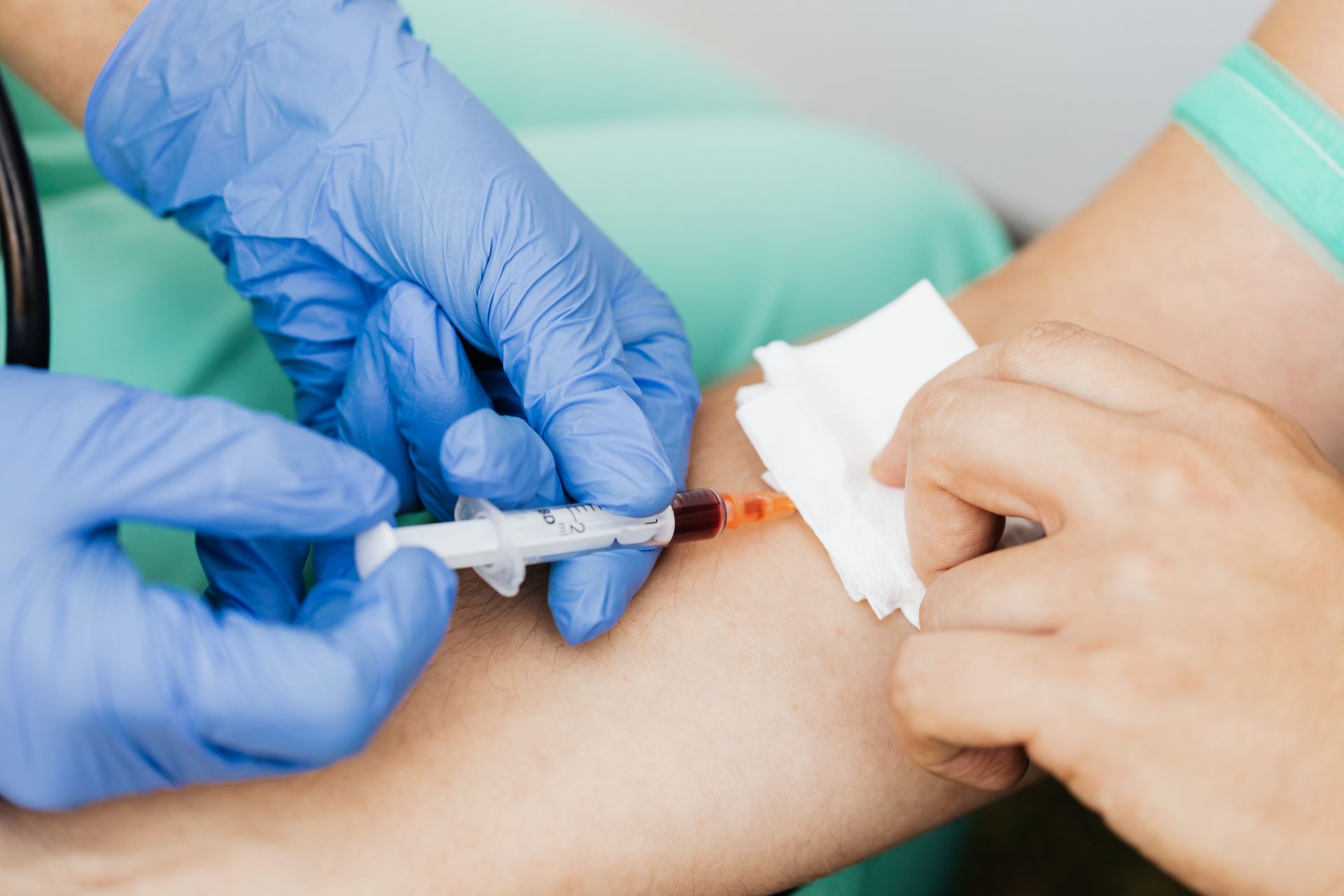
- you are unsure whether your complaints are related to menopause and want a broader picture through a blood test.
Frequently asked questions
Does red clover really work for hot flushes? The evidence is weak and inconsistent. The Cochrane review found no significant difference between red clover and placebo in the number of hot flushes. Some women notice mild relief, but that has not been reliably shown in randomised research.
How long does it take before you can judge the effect? Isoflavones act gradually rather than acutely, unlike a painkiller. Any effect would build slowly, so a fair judgement takes time, and an objective record of your complaints helps to separate a real effect from expectation.
Is there a difference between red clover tea and a supplement? Yes. Studies use a standardised extract with a known amount of isoflavones. Loose tea does not contain a measured, comparable concentration and therefore cannot be compared with the products that were studied.
Can I use red clover if I have a history of breast cancer? Not without discussing it with your treating doctor. Because of the estrogenic action of isoflavones, this is a point of attention with hormone-sensitive conditions and with related medication.
Is red clover better than bio-identical hormones? No. Bio-identical hormones under a doctor's supervision have the strongest support for hot flushes, while red clover shows no consistent benefit over placebo in most studies. Red clover can at most be an addition.
Is red clover reimbursed by health insurance? No, dietary supplements such as red clover are not covered. Whether a consultation is partly reimbursed depends on your supplementary insurance; check your own policy for that.
Sources
- Lethaby A, Marjoribanks J, Kronenberg F, Roberts H, Eden J, Brown J. Phytoestrogens for menopausal vasomotor symptoms. Cochrane Database of Systematic Reviews, 2013. cochrane.org
- National Center for Complementary and Integrative Health (NCCIH). Red Clover: Usefulness and Safety. nccih.nih.gov
This information is intended as an educational resource and does not replace medical advice, diagnosis, or treatment. For complaints or questions about your personal situation, we recommend consulting a doctor.
Free guide: menopause, a broader perspective
The menopause is about more than just hot flashes. In our free menopause guide, our doctors explain the hormonal changes happening in your body, the symptoms you might not immediately associate with it, and the treatment options available. Written in plain language and medically backed.
Read more blogs about the menopause
Menovia
Sign up today