
Cortisol and menopause: chronic stress and your hormones

Cortisol and menopause are connected through your stress system. The brain regions that steer your stress hormone cortisol are in close contact with the regions that regulate your estrogen and progesterone. When your hormone levels start to fluctuate in perimenopause, your stress system can react more sensitively, which can make the same busyness feel heavier than it did a few years earlier. Whether cortisol itself rises structurally, or whether your daily rhythm truly 'shifts', is inconsistent across studies, so it cannot be stated as proven.
In short
- Your stress system (the HPA axis) and your sex hormones share the same regulating regions in the brain, so they can influence each other.
- Fluctuating and declining estrogen levels appear to increase your sensitivity to stress. That this makes cortisol structurally high is not proven: the studies contradict one another.
- Single cortisol measurements (via saliva or urine) are not reliable enough to base treatment on. Your complaints and your story carry more weight.
- What does help with stress and menopause complaints is well supported: regularity in sleep, meals, and movement, plus rest during the day.
- Bio-identical hormones form the core of treatment when declining hormones are the cause. Lifestyle is an important addition, not a replacement.
How are cortisol and menopause connected?
The link runs through two hormone systems that are in contact with each other. Your stress system is called the hypothalamic-pituitary-adrenal axis, or HPA axis for short. It regulates the release of cortisol. The system that steers your estrogen and progesterone shares control centres in the brain with the HPA axis, so changes in one system can carry over into the other.
In research we see signals that strongly fluctuating estrogen levels go together with a stronger cortisol response to stress. There are also studies in which stabilising estrogen with an estradiol patch appears to dampen that stress response. It is important to know that the driving force here is mainly the fluctuation and decline of estrogen, not cortisol taking the lead role on its own.
In practical terms, this means busyness in this stage of life can feel heavier, even when objectively there is no more on your plate. That is not making a fuss and not a sign of weakness. It fits how your hormone balance responds at that moment.
Does your cortisol rhythm really change during menopause?
Normally, cortisol peaks about 30 to 45 minutes after waking and then gradually falls to a low point during the night. This morning pattern is called the cortisol awakening response and is present in most healthy people. With prolonged stress, this rhythm can flatten.
Whether this rhythm shifts because of menopause itself is less clear than is often suggested. Some studies find higher cortisol values in late perimenopause, but a Swiss cohort study found no demonstrable effect of the menopause phase on cortisol values. The differences between women were large and individual. The honest summary is therefore this: a 'typical shifted menopause curve' has not been demonstrated.
Which complaints can be linked to stress and cortisol?
Part of the complaints during menopause probably has a stress component, alongside the direct role of declining estrogen and progesterone. Think of trouble relaxing despite being tired, waking up with a churning stream of thoughts, and hot flashes that seem more intense after a busy day than during a quiet weekend.
Persistent fatigue, heart palpitations, and weight gain around the middle are also often linked to stress. Those connections are plausible, but not equally strong in everyone and rarely the only cause. If you want more depth on individual complaints, you can read for example about heart palpitations in menopause or about weight gain during menopause.
Suspect that stress is amplifying your menopause complaints? A broader picture of hormones, lifestyle, and recovery can help you understand what is going on for you. Download the free guide →
Can you have your cortisol measured?
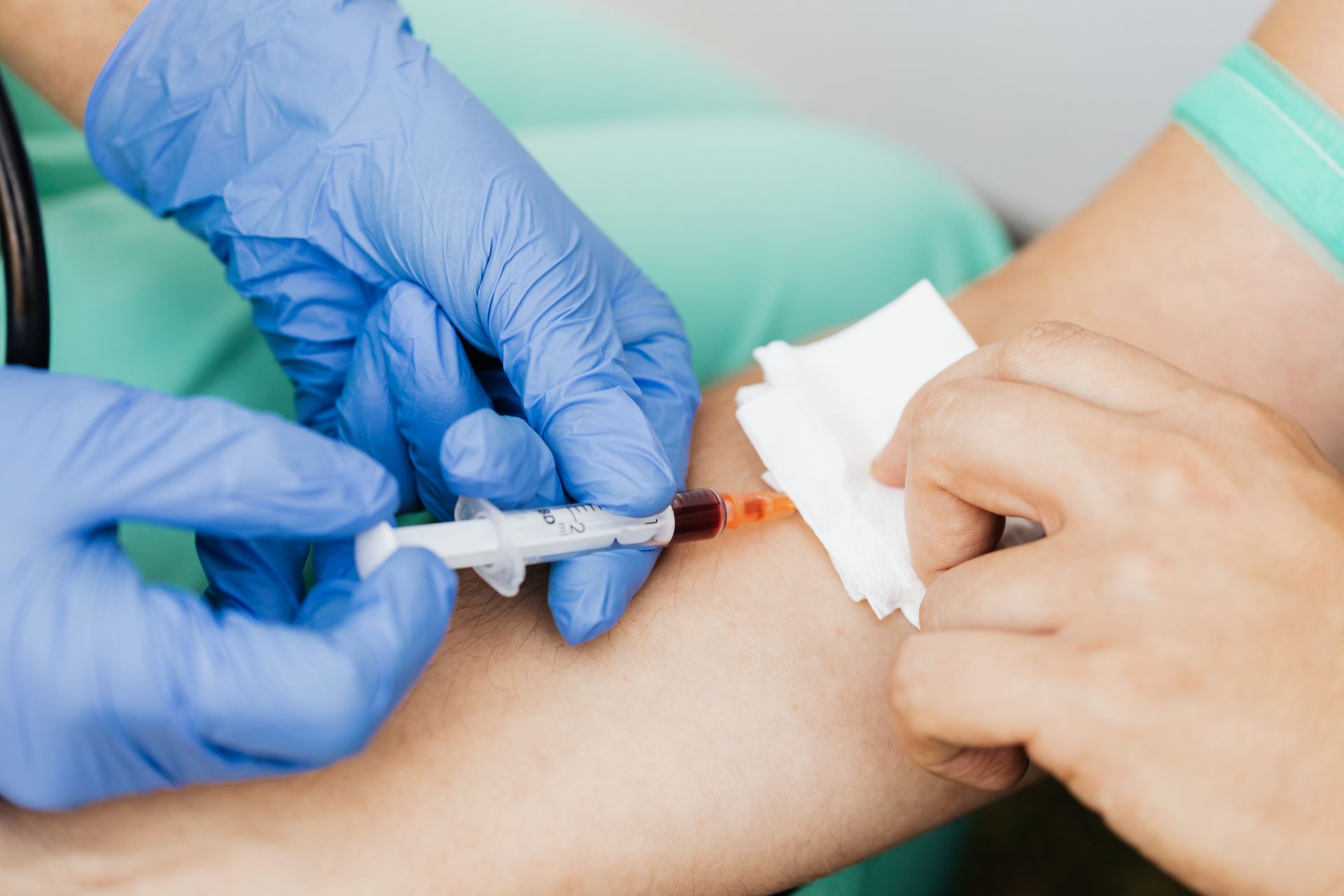
Measuring is possible, but its value is more limited than some providers suggest. A single cortisol value from blood says little, because cortisol fluctuates strongly within a day. Saliva or urine tests that map the daily curve are widely used, but they are not well validated as a basis for clinical decisions and do not belong in the diagnosis of serious adrenal diseases.
In practice we therefore see that your pattern of complaints, your story, and targeted blood tests usually guide decisions more than a single cortisol curve. At most a test can be one extra piece of the puzzle, never the whole picture. Always have a result interpreted by a doctor who knows the context of menopause, so that you do not end up treating a number that means little.
What can you do yourself about stress and menopause complaints?
The good news: the measures that are best supported are largely ones you can put in place yourself. They aim at regularity and recovery, not at a quick fix.
- Keep a fixed wake-up time, including at weekends, and seek daylight shortly after waking. That supports a stable day and night rhythm.
- Eat with some regularity, with protein and fibre, so that large swings in your blood sugar are avoided. Caffeine on an empty stomach can add to restlessness.
- Build short rest moments into your day, for example a few minutes of calm breathing or a short walk without your phone. Scheduling rest only in the evening often works less well.
- Choose movement that matches your energy. Alternating between walking, strength training, and rest days is often more pleasant than intense exercise every day.
Sleep and stress reinforce each other in both directions. If you get stuck here, our article on sleep problems in menopause offers concrete handholds.
What role do hormones play in treatment?
When declining estrogen and progesterone levels are the underlying cause of your complaints, lifestyle alone is often not enough. Bio-identical hormones then form the core of treatment, with lifestyle advice as an important addition. Stabilising estrogen with an estradiol patch may also contribute to a calmer stress response, although the effect differs from person to person.
Around the choice of progesterone, safety plays a part. In a large French cohort study (E3N-EPIC), micronized progesterone combined with estrogen was not associated with a demonstrably increased breast cancer risk, whereas synthetic progestogens were. This is observational research, so it is not hard proof of cause and effect, but it is relevant to the consideration. We always discuss such a trade-off personally, with a doctor registered in the BIG register.
When to see a doctor
Talk to a doctor when your complaints get in the way of your daily functioning, or when you are unsure whether it really is menopause. In any case, get in touch if you have:
- Persistent, extreme fatigue, unwanted weight loss, or dizziness on standing, because this can point to an adrenal or thyroid problem that needs separate investigation.
- Heart palpitations with chest pain, shortness of breath, or fainting. In that case call your doctor urgently, or your local emergency number.
- Low mood, anxiety, or thoughts you can no longer manage. Your doctor can think along with you about suitable help.
- Unexpected bleeding after a year without a period. Always have this assessed.
Thyroid values are often checked alongside this kind of complaint, because they can resemble menopause. You can read more about that in the role of the thyroid during menopause.
Frequently asked questions
What is the link between cortisol and menopause? The connection runs through your stress system (the HPA axis), which shares control centres in the brain with your estrogen and progesterone production. When hormone levels fluctuate, your sensitivity to stress appears to increase, which can amplify complaints. That cortisol itself rises structurally is not proven.
Can chronic stress worsen hot flashes? That is plausible. Stress appears to be able to make temperature regulation more sensitive, so hot flashes can feel more intense. It usually works together with declining estrogen and is rarely the only cause.
Is a cortisol test worthwhile during menopause? Usually of limited value. Single saliva or urine curves are not well validated as a basis for treatment, and a single blood value fluctuates too strongly. Your complaints and targeted testing, interpreted by a doctor, usually carry more weight.
Is cortisol the same as adrenaline? No. Adrenaline acts within seconds and is quickly gone again. Cortisol stays active for hours and helps set your daily rhythm. They are two different stress hormones.
Does hormone therapy help with stress complaints? Hormone therapy does not treat cortisol directly, but it can stabilise the underlying hormone fluctuations that make you more sensitive to stress. We always use this together with lifestyle advice, never as a replacement for it.
Can cortisol explain weight gain around the middle? Prolonged stress can encourage fat storage around the belly, but is rarely the only factor. Declining estrogen, sleep, and lifestyle also play a part. Lifestyle alone therefore does not always resolve it.
Sources
- Fournier A, et al. Breast cancer risk in relation to different types of hormone replacement therapy in the E3N-EPIC cohort. International Journal of Cancer, 2005. pubmed.ncbi.nlm.nih.gov
- Steroid Hormone Secretion Over the Course of the Perimenopause: Findings From the Swiss Perimenopause Study. Frontiers in Global Women's Health, 2021. pmc.ncbi.nlm.nih.gov
- Endocrine Society. The cortisol awakening response. Endocrine Reviews. endocrine.org
This information is intended as an educational resource and does not replace medical advice, diagnosis, or treatment. For complaints or questions about your personal situation, we recommend consulting a doctor.
Free guide: menopause, a broader perspective
The menopause is about more than just hot flashes. In our free menopause guide, our doctors explain the hormonal changes happening in your body, the symptoms you might not immediately associate with it, and the treatment options available. Written in plain language and medically backed.

Read more blogs about the menopause
Menovia
Sign up today