
Discussing menopause with your GP

Yes, your GP is a logical first step for menopause symptoms. In the Netherlands, menopause is usually diagnosed from your symptoms and the pattern of your periods, not from a blood test. Your GP can offer advice, start a treatment if needed, or refer you on. You will get more out of the appointment if you prepare well: keep a symptom diary, write down your questions, and ask for a little extra time.
In short
- Menopause is a clinical diagnosis. Your GP looks at the pattern of your symptoms and your cycle, not at a single hormone value.
- An FSH test is not recommended in the NHG guideline, because the value fluctuates strongly. A result showing 'your blood is fine' therefore does not rule menopause out.
- Prepare with a symptom diary kept for 2 to 4 weeks and 3 to 5 concrete questions, and ask in advance for a double appointment.
- Do not feel heard? You are allowed to keep asking, request an explanation, or ask for a referral or a second opinion.
- Your GP can use a blood test to rule out a thyroid problem, because that can cause similar symptoms.
Can your GP diagnose and treat menopause?
Yes. GPs work from the Dutch NHG guideline 'De overgang' (menopause), which describes how they recognise menopause symptoms, explain them, and treat them. Your GP makes the diagnosis based on your age, your symptoms, and the way your periods are changing. Usually no further testing is needed for this.
Your GP can advise you on lifestyle, and for bothersome symptoms can prescribe hormone therapy or refer you to a gynaecologist or specialised menopause care. A well-prepared conversation helps your GP place your menopause symptoms in the right context more quickly.
How do you prepare for the conversation with your GP?
A standard appointment is often short, around ten minutes. That is little time to discuss years of hormonal change. With brief, concrete preparation you steer the conversation and avoid leaving with half an answer.
- Keep a symptom diary for 2 to 4 weeks. Note your main symptoms each day (hot flashes, night sweats, sleep, mood, heart palpitations) and how severe they are on a scale of 1 to 10.
- Write down the date of your last period and any changes in your cycle.
- Put 3 to 5 concrete questions on paper or in your phone. For example: could my heart palpitations be caused by menopause, or should the thyroid be ruled out first?
- Bring earlier blood results if you have them.
- Call the practice and ask for a double appointment or a 20-minute consultation for menopause symptoms.
A common mistake is waiting until just before the appointment. Two days of data shows no pattern. Another is assuming you are too young: perimenopause can begin as early as your early forties, and sometimes sooner.
Want to walk into the conversation well prepared? A broader picture of what happens during menopause can help you ask your GP more focused questions. Download the free guide →
Are blood tests needed to diagnose menopause?
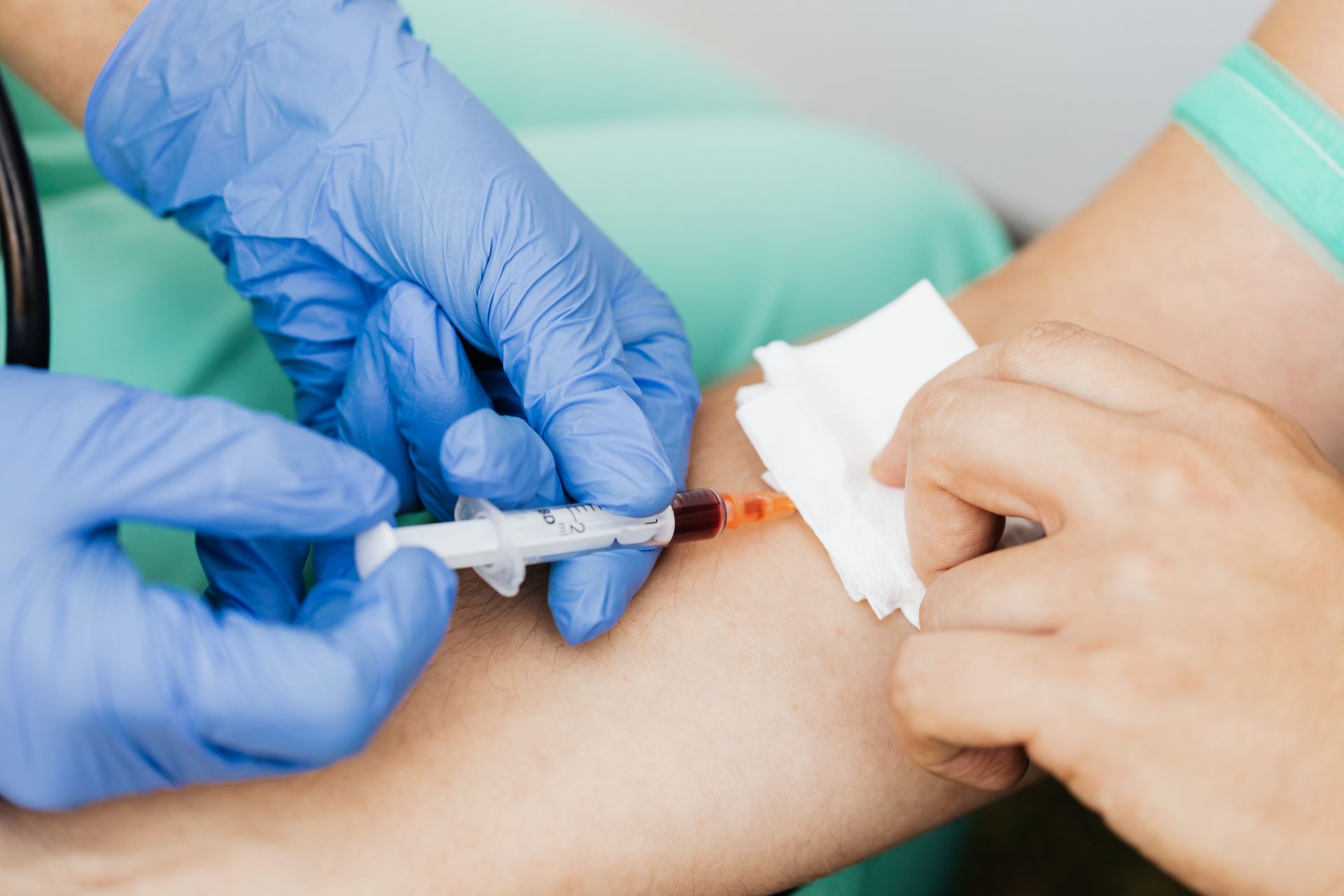
Usually not. The NHG guideline advises against measuring FSH, LH, and estradiol, because these values add nothing to the diagnosis. In perimenopause especially, FSH fluctuates strongly, so a single measurement can be normal while you are genuinely in menopause.
This is important to know: if your GP says 'your blood is fine', that does not mean your symptoms are not caused by menopause. The diagnosis rests on your story and your cycle, not on a number.
Your GP can, though, rule out other causes in a targeted way. A thyroid problem, for example, causes similar symptoms such as heart palpitations and fatigue. For that, the TSH value can be measured, where a result outside the normal range (roughly 0.4 to 4.0 mU/L) points to the thyroid. Read more about how the thyroid and hot flashes are connected.
What if your GP is hesitant about hormone therapy?
Some GPs are cautious about hormone therapy because of older research. The well-known WHI study mainly looked at women with an average age of 63 who used conjugated equine estrogen with a synthetic progestogen. That is different from bio-identical hormones in women around menopause itself.
Later data add nuance. In a large French cohort study (E3N), the breast cancer risk was raised with synthetic progestogens, but not significantly with micronized (bio-identical) progesterone combined with estrogen. This does not mean hormone therapy carries no risk. It shows that the type of hormone, your age, and the way it is delivered all matter. Feel free to ask your GP about this.
What if you do not feel heard?
Many women find that their symptoms are dismissed as something that 'comes with the territory'. That feeling is recognisable and understandably frustrating. At the same time, it is rarely unwillingness: a short consultation and the overlap with other conditions make menopause hard to recognise straight away.
If you do not feel taken seriously, you are allowed to keep asking. Ask specifically which causes have been considered and why further testing is not needed. You can also ask for a referral to a gynaecologist or specialised menopause care, or for a second opinion. Asking questions is not being difficult; it is part of shared decision-making.
If the waiting time is long or a physical appointment fits poorly into your week, some women choose an online menopause clinic as an interim step. At Menovia we work with BIG-registered doctors and consultants, who map your symptoms and, together with you, draw up a well-founded plan.
When to see a doctor
A menopause clinic does not replace care for acute or alarming symptoms. Always contact your GP in these situations, separate from any planned menopause conversation:
- Bleeding after your periods have been absent for a year or longer.
- Heavy, prolonged, or irregular bleeding, or bleeding after sex.
- Symptoms that fit menopause while you are younger than 40, because this can indicate early menopause.
- Low mood, anxiety, or thoughts that interfere with your daily life.
- Severe heart palpitations, chest pain, or shortness of breath. For acute, severe symptoms, seek emergency care immediately.
Frequently asked questions
How do I prepare for the conversation with my GP about menopause? Keep a symptom diary for 2 to 4 weeks and write down 3 to 5 concrete questions. Bring earlier blood results if you have them, and ask in advance for a double appointment.
Do I need a blood test to know whether I am in menopause? Usually not. The diagnosis is clinical, based on your symptoms and your cycle. An FSH test is not advised because the value fluctuates too strongly to be reliable.
What if my GP does not take my symptoms seriously? Ask which causes have been considered and why further testing is not needed. You are allowed to keep asking and to request a referral to a gynaecologist or specialised menopause care, or a second opinion.
Can my GP prescribe hormone therapy or refer me? Yes. For bothersome symptoms your GP can prescribe hormone therapy and can refer you to a gynaecologist or specialised menopause care, for example when waiting times are long or symptoms are persistent.
What is the difference between perimenopause and menopause? Perimenopause is the phase with irregular cycles that precedes menopause. Menopause is the point 12 months after your last period. This distinction partly determines how your GP interprets your symptoms. Read more about what is really happening in your body during perimenopause.
Sources
- Nederlands Huisartsen Genootschap. NHG-Standaard De overgang. richtlijnen.nhg.org
- Thuisarts.nl. Ik ben in de overgang (I am going through menopause). thuisarts.nl
- Rossouw JE, et al. Risks and Benefits of Estrogen Plus Progestin in Healthy Postmenopausal Women (WHI). JAMA, 2002. pubmed.ncbi.nlm.nih.gov
- Fournier A, et al. Breast cancer risk in relation to different types of hormone replacement therapy in the E3N-EPIC cohort. Int J Cancer, 2005. pubmed.ncbi.nlm.nih.gov
- How long does menopause last. menovia.nl
This information is intended as an educational resource and does not replace medical advice, diagnosis, or treatment. For complaints or questions about your personal situation, we recommend consulting a doctor.
Free guide: menopause, a broader perspective
The menopause is about more than just hot flashes. In our free menopause guide, our doctors explain the hormonal changes happening in your body, the symptoms you might not immediately associate with it, and the treatment options available. Written in plain language and medically backed.

Read more blogs about the menopause
Menovia
Sign up today