
Dry eyes during menopause: causes and relief
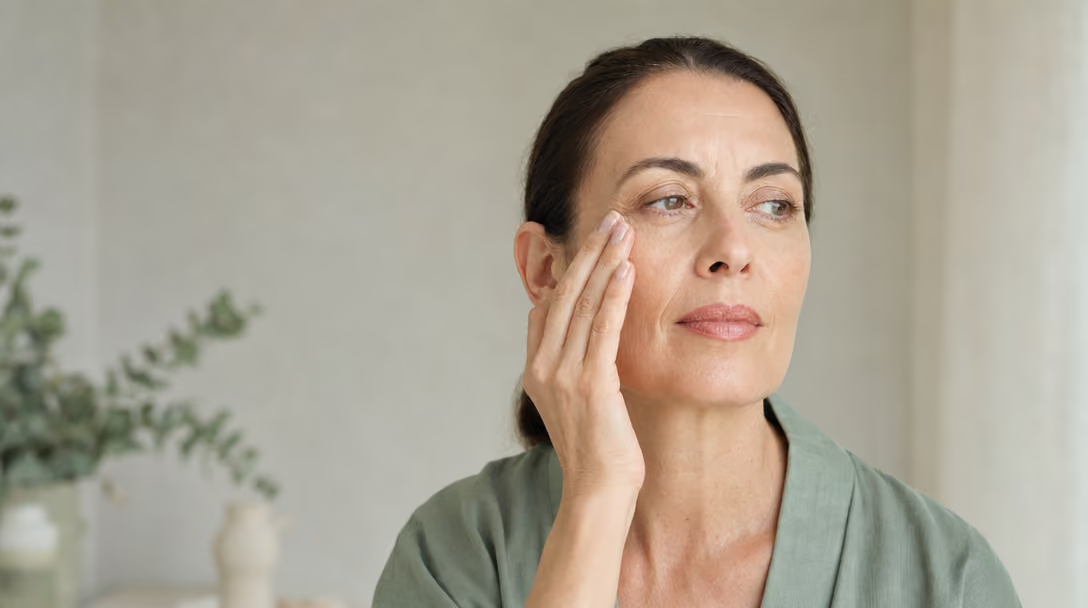
Dry, burning, or gritty eyes during menopause are often dismissed as not drinking enough or too much screen time. The real cause runs deeper: falling estrogen and androgen levels affect the tear film and the tiny glands that keep your eyes comfortable. This article explains why that happens, what actually helps, and why hormone therapy is not a logical fix here.
In short
- Dry eyes in menopause often develop because falling estrogen and androgen levels affect the tear film and the meibomian glands (oil glands in your eyelid).
- Preservative-free artificial tears and a few changes to your environment usually ease mild symptoms within a few days to weeks.
- Warm compresses help with blocked meibomian glands; the evidence for omega-3 supplements is weak.
- Important: hormone therapy is not a treatment for dry eyes. Research actually links (estrogen) hormone therapy to more dry-eye complaints in some women. If you have dry eyes and use hormone therapy, discuss this with your doctor.
Why do you get dry eyes during menopause?
Estrogen and androgen receptors sit not only in your uterus and skin, but also in the tear glands and the meibomian glands of your eyelids. When these hormones fall, the makeup and the amount of your tear film change, which can contribute to burning, blurred vision, and a gritty feeling. Androgens also drive oil production in the meibomian glands: less oil means a less stable tear film that evaporates faster.
These eye symptoms often appear alongside other menopause symptoms, such as hot flashes or heart palpitations in menopause, because hormonal shifts affect the whole system, not one complaint in isolation.
What helps: artificial tears and your environment
The first and cheapest step is preservative-free artificial tears. Preservatives such as benzalkonium chloride can further irritate the eye surface with daily use. Use them 3 to 6 times a day; most women notice less burning within 3 to 7 days. For overnight, a thicker eye ointment or gel is comfortable.
Also adjust your environment. Heated indoor air and air conditioning lower humidity, which speeds up evaporation of your tear film. Switch on a humidifier below 40% relative humidity, and do not let the car air conditioning blow straight at your face. If you spend a lot of time at a screen, apply the 20-20-20 rule: every 20 minutes, look at something about 6 meters away for 20 seconds. At a screen you blink less, so your tear film dries out faster.
Care for your meibomian glands
Warm compresses of 5 to 10 minutes, twice a day, soften thickened oil in the meibomian glands so drainage recovers. That is especially useful for meibomian gland dysfunction, a common cause of dry eyes. Much has been written about omega-3 supplements, but the evidence is weak: the largest study on this (the DREAM trial, with over 500 participants) found no clear benefit of omega-3 over placebo (DREAM, NEJM, 2018). So treat it as optional, not a core treatment.
Do you suspect your symptoms are hormonally connected? Our free guide can give you a broader view of menopause and how hormones affect your whole body. Download the free guide →
When are blood tests useful?
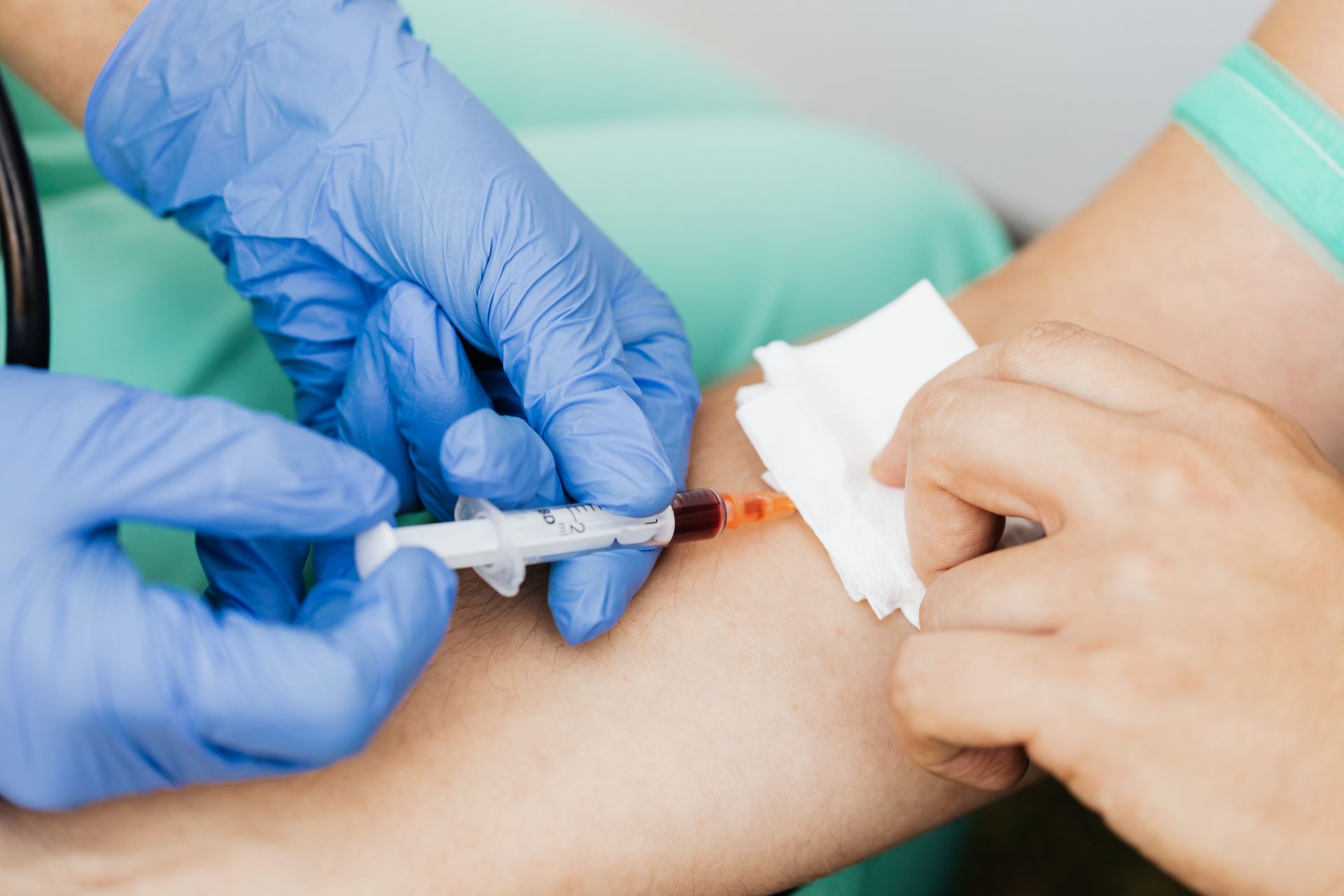
If artificial tears and environmental changes give too little relief after three to four weeks, it can help to map your hormonal picture and your thyroid, alongside what you are already doing. Thyroid problems can also cause dry eyes, separate from menopause. At Menovia we routinely include thyroid values (TSH, free T4, free T3) in the blood tests, along with estradiol and FSH. See also how the thyroid and menopause symptoms can overlap.
And hormone therapy? Why it is not a solution here
It sounds logical: if falling hormones cause dry eyes, would hormone therapy not fix them? The evidence points the other way. A large study of more than 25,000 postmenopausal women found that those using hormone therapy were more likely to have dry eyes: with estrogen alone the risk was about 70% higher, and with estrogen plus a progestogen about 30% higher than in women not using hormone therapy (Schaumberg et al., JAMA, 2001). The picture in later research is mixed, but hormone therapy as a treatment for dry eyes is not supported.
For Menovia that means: dry eyes on their own are not a reason to start hormone therapy. If you already use hormone therapy for other menopause symptoms and you have dry eyes, discuss this with your doctor; sometimes the treatment plays a part. A hormone treatment should match the complaint you want to treat, and dry eyes are addressed first and foremost locally.
When to see a doctor
See your GP or an eye doctor if symptoms persist after a few weeks of self-care, if your eyes are red or produce discharge (that points more to an infection), or if blurred vision does not clear after blinking. If you have dry eyes together with a dry mouth or joint complaints, have Sjogren's syndrome, an autoimmune condition, ruled out.
Frequently asked questions
Why do you get dry eyes during menopause? Falling estrogen and androgen levels affect the tear glands and meibomian glands, making the tear film thinner and less stable. This often happens at the same time as other menopause symptoms.
Do artificial tears really help? Yes, preservative-free artificial tears usually ease mild to moderate symptoms within 3 to 7 days. If symptoms persist after two to three weeks, have your meibomian glands and your hormone and thyroid values checked.
Does hormone therapy improve dry eyes? No, that is not supported. Research actually links (estrogen) hormone therapy to more dry-eye complaints in some women. Dry eyes are addressed first and foremost locally; if you already use hormone therapy, discuss any eye symptoms with your doctor.
Is this the same as Sjogren's syndrome? No. Dry eyes in menopause are usually a hormonal effect; Sjogren's is an autoimmune condition that also causes a dry mouth and joint complaints. If symptoms persist despite treatment, a referral is sensible.
Does omega-3 help? The evidence is weak. The largest study found no clear benefit over placebo. Warm compresses and artificial tears are more effective as a first step.
Does screen time make dry eyes worse? Yes, at a screen you blink less, so the tear film evaporates faster. The 20-20-20 rule helps.
Sources
- Schaumberg DA et al. Hormone replacement therapy and dry eye syndrome. JAMA, 2001. pubmed.ncbi.nlm.nih.gov/11694152
- Dry Eye Assessment and Management (DREAM) Study Research Group. n-3 Fatty Acid Supplementation for the Treatment of Dry Eye Disease. NEJM, 2018. nejm.org
- Hormone Replacement Therapy and Dry Eye Disease in Females with Menopause. IOVS (ARVO Journals). iovs.arvojournals.org
This information is intended as an educational resource and does not replace medical advice, diagnosis, or treatment. For complaints or questions about your personal situation, we recommend consulting a doctor.
Free guide: menopause, a broader perspective
The menopause is about more than just hot flashes. In our free menopause guide, our doctors explain the hormonal changes happening in your body, the symptoms you might not immediately associate with it, and the treatment options available. Written in plain language and medically backed.

Read more blogs about the menopause
Menovia
Sign up today