
Menopause home test: how reliable is it?

A home menopause test almost always measures the hormone FSH (follicle-stimulating hormone), usually in your urine and sometimes in a drop of blood. Such a test can show that your FSH is raised, but it cannot reliably confirm that you are going through the menopause transition. FSH swings widely during perimenopause, so a single reading tells you little. A doctor therefore bases the diagnosis mainly on your age, your symptoms and your cycle.
In short
- Most home tests measure FSH, usually in urine. They give a raised-or-not result, not a diagnosis.
- During perimenopause, FSH fluctuates from day to day and month to month. A normal result does not rule out the transition, and a high result does not confirm it.
- Dutch GP guidance (the NHG standard on menopause) advises that a hormone test is usually unnecessary for women over 45 with recognisable symptoms. The diagnosis is clinical.
- A doctor's blood test is useful to rule out other causes, such as an underactive thyroid, anaemia or a vitamin deficiency, or when early menopause is suspected.
- In practice we see that a test result only gains meaning alongside your symptom pattern, your history and a conversation with a doctor.
What does a home menopause test actually measure?
Almost all home tests measure FSH. This hormone signals your ovaries, and it rises when the ovaries produce less oestrogen. You place a few drops of urine on a test strip or dip the strip into a cup of urine. A colour or line then indicates whether your FSH is above a set threshold.
It is a qualitative test: you get a yes-or-no signal about a raised FSH level, not an exact measurement and not a diagnosis. The US regulator, the FDA, stresses that a home test does not detect menopause, it only shows whether your FSH is raised at that moment. Some newer tests ask you to measure several times across a cycle, but they still rely on that same fluctuating hormone.
Why is a single FSH reading so unreliable in perimenopause?
In the years before your final period, FSH moves the most. One month you measure a high value, the next a low one, while nothing has changed in your situation. A single reading therefore captures only a snapshot of a strongly shifting signal.
On top of that, other factors affect your FSH, such as hormonal contraception, other conditions and even how much you drank that day. So a normal result does not rule out the transition, and a high result does not prove it. What an FSH value can and cannot tell you is explained in our article on the FSH level and menopause.
What can a home test tell you, and what can it not?
A home test can give a first signal. If you have symptoms and the test shows a raised FSH, that can confirm it is worth taking your symptoms seriously and discussing them with a doctor. For some women this lowers the threshold to seek help.
What a home test cannot do: make the diagnosis, determine which menopause phase you are in, support a treatment or dose, or rule out other causes of your symptoms. Those questions need more than a single hormone value.
Home test or a doctor's blood test: what is the difference?
A home test looks at one hormone at one moment and gives a rough signal. A doctor's blood test can combine several values, weigh them against your symptoms and rule out other causes. That difference decides how much the result is worth.
A home test may make you curious or reassure you, but it does not lead to a treatment plan. A doctor translates blood values, symptoms and history together into advice that fits you. In practice we see that this broader view is what separates a loose result from a usable answer.
Unsure about a home test result? Our free guide helps you see your symptoms in a broader context, so you can prepare for a conversation with a doctor. Download the free guide →
How does a doctor establish the menopause transition?
For women over 45 with a recognisable symptom pattern, the transition is mainly a clinical diagnosis. A doctor weighs your age, your symptoms and the course of your periods together. Dutch GP guidance (the NHG standard on menopause) advises against a routine hormone test in this group, because the fluctuations mean the result adds little and does not change the diagnosis.
Want a first impression of where you stand? Our quick check based on your symptoms and cycle is more useful for that than a single FSH test. It does not replace a doctor, but it follows the way the diagnosis is actually made.
When is a doctor's blood test worthwhile?
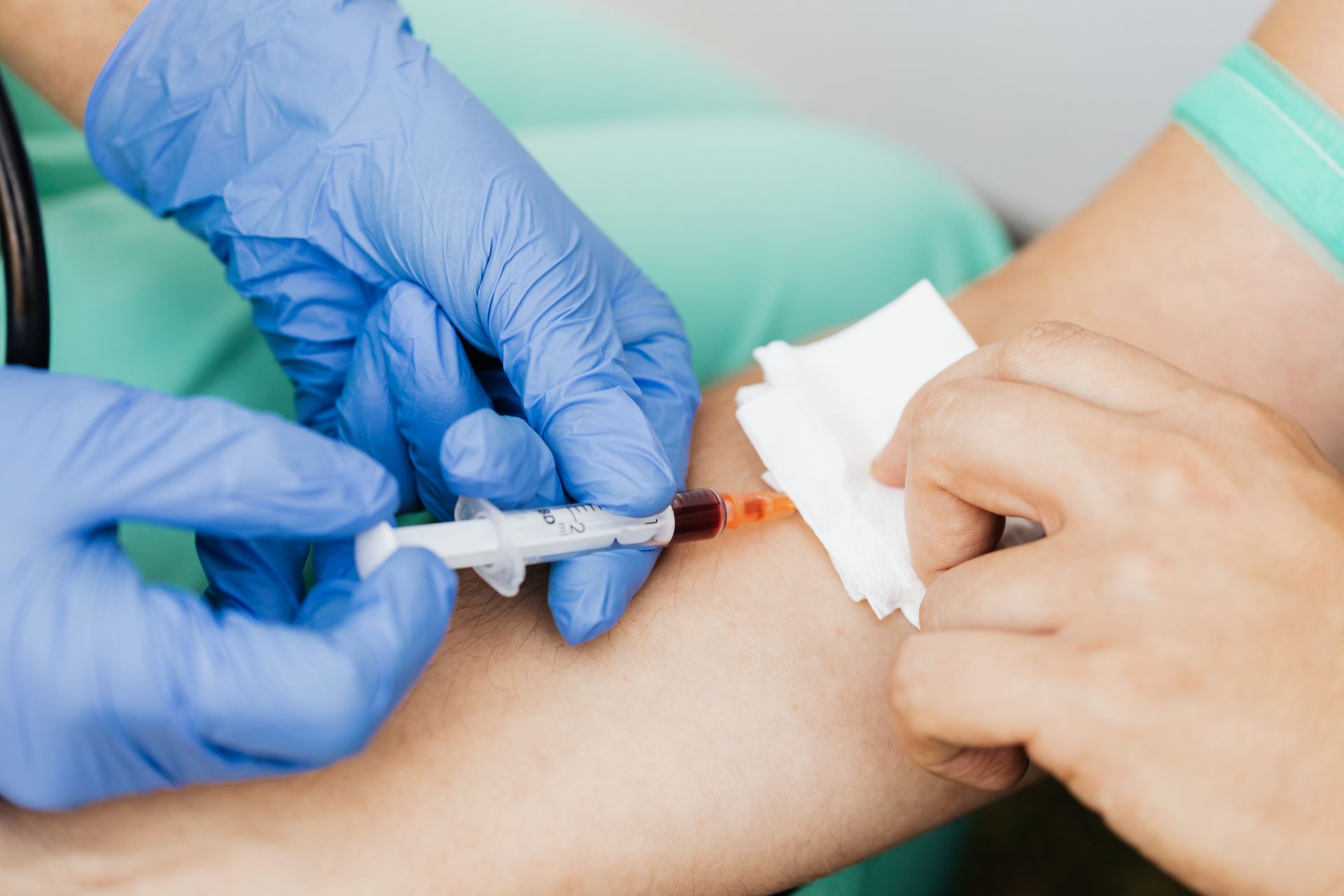
Blood testing does have value, but at different moments than a home test suggests. It is mainly useful to rule out other causes of your symptoms. Fatigue, brain fog or mood changes fit the transition, but can also point to an underactive thyroid, anaemia, disturbed blood sugar or a shortage of, for example, vitamin D or B12.
A doctor can have these measured specifically. The thyroid is a logical part of that, because thyroid symptoms and menopause symptoms closely resemble each other. When early menopause is suspected, under the age of 40, a hormone test is also appropriate. And to start hormone therapy, a baseline measurement gives useful information. You can discuss all of this with your GP.
This is also how it works at Menovia. Our intake maps your symptoms systematically, a doctor registered in the Dutch BIG register reviews the whole picture, and the blood test is broader than a single FSH value. This allows a tailored dose to be set and other causes to be weighed. Blood remains one part of the picture, alongside your symptoms and your history, not the whole story.
When to see a doctor
Contact a doctor in these situations, whatever a home test shows:
- Bleeding after you have not menstruated for a year or longer. Bleeding after menopause should always be assessed.
- Heavy, prolonged or unpredictable bleeding, or bleeding after intercourse.
- Menopause-like symptoms under the age of 40.
- Symptoms that clearly affect your daily life, or that leave you in doubt.
Frequently asked questions
Can a home menopause test tell me for certain that I am in the transition? No. A home test measures FSH at one moment, and that value fluctuates strongly. The diagnosis rests mainly on your age, your symptoms and your cycle.
Does a home test use blood or urine? Usually urine. There are also finger-prick tests that measure FSH in blood, but these too capture only a snapshot.
So is a home menopause test pointless? Not necessarily. The test can signal that your symptoms deserve attention. For a diagnosis or treatment you need a doctor.
Why does a GP often not recommend a hormone test? Because for women over 45 with recognisable symptoms the result does not change the diagnosis. The fluctuations make a single reading of little value.
My result is normal, but I do have symptoms. What now? A normal result does not rule out the transition. Discuss your symptoms with a doctor, who can also rule out other causes.
Sources
- NHG. NHG Guideline The Menopause (M73). Dutch College of General Practitioners. richtlijnen.nhg.org
- Thuisarts.nl. I am going through the menopause. Dutch College of General Practitioners. thuisarts.nl
- FDA. Menopause (Home-Use Tests). U.S. Food and Drug Administration. fda.gov
- Cleveland Clinic. Are At-Home Menopause Tests Accurate? clevelandclinic.org
This information is intended as an educational resource and does not replace medical advice, diagnosis or treatment. If you have symptoms or questions about your personal situation, we recommend consulting a doctor.
Free guide: menopause, a broader perspective
The menopause is about more than just hot flashes. In our free menopause guide, our doctors explain the hormonal changes happening in your body, the symptoms you might not immediately associate with it, and the treatment options available. Written in plain language and medically backed.

Read more blogs about the menopause
Menovia
Sign up today